






Manila Bulletin
 Business
Trade & Industry
US moves to open all ports to Philippine pineapple exports
Business
Trade & Industry
US moves to open all ports to Philippine pineapple exports
Business
Trade & Industry
US moves to open all ports to Philippine pineapple exports
US moves to open all ports to Philippine pineapple exports
Published Jun 11, 2026 06:00 pm


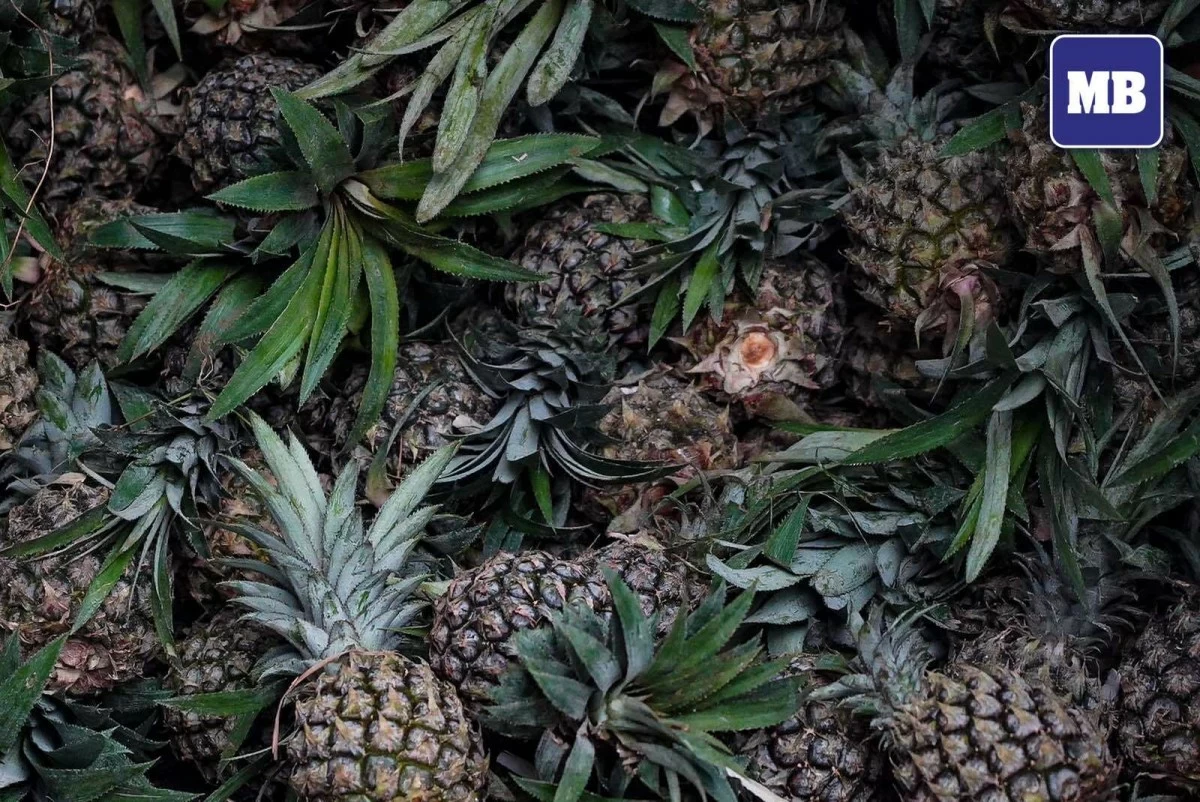
(Manila Bulletin file photo)
The Philippines could soon increase its fresh pineapple exports to the United States to as much as 19,200 metric tons (MT) per year after the US government determined risk-mitigation measures to address pest concerns that have long restricted the commodity’s access to the American market.
In a notice dated June 10 seen by the Manila Bulletin, the US Animal and Plant Health Inspection Service (APHIS) proposed authorizing expanded market access for the country’s fresh pineapple exports.
The move follows a request from the Bureau of Plant Industry (BPI), the Philippines' national plant protection organization, asking APHIS to allow fresh pineapples to enter through all US ports. Currently, fresh pineapple exports from the Philippines are restricted to ports in the North Atlantic region, Guam, and the Northern Mariana Islands.
These port restrictions were originally implemented to prevent the introduction of pests like the oriental fruit fly, a destructive insect capable of damaging more than 400 types of fruits and vegetables.
Based on its pest risk assessment, APHIS will require Philippine pineapples to be either a fruit fly-resistant variety or subjected to phytosanitary treatment. Specifically, exports must belong to a lineage that is at least 50 percent Smooth Cayenne, a variety not considered a host to the pest. Other varieties failing to meet this condition will require irradiation or vapor heat treatment.
Citing data from the BPI, APHIS expects the Philippines to ship approximately 19,200 MT of fresh pineapples to the US annually. By comparison, APHIS estimates show that the US imported fewer than 600 MT of fresh pineapples annually from the Philippines over the five-year period ending in 2024.
According to APHIS, expanding the trade volume to 19,200 MT could generate $20.1 million in net annual benefits from consumer welfare gains. Meanwhile, potential losses to US farmers are projected at around $713,547, indicating that the influx of imports would not pose a major economic threat to the domestic agriculture sector.
“To expand the US domestic supply of fresh pineapples, any new fresh pineapple imports from the Philippines would need to be in addition to, rather than displacing, other existing fresh pineapple imports,” APHIS stated.
APHIS is accepting stakeholder comments on the proposal until August 10. Based on the feedback, the agency will announce its final decision regarding the revision of port restrictions in a subsequent notice.
According to the Food and Agriculture Organization (FAO), the Philippines maintained its position as the world’s second-largest pineapple exporter in 2025. Shipments reached an estimated 775,028 MT, up nearly 14 percent from the 682,383 MT recorded in 2024.