






Manila Bulletin
 Philippines
National
PH can lead nuclear energy renaissance with skilled workforce — US Embassy
Philippines
National
PH can lead nuclear energy renaissance with skilled workforce — US Embassy
Philippines
National
PH can lead nuclear energy renaissance with skilled workforce — US Embassy
PH can lead nuclear energy renaissance with skilled workforce — US Embassy
By Jel Santos
Published Jun 11, 2026 05:29 pm


At A Glance
- During the Nuclear Workforce Educational Forum at the University of Makati, US Embassy Counselor for Public Diplomacy Jessica Simon said workforce development remains key to the country's civil nuclear ambitions, with the United States helping build that talent pool through the Fulbright Program in the Philippines.
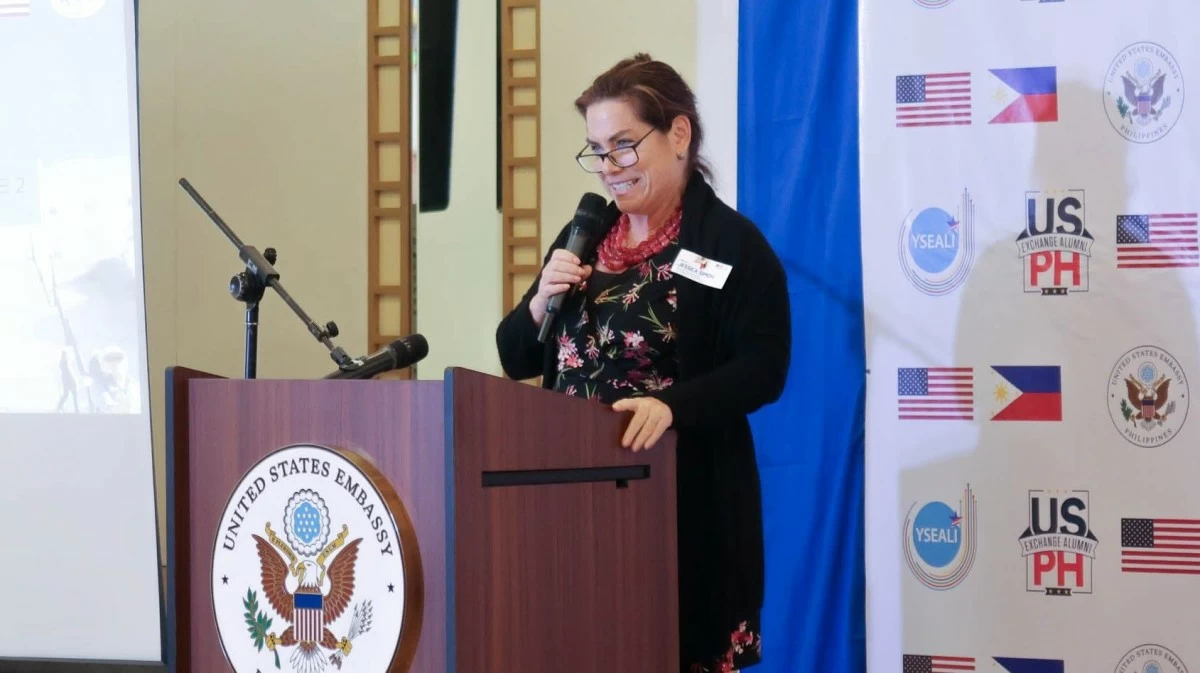
(US EMBASSY FILE PHOTO)
The Philippines can play a leading role in the global nuclear energy renaissance if it succeeds in developing a skilled workforce capable of supporting a safe, secure, and modern nuclear sector, a United States (US) Embassy official said on Thursday, June 11.
During the Nuclear Workforce Educational Forum at the University of Makati, US Embassy Counselor for Public Diplomacy Jessica Simon said workforce development remains key to the country’s civil nuclear ambitions, with the United States helping build that talent pool through the Fulbright Program in the Philippines.
“Today’s forum reflects a shared aspiration: that the Philippines will not simply observe the global nuclear energy renaissance, it will help lead it,” she said.
“Central to building a safe, secure, and modern nuclear sector is a skilled workforce. Through the Fulbright Program in the Philippines, the United States is building this workforce together with you,” she went on.
Simon said the Philippines and the United States are marking 80 years of diplomatic relations this year, providing an opportunity to strengthen cooperation in areas that could shape the future of both countries, including civil nuclear development.
“This year, the Philippines and the United States celebrate 80 years of our diplomatic relationship. It’s a chance to look back and celebrate all we’ve accomplished together. It’s also a chance to look forward, to consider everything we can accomplish together over the next 80 years,” she said.
“If anything meets that goal, it’s the work the Philippine American Educational Foundation is doing in support of the Philippines’ civil-nuclear development,” she added.
The forum was organized by the Philippine-American Educational Foundation (PAEF), also known as Fulbright Philippines, under its Freedom 250 initiative, which commemorates the 250th anniversary of the founding of the United States in 2026.
Per Simon, the initiative seeks to foster cross-sector dialogue on issues relevant to both countries by bringing together government agencies, academic institutions, and private-sector stakeholders.
She said the US Mission and PAEF have been working with agencies such as the Department of Energy, Commission on Higher Education (CHED), and Technical Education and Skills Development Authority (TESDA), as well as private energy companies, through programs such as the International Visitor Leadership Program, Fulbright Specialists, and Speaker Programs.
The development of a nuclear workforce, she said, requires contributions from all levels of expertise, from researchers and engineers to skilled technicians.
“At the heart of today’s forum is a simple but powerful insight: building a nuclear workforce requires a full-stack approach,” Simon said.
“Every layer matters, from PhD researchers to licensed engineers to skilled technicians. Neglect the technician layer, and you build a system that looks impressive on paper but cannot function in practice,” she added.
Simon urged participants to translate the discussions into concrete institutional action as the Philippines explores the development of its nuclear energy sector.
“The Philippines stands at the threshold of a new era,” she said.
“I encourage everyone here to translate today’s concrete steps into institutional action, and to keep our Fulbright and the US Embassy teams informed of your progress. We want to hear from you, support you, and celebrate your wins,” she added.