ADVERTISEMENT

Displaced Sarangani folk remain glued to open spaces

Published Jun 11, 2026 04:42 pm

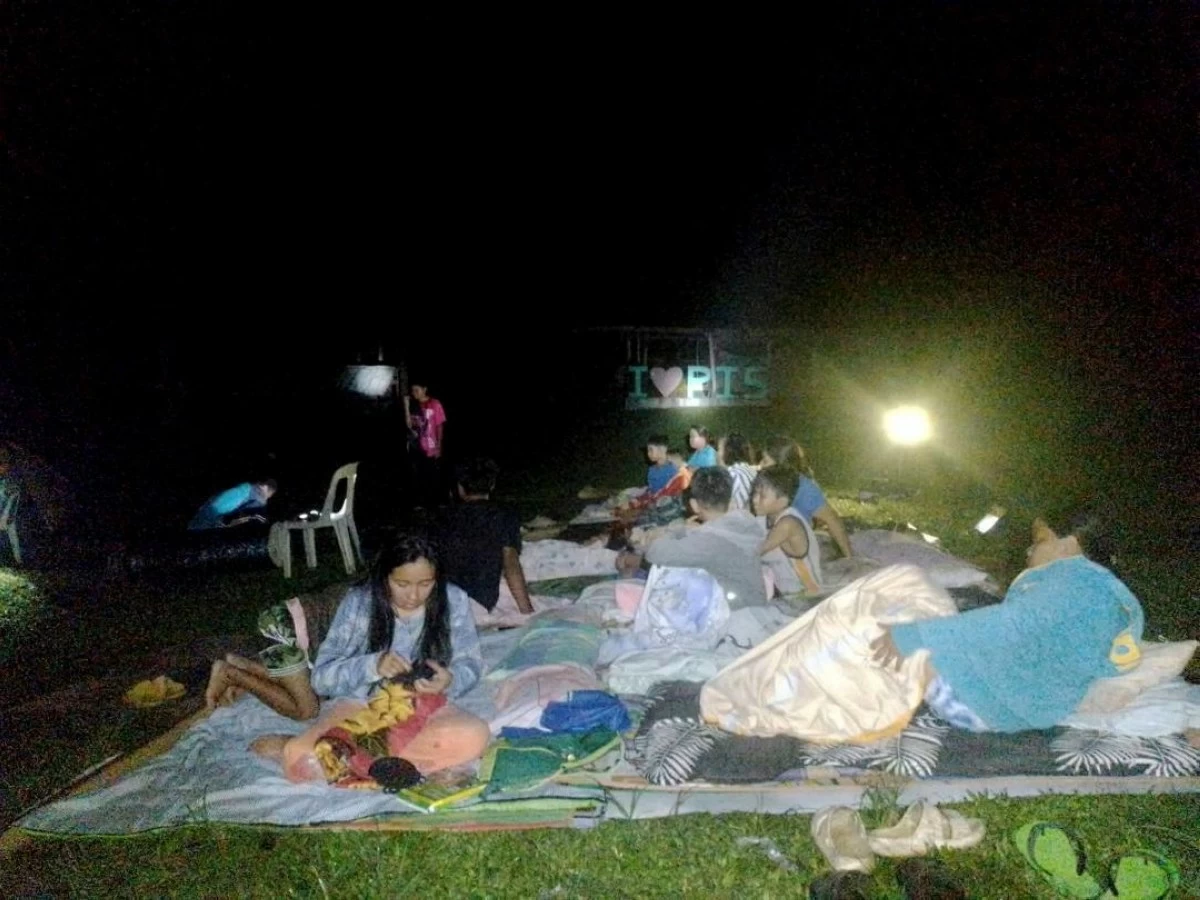
RESIDENTS displaced by the earthquake spend a night at Panambalan Integrated School in Barangay Rio del Pilar, Glan, Sarangani. (DepEd-Sarangani)
DAVAO CITY – Four days since the magnitude-7.8 earthquake jolted Sarangani and nearby provinces, many
affected residents are still spending the night in open spaces in schools and town plazas.
Since the earthquake struck, pictures of displaced residents have been making rounds in social media showing that open spaces, particularly in some school grounds, have become living spaces at night.
Donna Panes, chief of the Curriculum Implementation Division of the Department of Education-Sarangani Division, said that they have received reports from school officials across the province that local residents have put makeshift tents in many of schools’ open grounds.
Panes said that the displaced residents prefer to spend a night in school grounds since most of the gymnasiums have been damaged by the earthquake.
She added many of these affected residents are located in the remote areas of the Glan and Malapatan, two of the heavily devastated towns in Sarangani.
A report from the Sarangani Provincial Disaster Risk Reduction and Management Office (PDRRMO) showed that 1,524 houses have been totally damaged and 6,368 were partially damaged as of 9 a.m. June 11. Most of the totally damaged houses are in Glan with 439.
Department of Social Welfare and Development (DSWD) Region-12 chief Loreto Cabaya Jr. said they have distributed modular tents to affected areas but more tents or any materials that can be used as temporary shelters are needed, particularly in Glan.
Angel Faith Dugaduga, a staff of the Glan Municipal Disaster Risk Reduction and Management Office (MDRRMO), said many affected residents are spending the night in the town plaza and other open spaces because many houses were damaged by the earthquake.
Panes is appealing for food, water, and tents for affected communities in the remote villages of Glan and Malapatan, particularly Sitio Panambalan in Barangay Rio del Pilar in Glan as they have not yet received any aid since the earthquake struck.
Glan is the most heavily devastated town in Sarangani due to its proximity to the offshore epicenter of the earthquake 33 kilometers west of Maasim.
The MDRRMO reported that at least 110,000 individuals from have been affected by the earthquake. Most of those affected were from 21 out of 31 barangays. Twelve of the 20 fatalities in the province are from Glan.

Related Tags

Sarangani Mindanao earthquake
ADVERTISEMENT
.most-popular .layout-ratio{ padding-bottom: 79.13%; } @media (min-width: 768px) and (max-width: 1024px) { .widget-title { font-size: 15px !important; } }

{{ articles_filter_1561_widget.title }}

.most-popular .layout-ratio{ padding-bottom: 79.13%; } @media (min-width: 768px) and (max-width: 1024px) { .widget-title { font-size: 15px !important; } }

{{ articles_filter_1562_widget.title }}

.most-popular .layout-ratio{ padding-bottom: 79.13%; } @media (min-width: 768px) and (max-width: 1024px) { .widget-title { font-size: 15px !important; } }

{{ articles_filter_1563_widget.title }}

{{ articles_filter_1564_widget.title }}

.mb-article-details { position: relative; } .mb-article-details .article-body-preview, .mb-article-details .article-body-summary{ font-size: 17px; line-height: 30px; font-family: "Libre Caslon Text", serif; color: #000; } .mb-article-details .article-body-preview iframe , .mb-article-details .article-body-summary iframe{ width: 100%; margin: auto; } .read-more-background { background: linear-gradient(180deg, color(display-p3 1.000 1.000 1.000 / 0) 13.75%, color(display-p3 1.000 1.000 1.000 / 0.8) 30.79%, color(display-p3 1.000 1.000 1.000) 72.5%); position: absolute; height: 200px; width: 100%; bottom: 0; display: flex; justify-content: center; align-items: center; padding: 0; } .read-more-background a{ color: #000; } .read-more-btn { padding: 17px 45px; font-family: Inter; font-weight: 700; font-size: 18px; line-height: 16px; text-align: center; vertical-align: middle; border: 1px solid black; background-color: white; } .hidden { display: none; }
function initializeAllSwipers() { // Get all hidden inputs with cms_article_id document.querySelectorAll('[id^="cms_article_id_"]').forEach(function (input) { const cmsArticleId = input.value; const articleSelector = '#article-' + cmsArticleId + ' .body_images'; const swiperElement = document.querySelector(articleSelector); if (swiperElement && !swiperElement.classList.contains('swiper-initialized')) { new Swiper(articleSelector, { loop: true, pagination: false, navigation: { nextEl: '#article-' + cmsArticleId + ' .swiper-button-next', prevEl: '#article-' + cmsArticleId + ' .swiper-button-prev', }, }); } }); } setTimeout(initializeAllSwipers, 3000); const intersectionObserver = new IntersectionObserver( (entries) => { entries.forEach((entry) => { if (entry.isIntersecting) { const newUrl = entry.target.getAttribute("data-url"); if (newUrl) { history.pushState(null, null, newUrl); let article = entry.target; // Extract metadata const author = article.querySelector('.author-section').textContent.replace('By', '').trim(); const section = article.querySelector('.section-info ').textContent.replace(' ', ' '); const title = article.querySelector('.article-title h1').textContent; // Parse URL for Chartbeat path format const parsedUrl = new URL(newUrl, window.location.origin); const cleanUrl = parsedUrl.host + parsedUrl.pathname; // Update Chartbeat configuration if (typeof window._sf_async_config !== 'undefined') { window._sf_async_config.path = cleanUrl; window._sf_async_config.sections = section; window._sf_async_config.authors = author; } // Track virtual page view with Chartbeat if (typeof pSUPERFLY !== 'undefined' && typeof pSUPERFLY.virtualPage === 'function') { try { pSUPERFLY.virtualPage({ path: cleanUrl, title: title, sections: section, authors: author }); } catch (error) { console.error('ping error', error); } } // Optional: Update document title if (title && title !== document.title) { document.title = title; } } } }); }, { threshold: 0.1 } ); function showArticleBody(button) { const article = button.closest("article"); const summary = article.querySelector(".article-body-summary"); const body = article.querySelector(".article-body-preview"); const readMoreSection = article.querySelector(".read-more-background"); // Hide summary and read-more section summary.style.display = "none"; readMoreSection.style.display = "none"; // Show the full article body body.classList.remove("hidden"); } document.addEventListener("DOMContentLoaded", () => { let loadCount = 0; // Track how many times articles are loaded const offset = [1, 2, 3, 4, 5, 6, 7, 8, 9, 10]; // Offset values const currentUrl = window.location.pathname.substring(1); let isLoading = false; // Prevent multiple calls if (!currentUrl) { console.log("Current URL is invalid."); return; } const sentinel = document.getElementById("load-more-sentinel"); if (!sentinel) { console.log("Sentinel element not found."); return; } function isSentinelVisible() { const rect = sentinel.getBoundingClientRect(); return ( rect.top < window.innerHeight && rect.bottom >= 0 ); } function onScroll() { if (isLoading) return; if (isSentinelVisible()) { if (loadCount >= offset.length) { console.log("Maximum load attempts reached."); window.removeEventListener("scroll", onScroll); return; } isLoading = true; const currentOffset = offset[loadCount]; window.loadMoreItems().then(() => { let article = document.querySelector('#widget_1690 > div:nth-last-of-type(2) article'); intersectionObserver.observe(article) loadCount++; }).catch(error => { console.error("Error loading more items:", error); }).finally(() => { isLoading = false; }); } } window.addEventListener("scroll", onScroll); });

Sign up by email to receive news.