






Manila Bulletin
 Philippines
National
Tagaytay court convicts Canadian over P9.5 B shabu haul in Batangas
Philippines
National
Tagaytay court convicts Canadian over P9.5 B shabu haul in Batangas
Philippines
National
Tagaytay court convicts Canadian over P9.5 B shabu haul in Batangas
Tagaytay court convicts Canadian over P9.5 B shabu haul in Batangas
Published Jun 10, 2026 10:17 am
|
Updated Jun 10, 2026 02:01 pm


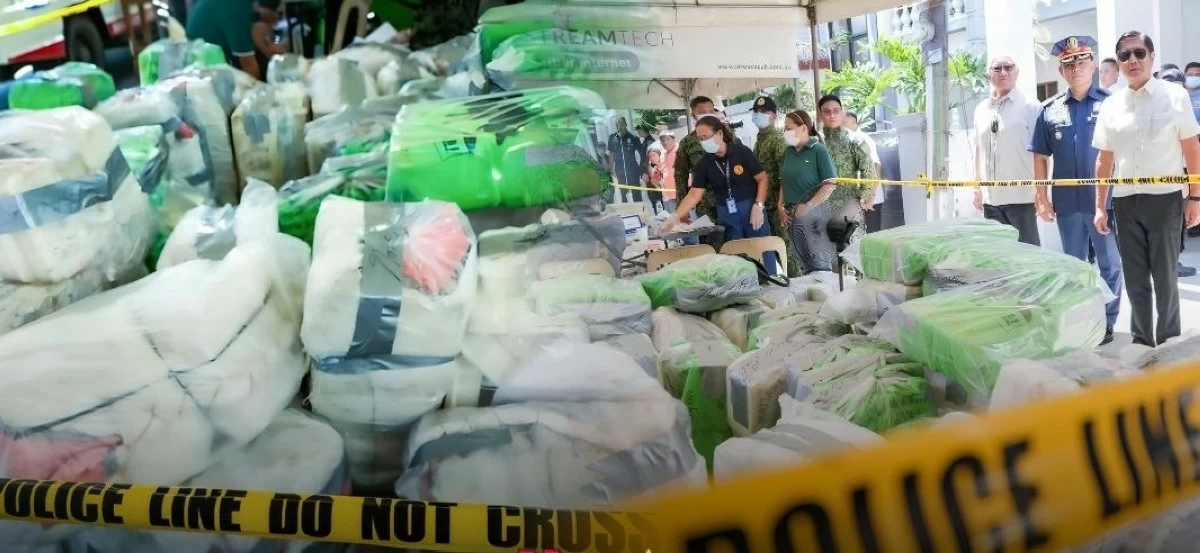
A Tagaytay City Regional Trial Court sent a Canadian national to life imprisonment after he was found guilty of illegal drug charges in connection with the P9.5-billion shabu haul in Batangas two years ago, the Philippine National Police (PNP) disclosed on Wednesday, June 10.
PNP chief Gen. Jose Melencio C. Nartatez, Jr. welcomed the court decision, saying the court decision underscores the value of a rules-based enforcement effort that leads not only to arrests but also to certainty of conviction.
“This case highlights that our anti-illegal drugs campaign is not only measured by arrests and seizures but also by successful convictions. The suspect was arrested without loss of life, evidence was preserved, and the judicial process ultimately resulted in a conviction, reflecting the effectiveness of a rules-based approach to law enforcement,” said Nartatez.
The case stemmed from the arrest of Thomas Gordon O’Quinn on May 16, 2024 inside a wellness resort in Tagaytay City after intelligence monitoring linked him to the interdiction in Alitagtag, Batangas, where authorities seized around 1.4 tons of suspected shabu worth about P9.5 billion, a month earlier.
In the decision, the arrested driver of the van containing shabu tagged several personalities as key players in the illegal drugs operation—and that includes a foreigner identified as “James Toby Martin.”
Subsequent investigation revealed that “James Toby Martin” was allegedly a false identity used by O'Quinn. Police also verified through the Philippine Center for Transnational Crime that an Interpol Red Notice had been issued against O'Quinn for drug-related offenses in the United States.
Acting on the information that O’Quinn frequently visits a wellness resort for detox therapy in Tagaytay, police surveillance teams conducted the operation that led to his arrest.
A subsequent search by police recovered two vacuum-sealed sachets containing suspected shabu, a sachet containing suspected cocaine, tablets suspected to be illegal drugs, and 14 identification cards bearing O'Quinn's photograph but carrying different names, according to the decision.
Life imprisonment
In a 19-page decision dated May 29 this year, the Tagaytay City Regional Trial Court Branch 135 found O'Quinn guilty of two counts of illegal possession of dangerous drugs under Republic Act 9165, or The Comprehensive Dangerous Drugs Act of 2002.
The court sentenced him to life imprisonment and fined him P500,000 for possessing 45 grams of shabu. It also imposed another life sentence and a P10-million fine for possessing 81.65 grams of cocaine.
“The court finds that the chain of custody over the seized dangerous drugs remained unbroken, and the integrity and evidentiary value of the corpus delicti have been properly preserved,” Presiding Judge Andy S. De Vera said.
The court also noted that O'Quinn was the sole occupant of the villa where authorities found the drugs and that he failed to show any legal authority to possess them.
“Having been caught in flagrante delicto, there is prima facie evidence that he had animus possidendi,” or intent to possess the drugs, the court added.
How drug war should be done
For his part, Nartatez directed all concerned units to maintain operational momentum and strengthen coordination with partner agencies, including the Bureau of Immigration and international counterparts.
He also commended all police units involved in the operation, citing the successful arrest without casualties and the preservation of evidence that led to the conviction.
“The successful prosecution of a suspect linked to one of the country's largest drug seizures sends a strong message that drug syndicates will be held accountable under the rule of law,” said Nartatez.
“We will continue working with our local and international partners to ensure that those involved in the illegal drug trade are brought before the courts and held accountable,” he added.