






Manila Bulletin
 Environment and Sustainability
Saving the endangered Philippine eagle from extinction
Environment and Sustainability
Saving the endangered Philippine eagle from extinction
Environment and Sustainability
Saving the endangered Philippine eagle from extinction
Saving the endangered Philippine eagle from extinction
Published Jun 10, 2026 06:00 am


Once a species is lost, it is lost forever. Along with its disappearance comes the loss of one of the country’s natural treasures and the unfortunate truth about the condition of our environment.
This is particularly true in the case of the Philippine eagle, the country’s national bird. It is said that the death of the last eagle will herald even graver consequences: the demise of our environment.
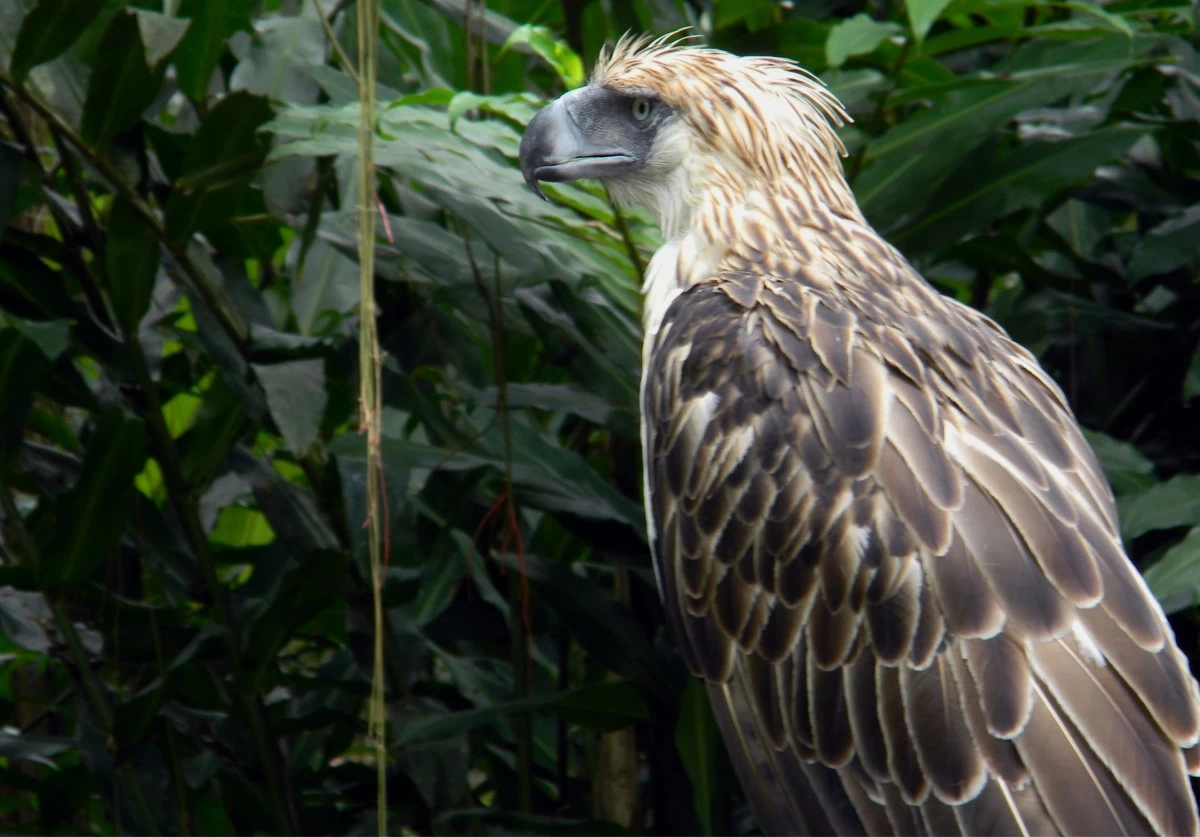
The endangered Philippine eagle, the country's national bird.
This outcome must be averted. To this end, Presidential Proclamation No. 79, issued in 1999, established Philippine Eagle Week, observed from June 4 to June 10. The observance aims to educate the public about the importance of protecting the Philippine eagle and its natural habitat, while highlighting the threats posed by deforestation and human activities.
Likewise, Philippine Eagle Week promotes forest conservation, wildlife protection, and greater awareness of the eagle both locally and internationally.
The Philippine eagle ranks as the second-rarest eagle species after the Madagascar sea eagle. In terms of size, it surpasses the American bald eagle, making it the world’s second-largest eagle after the harpy eagle found in Central and South America.
This raptor was first identified in 1896 by English naturalist John Whitehead in Samar. He originally named it the monkey-eating eagle, believing it primarily preyed on monkeys, and assigned it the scientific name Pithecophaga jefferyi. The name is derived from the Greek words pitekos. meaning “monkey” and phagien, meaning “to eat.” The name jefferyi was a tribute to his father, Jeffrey, who financed the expedition.
In 1978, the earlier name was abandoned and replaced with its current designation through Presidential Decree No. 1732, after studies showed that monkeys constitute only a negligible part of the bird’s diet.
In the past, Philippine eagles abounded in the forests of Mt. Apo and other parts of Mindanao. They could also be seen soaring above the forests of Sierra Madre in Luzon and Samar and Leyte in the Visayas.
Today, Philippine eagles still inhabit these areas, but their population has dwindled. In fact, the International Union for the Conservation of Nature has declared the Philippine eagle a critically endangered species.
The Philippine Eagle Foundation (PEF) said on its website that about 400 pairs of Philippine eagles remain in the wild. PEF is a non-profit organization committed to preserving the critically endangered bird of prey and its rainforest ecosystem.
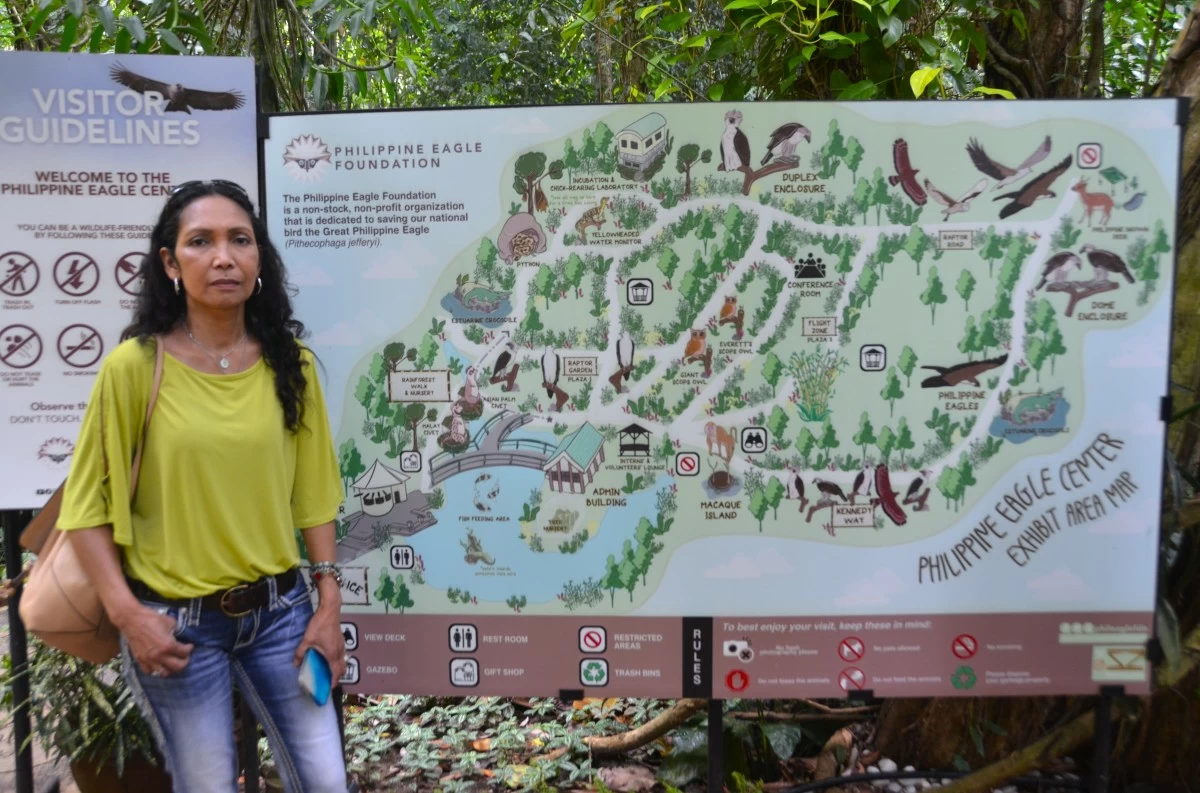
A visitor poses at the entrance of the Philippine Eagle Center in Malagos, Calinan, Davao City.
The organization manages the Philippine Eagle Center, an 8.4-hectare facility located at the foot of Mt. Apo, in the Malagos area of Baguio District in Davao City, within the Malagos Watershed.
“We combine scientific research and methods with cultural knowledge and practices to create a holistic approach to conserving the species,” the PEF website stated. “We work with local communities and different organizations to maximize our operations, both in situ and ex situ.”
In July 1995, then President Fidel V. Ramos signed Proclamation No. 615 declaring the Philippine eagle as the country’s national bird. He said the eagle, found only in the Philippines, should be a source of national pride.

Dennis Joseph I. Salvador, executive director of the Philippine Eagle Foundation.
“The Philippine eagle is the largest predator we have,” said Dennis Joseph I. Salvador, PEF executive director. “By using the Philippine eagle as the focal point of conservation, we are, in the process, saving wildlife and their habitat.”
Efforts to save the Philippine eagle began in 1965 through the initiatives of Jesus A. Alvarez, then director of the autonomous Parks and Wildlife Office, and Dioscoro S. Rabor, one of the pioneers of Philippine conservation efforts.
From 1969 to 1972, famed American aviator Charles Lindbergh spearheaded a campaign to save the bird, which he called the “noblest flier.” During this period, several important laws were enacted.
Salvador – whose surname means “savior” in Spanish – firmly believes that the fate of the Philippine eagle is closely tied to forest conservation. According to the United Nations Food and Agriculture Organization, a pair of Philippine eagles requires at least 7,000 to 13,000 hectares of forest as nesting territory.
“The forest is its only habitat,” Salvador said. “Without the forest, the species cannot survive in the long term.”
Aside from deforestation, another threat to the survival of the country’s bird icon is hunting.
“Some do it because of ignorance but most, I believe, because of arrogance,” said Salvador, who was named one of The Outstanding Young Men (TOYM) in 2000 for leadership in wildlife conservation. “People believe they can get away with it, so they do it. This, of course, is aggravated by poor enforcement of the law and a clear lack of political will.”
Salvador – who studied agricultural economics at the University of the Philippines Los Baños and agribusiness at Ateneo de Davao University – joined the foundation in 1987.
“It was a very tumultuous period for the organization,” he recalled.
At that time, the eagle camp, as it was then known, was located in Barangay Baracatan in Toril. Salvador was in charge of the eagles’ food supply. Since insurgency was at its height, they were often isolated as nearby residents evacuated to safer areas.
“At night, we would dread hearing the dogs barking because that meant rebels were just around the corner,” he said.
Another pressure they faced came from a government agency.
“They were hot on our heels, trying their best to take the eagles from us and relocate the entire operation to a state university in Luzon,” Salvador recalled. “In the end, they simply stopped funding the project.”
The foundation managed to retain custody of the eagles because of media support and backing from the Davao City local government. Still, they were largely left to manage the situation on their own. It was only after several howitzer shells landed about 50 meters from the facility that they decided to leave Baracatan and relocate to Malagos.
In 1992, Salvador became the executive director of the foundation. It was also the year PEF successfully bred an eagle in captivity.
“The success of the birth of Pag-asa attracted biologists and young graduates into the program,” he said. “They were amazed to find out that what we were doing was far different from how such work was portrayed in movies or on television. Working with eagles was hard and dangerous.”
Salvador takes pride in what he and his team have accomplished over the years.
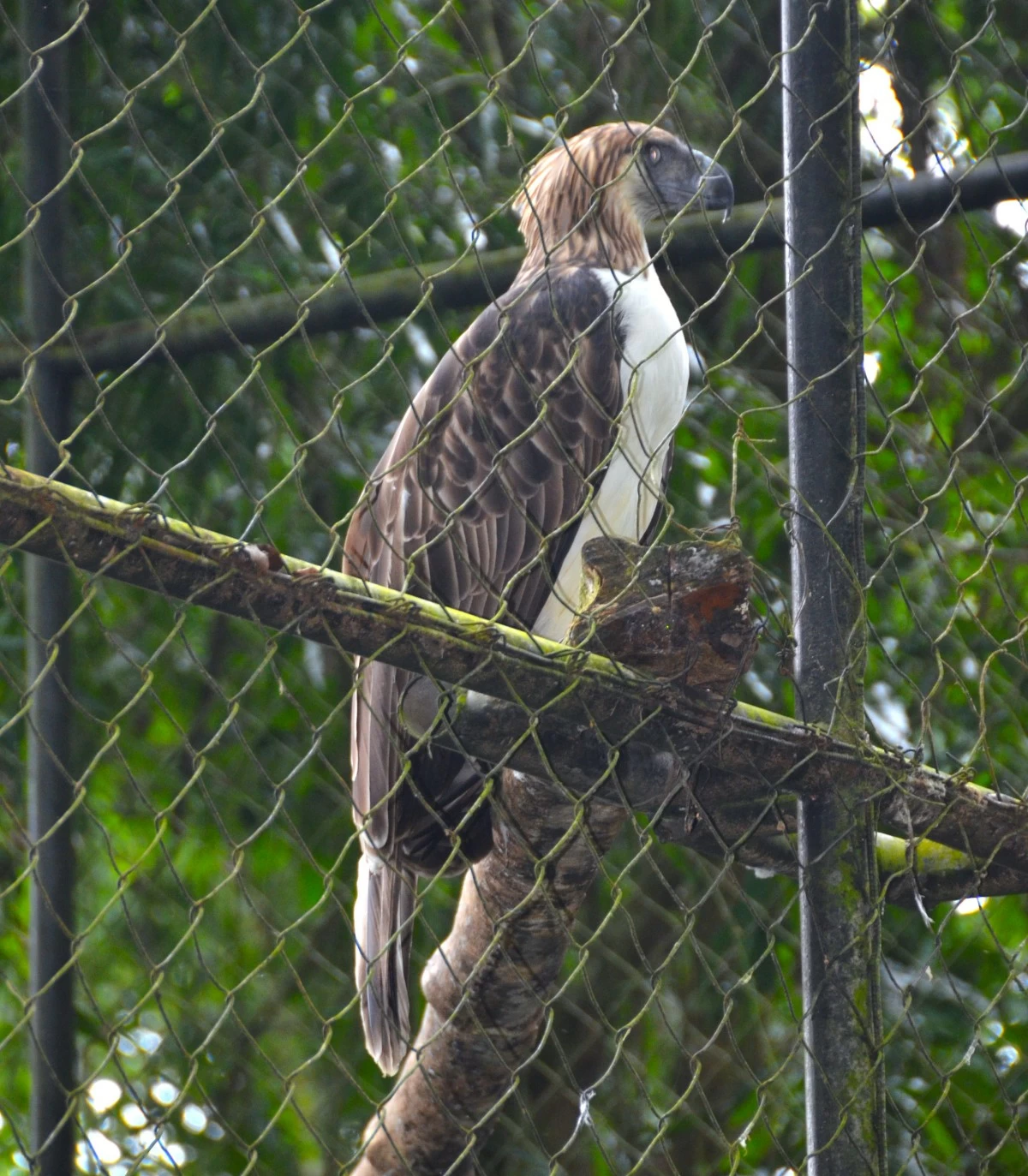
Most of the Philippine eagles at the Philippine Eagle Center are kept in cages.
“The success of captive breeding, particularly with Pag-asa, brought national attention to the plight of the species and was probably instrumental in making it our national bird,” he pointed out.
Still, the future of the Philippine eagle remains bleak. The country’s remaining forests reportedly can support only an average of 392 pairs of Philippine eagles.
“That’s the average,” Dr. Jayson C. Ibanez, director of PEF’s research and conservation division, said in a text message. “The maximum number of pairs that the sustainable predicted suitable forest habitat can possibly contain is 447 pairs.”
Like many other bird species, Philippine eagles also face threats from hunting and shooting. These remain among the major dangers to the species, with juvenile eagles considered especially vulnerable.
“At least one Philippine eagle is killed every year because of shooting,” PEF said.
Disease is another threat.
A retrospective study conducted from 1970 to 2006 examined the causes of mortality among birds admitted from the wild and those hatched in captivity at the Philippine Eagle Center.
The study found that the leading cause of death among wild-caught birds was unknown factors (44.4 percent), followed by infectious disease (25 percent), metabolic and nutritional disease (16.7 percent), trauma (11.1 percent), and neoplasia (2.8 percent).
Among captive-bred eagles, mortality was linked to congenital anomalies, metabolic disease, pneumonia, and electrocution.