






Manila Bulletin
 Philippines
National
Philippines protests Chinese structure in Scarborough Shoal ahead of arbitral ruling anniversary
Philippines
National
Philippines protests Chinese structure in Scarborough Shoal ahead of arbitral ruling anniversary
Philippines
National
Philippines protests Chinese structure in Scarborough Shoal ahead of arbitral ruling anniversary
Philippines protests Chinese structure in Scarborough Shoal ahead of arbitral ruling anniversary
DFA's protest over a reported floating structure in Bajo de Masinloc highlights ongoing tensions in the West Philippine Sea weeks before the 10th anniversary of the 2016 arbitral ruling
Published Jun 10, 2026 12:33 pm
|
Updated Jun 10, 2026 01:55 pm


At A Glance
- The Philippines filed a diplomatic protest against a Chinese floating structure spotted in Bajo de Masinloc.
- The dispute has renewed attention to the 2016 arbitral ruling, which found no legal basis for China's claims to historic rights within the nine-dash line, but which Beijing continues to reject.
- An overwhelming 86% of Filipinos support working with allies such as the United States and Japan to defend the West Philippine Sea.
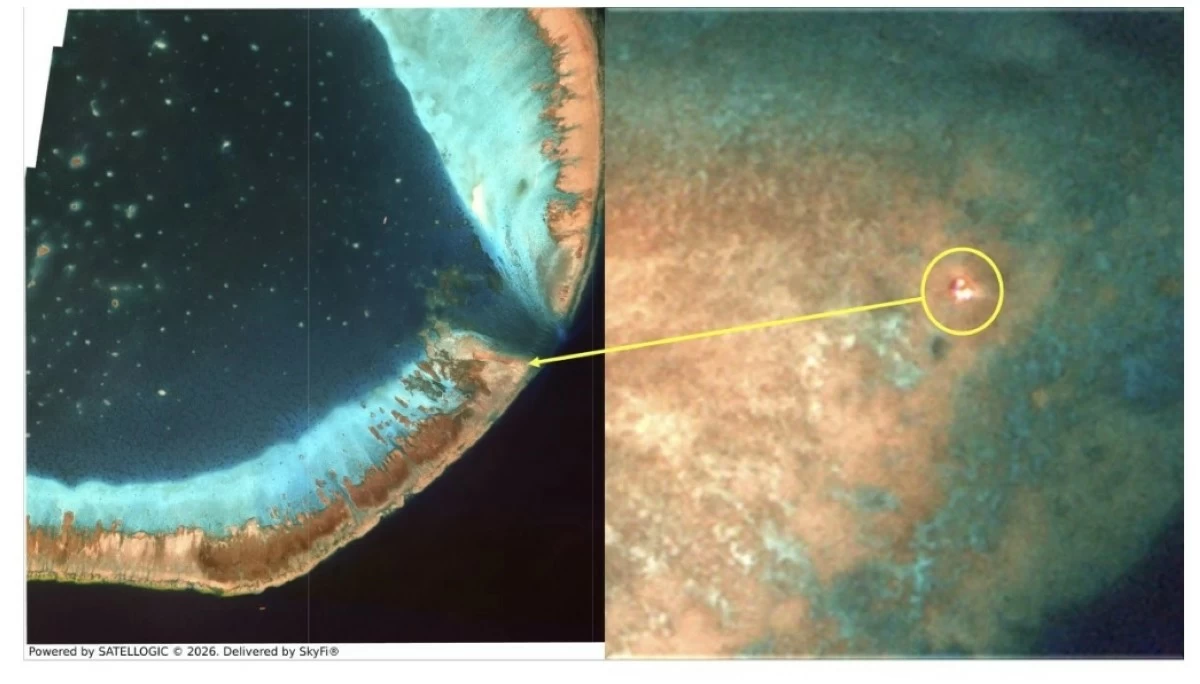
A reported Chinese floating structure in Bajo de Masinloc has prompted a Philippine diplomatic protest, highlighting continuing tensions in the West Philippine Sea as the country approaches the 10th anniversary of its landmark 2016 arbitral victory. Commercial satellite imagery captured on May 28, 2026, by Satellogic and Sealight shows a small, reflective object near the lagoon entrance of Bajo de Masinloc (Scarborough or Panatag Shoal) in the West Philippine Sea. (Courtesy of SeaLight via Ray Powell/X, formerly Twitter).
The Philippine government has lodged a diplomatic protest and issued several demarches against China over the presence of a floating structure in Bajo de Masinloc (Scarborough Shoal), a move that underscores continuing tensions in the West Philippine Sea nearly a decade after Manila's landmark arbitral victory.
Department of Foreign Affairs (DFA) spokesperson Analyn Ratonel confirmed on June 9 that Manila had already undertaken diplomatic action following reports from the Armed Forces of the Philippines (AFP) and the Philippine Coast Guard (PCG) regarding the structure's presence within the disputed shoal.
Philippines lodges diplomatic protest
“The DFA has undertaken the appropriate diplomatic action, such as several demarches and the issuance of a formal protest, against the structure in Bajo de Masinloc reported by the AFP and the PCG,” Ratonel said.
"We are unable to discuss the specific contents of the demarches and the diplomatic protest any further as these are confidential communications," she added.
In a separate statement issued the same day, the DFA emphasized that the protection of Philippine sovereignty, sovereign rights, and jurisdiction remains a paramount consideration.
“The Department of Foreign Affairs has already undertaken appropriate diplomatic action with the government of the People’s Republic of China in connection with the illegal presence of this floating structure,” the DFA said.
“The Philippine Government will continue to take appropriate actions consistent with international law and in defense of the country's national interests,” it added.
READ:
‘Floating structure’ raises new concerns
According to the National Task Force for the West Philippine Sea (NTF-WPS), aerial surveillance confirmed the presence of a “floating” platform measuring approximately six by six meters and equipped with what appeared to be an antenna.
Recent imagery obtained by the AFP showed personnel stationed atop the structure, while PCG monitoring indicated that the platform remains within the shoal with several individuals on board.
Authorities are still monitoring developments to “further assess the nature, purpose, and implications of the installation and related activities” within the shoal.
Competing legal claims, China rejects arbitral ruling anew
The discovery quickly revived longstanding legal and diplomatic disagreements between Manila and Beijing.
The Philippines maintains that Bajo de Masinloc falls within its maritime zones under the 1982 United Nations Convention on the Law of the Sea (UNCLOS) and is covered by the rights affirmed under the 2016 arbitral award.
China, however, insists that Huangyan Dao—the Chinese name for Scarborough Shoal—is its inherent territory.
Chinese Embassy spokesperson Ji Lingpeng, in a statement sent to reporters on June 9, said China has “indisputable sovereignty” over Huangyan Dao and its adjacent waters.
“It is fully within China’s sovereign rights to carry out activities, including scientific research, at Huangyan Dao,” Ji said.
He also reiterated Beijing's longstanding rejection of the 2016 arbitral ruling, describing it as “illegal, null and void.”
“China does not accept or recognize it, and will never accept any claim or action based on the award,” Ji said.
The competing positions underscore a persistent reality in the West Philippine Sea dispute: while the arbitral ruling clarified maritime entitlements under international law, it did not settle sovereignty claims over Scarborough Shoal.
A decade after the arbitral victory
The latest development comes just weeks before the Philippines marks the 10th anniversary of the landmark arbitral ruling issued on July 12, 2016.
The decision ruled that China's claims to historic rights within the nine-dash line had no legal basis under UNCLOS and affirmed the Philippines' maritime entitlements within its exclusive economic zone.
Why the 2016 Hague ruling still matters
Yet nearly a decade later, the appearance of another contested structure highlights the limits of legal victories when enforcement mechanisms remain weak and rival claimants continue to assert competing maritime claims.
For Manila, the ruling remains a powerful diplomatic and legal instrument. For Beijing, however, the decision remains rejected, allowing tensions and competing maritime claims to persist across disputed waters.
The incident highlights the continuing challenge facing Philippine policymakers: translating international legal recognition into effective protection of maritime rights and national interests.
BBNJ treaty adds new legal dimension
The controversy also coincides with the implementation of the Biodiversity Beyond National Jurisdiction (BBNJ) Agreement, a new treaty under UNCLOS aimed at protecting marine biodiversity in areas beyond national jurisdiction.
During a forum organized by the Stratbase Institute and the Embassy of France in the Philippines on June 9, policy experts said the BBNJ Agreement reinforces environmental principles recognized in the 2016 arbitral ruling.
Stratbase Institute President Victor Andres “Dindo” Manhit noted that the tribunal's decision was not only about maritime rights but also about environmental responsibility.
The arbitral tribunal found that China had violated its obligations under UNCLOS by failing to prevent the destructive harvesting of endangered marine species and by causing severe environmental damage through large-scale island-building activities.
Manhit said the BBNJ Agreement strengthens legal mechanisms for protecting marine ecosystems and complements the environmental principles established by the arbitral award.
Carpio warns over China's BBNJ interpretation
In the same forum, former Supreme Court Senior Associate Justice Antonio Carpio also raised concerns about China's interpretation of the BBNJ Agreement.
Although China has ratified the treaty, Carpio noted that Beijing maintains that the agreement does not affect its claims in the South China Sea.
“For China, the High Seas Treaty does not apply to the high seas of the South China Sea,” he said.
Carpio warned that Manila may need to formally object to any interpretation suggesting China has jurisdiction over high seas areas in the South China Sea, arguing that failure to do so could create an impression of acquiescence under international law.
“To prevent acquiescence from setting in, the Philippines must object in a timely manner to China’s declaration that China has jurisdiction over the high seas in the South China Sea,” he said.
“We have to protest within one year from September 2025,” Carpio stressed. “The Philippines must initiate the protest because otherwise we will have implicitly acquiesced to it,” he added.
Carpio’s remarks illustrate how emerging international agreements are becoming increasingly intertwined with longstanding maritime and territorial disputes in the region.
Growing international attention
The incident also comes amid expanding maritime cooperation among the Philippines, the United States, and Japan.
During the second U.S.-Japan-Philippines Trilateral Maritime Dialogue held in Manila on June 8, officials discussed deeper cooperation on maritime security, joint exercises, foreign assistance coordination, and capacity-building initiatives.
While the dialogue did not directly address the floating structure, it underscored how maritime security concerns in the West Philippine Sea have become increasingly internationalized.
In a media note, U.S. Department of State spokesperson Thomas Pigott said the three countries discussed areas to deepen maritime cooperation in support of a shared vision of a free and open Indo-Pacific.
The discussions included “trilateral alignment of foreign assistance, joint operations and exercises, and capacity-building initiatives,” he said.
Filipinos favor stronger alliances on WPS
Meanwhile, public support for deeper cooperation with like-minded nations also appears strong.
According to a Pulse Asia survey commissioned by the Stratbase Institute, 86 percent of Filipinos agree that the Philippines should work with countries such as the United States, Japan, Australia, Canada, and South Korea to defend the West Philippine Sea in accordance with the 2016 arbitral award.
The survey, conducted from May 3 to 7, 2026, among 1,500 respondents nationwide, was released ahead of the country's 128th Independence Day celebration and just weeks before the ruling's 10th anniversary.
In a statement issued on Wednesday, June 10, Manhit said the findings demonstrate that Filipinos recognize the importance of combining legal victories with sustained international cooperation.
“Filipinos clearly recognize that upholding the 2016 arbitral award and strengthening cooperation with like-minded nations are essential components of preserving our independence in the 21st century,” he said.
“As we mark a decade of our victory at The Hague, we must do our part in defending our hard-won triumph so that future generations inherit a nation that is free, secure, and respected in the international community,” he added.
The survey found particularly strong support in Mindanao, where 91 percent agreed with the statement, followed by the National Capital Region at 90 percent.
Only three percent disagreed, while the remainder were undecided or could not say whether they agreed or disagreed.
Respondents were also asked which countries or organizations the Philippines should work with in defending the West Philippine Sea. The United States emerged as the top choice, supported by 84 percent of respondents, followed by Japan (67 percent), Australia (57 percent), Canada (51 percent), and South Korea (44 percent).
Manhit said the results send a clear signal to policymakers amid continuing tensions in the West Philippine Sea.
“The Philippines must remain firm in defending its rights while working closely with allies and partners that uphold international law and support a free, open, and rules-based Indo-Pacific,” he said.
Manhit noted that the 2016 arbitral award “remains a cornerstone of our lawful claims in the West Philippine Sea.”
He added that the survey results also showed that “Filipinos want the government to continue pursuing a strategy that combines principled diplomacy, credible defense, and strong partnerships with like-minded nations.”