

ADVERTISEMENT

Most Mindanao earthquake damage uninsured—AM Best

Published Jun 10, 2026 06:00 pm  |  Updated Jun 10, 2026 02:05 pm

At A Glance

  • United States (US)-headquartered AM Best expects the Philippine insurance industry to bear limited financial pressure from the destructive magnitude 7.8 earthquake in Mindanao, as a large portion of domestic property and infrastructure remains uninsured.
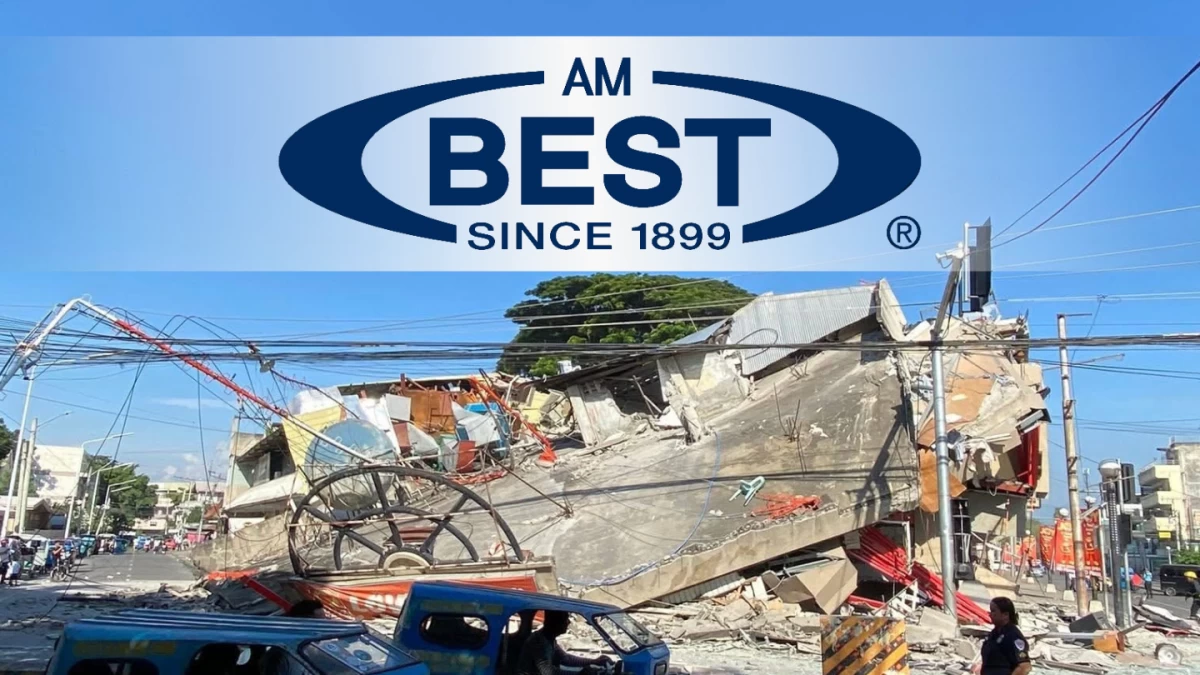
Local insurance sector is expected to escape severe financial strain following the destructive magnitude 7.8 earthquake in Mindanao, as significant portion of the country’s domestic property and infrastructure is uninsured.
In a commentary published on Tuesday, June 9, global credit rating agency AM Best noted that insured losses from the disaster will likely represent only a small fraction of the total economic damage.
“Due to the catastrophe protection gap in the Philippines, insured losses from damage caused by a recent 7.8-magnitude earthquake in the Mindanao region are expected to be limited and a small fraction of total economic damage,” the agency wrote.
AM Best believes the country’s non-life insurance market “will absorb the primary layer of exposure through a risk-sharing programme involving direct policies and the Philippine Catastrophe Insurance Facility (PCIF), which was established to pool domestic catastrophe risk.”
This remains the credit rating agency’s expectation even as the full extent of insured losses is still being assessed and costs remain unquantified. Yet despite this display of resilience, local insurers have increasingly shouldered more risk to manage expenses.
Susan Tan, senior financial analyst at AM Best, said domestic insurance companies are retaining more disaster risk on their own books because buying global reinsurance has become too costly. While avoiding these high costs could allow insurers to hit their profitability targets, it also renders them more financially vulnerable to major catastrophes.
Tan warned that this shift has “heightened sensitivity to climate risks and exposed inaccuracies in traditional risk models,” which could lead to elevated underwriting volatility.
Meanwhile, Victoria Ohorodnyk, AM Best senior director of analytics, pointed out that while the Mindanao earthquake was destructive, a catastrophe hitting Manila—the Philippines’ main commercial hub—would pose a far more severe threat to the insurance industry’s stability.
“A greater risk for insurers would be if an event happens in one of the more commercial centers in the country, such as Manila,” Ohorodnyk said.
According to the Philippine Insurers and Reinsurers Association, Inc. (PIRA), non-life insurers anticipate losses from the earthquake in General Santos City and Sarangani, as early reports have already detailed damage to covered assets.
PIRA and its member companies stated that the industry group stands ready to process and settle claims promptly and fairly. The group expects a clearer assessment of the total destruction to emerge over the next several weeks as they continue to monitor the situation on the ground.
PIRA Executive Director Michael Ferre Rellosa said the earthquake serves as a stark reminder of the country’s inherent vulnerability. Aside from seismic activity, Rellosa noted that the country is currently witnessing a flurry of volcanic unrest, while a strong La Niña is projected to worsen the upcoming typhoon season.
In light of these compounding threats, PIRA reaffirmed its commitment to working with regulators and government partners to deepen catastrophe insurance penetration across the country.

Related Tags

insurance Mindanao earthquake
ADVERTISEMENT
.most-popular .layout-ratio{ padding-bottom: 79.13%; } @media (min-width: 768px) and (max-width: 1024px) { .widget-title { font-size: 15px !important; } }

{{ articles_filter_1561_widget.title }}

.most-popular .layout-ratio{ padding-bottom: 79.13%; } @media (min-width: 768px) and (max-width: 1024px) { .widget-title { font-size: 15px !important; } }

{{ articles_filter_1562_widget.title }}

.most-popular .layout-ratio{ padding-bottom: 79.13%; } @media (min-width: 768px) and (max-width: 1024px) { .widget-title { font-size: 15px !important; } }

{{ articles_filter_1563_widget.title }}

{{ articles_filter_1564_widget.title }}

.mb-article-details { position: relative; } .mb-article-details .article-body-preview, .mb-article-details .article-body-summary{ font-size: 17px; line-height: 30px; font-family: "Libre Caslon Text", serif; color: #000; } .mb-article-details .article-body-preview iframe , .mb-article-details .article-body-summary iframe{ width: 100%; margin: auto; } .read-more-background { background: linear-gradient(180deg, color(display-p3 1.000 1.000 1.000 / 0) 13.75%, color(display-p3 1.000 1.000 1.000 / 0.8) 30.79%, color(display-p3 1.000 1.000 1.000) 72.5%); position: absolute; height: 200px; width: 100%; bottom: 0; display: flex; justify-content: center; align-items: center; padding: 0; } .read-more-background a{ color: #000; } .read-more-btn { padding: 17px 45px; font-family: Inter; font-weight: 700; font-size: 18px; line-height: 16px; text-align: center; vertical-align: middle; border: 1px solid black; background-color: white; } .hidden { display: none; }
function initializeAllSwipers() { // Get all hidden inputs with cms_article_id document.querySelectorAll('[id^="cms_article_id_"]').forEach(function (input) { const cmsArticleId = input.value; const articleSelector = '#article-' + cmsArticleId + ' .body_images'; const swiperElement = document.querySelector(articleSelector); if (swiperElement && !swiperElement.classList.contains('swiper-initialized')) { new Swiper(articleSelector, { loop: true, pagination: false, navigation: { nextEl: '#article-' + cmsArticleId + ' .swiper-button-next', prevEl: '#article-' + cmsArticleId + ' .swiper-button-prev', }, }); } }); } setTimeout(initializeAllSwipers, 3000); const intersectionObserver = new IntersectionObserver( (entries) => { entries.forEach((entry) => { if (entry.isIntersecting) { const newUrl = entry.target.getAttribute("data-url"); if (newUrl) { history.pushState(null, null, newUrl); let article = entry.target; // Extract metadata const author = article.querySelector('.author-section').textContent.replace('By', '').trim(); const section = article.querySelector('.section-info ').textContent.replace(' ', ' '); const title = article.querySelector('.article-title h1').textContent; // Parse URL for Chartbeat path format const parsedUrl = new URL(newUrl, window.location.origin); const cleanUrl = parsedUrl.host + parsedUrl.pathname; // Update Chartbeat configuration if (typeof window._sf_async_config !== 'undefined') { window._sf_async_config.path = cleanUrl; window._sf_async_config.sections = section; window._sf_async_config.authors = author; } // Track virtual page view with Chartbeat if (typeof pSUPERFLY !== 'undefined' && typeof pSUPERFLY.virtualPage === 'function') { try { pSUPERFLY.virtualPage({ path: cleanUrl, title: title, sections: section, authors: author }); } catch (error) { console.error('ping error', error); } } // Optional: Update document title if (title && title !== document.title) { document.title = title; } } } }); }, { threshold: 0.1 } ); function showArticleBody(button) { const article = button.closest("article"); const summary = article.querySelector(".article-body-summary"); const body = article.querySelector(".article-body-preview"); const readMoreSection = article.querySelector(".read-more-background"); // Hide summary and read-more section summary.style.display = "none"; readMoreSection.style.display = "none"; // Show the full article body body.classList.remove("hidden"); } document.addEventListener("DOMContentLoaded", () => { let loadCount = 0; // Track how many times articles are loaded const offset = [1, 2, 3, 4, 5, 6, 7, 8, 9, 10]; // Offset values const currentUrl = window.location.pathname.substring(1); let isLoading = false; // Prevent multiple calls if (!currentUrl) { console.log("Current URL is invalid."); return; } const sentinel = document.getElementById("load-more-sentinel"); if (!sentinel) { console.log("Sentinel element not found."); return; } function isSentinelVisible() { const rect = sentinel.getBoundingClientRect(); return ( rect.top < window.innerHeight && rect.bottom >= 0 ); } function onScroll() { if (isLoading) return; if (isSentinelVisible()) { if (loadCount >= offset.length) { console.log("Maximum load attempts reached."); window.removeEventListener("scroll", onScroll); return; } isLoading = true; const currentOffset = offset[loadCount]; window.loadMoreItems().then(() => { let article = document.querySelector('#widget_1690 > div:nth-last-of-type(2) article'); intersectionObserver.observe(article) loadCount++; }).catch(error => { console.error("Error loading more items:", error); }).finally(() => { isLoading = false; }); } } window.addEventListener("scroll", onScroll); });

Sign up by email to receive news.