






Manila Bulletin
 Philippines
National
Lazaro highlights regional cooperation at Nikkei Future of Asia Forum in Tokyo
Philippines
National
Lazaro highlights regional cooperation at Nikkei Future of Asia Forum in Tokyo
Philippines
National
Lazaro highlights regional cooperation at Nikkei Future of Asia Forum in Tokyo
Lazaro highlights regional cooperation at Nikkei Future of Asia Forum in Tokyo
Philippine foreign affairs chief cites the shared values of "kizuna" and "bayanihan" as foundations for stronger regional cooperation, peace, and resilience across Asia
Published Jun 10, 2026 06:37 pm


At A Glance
- Lazaro called for stronger regional cooperation and solidarity to address political, economic, climate, and technological challenges facing Asia.
- The Philippines reaffirmed its commitment to ASEAN centrality, rules-based maritime governance, and stronger Indo-Pacific partnerships.
- Lazaro highlighted the shared values of Japan's "kizuna" and the Filipino spirit of "bayanihan" as key drivers of regional peace, resilience, and prosperity.
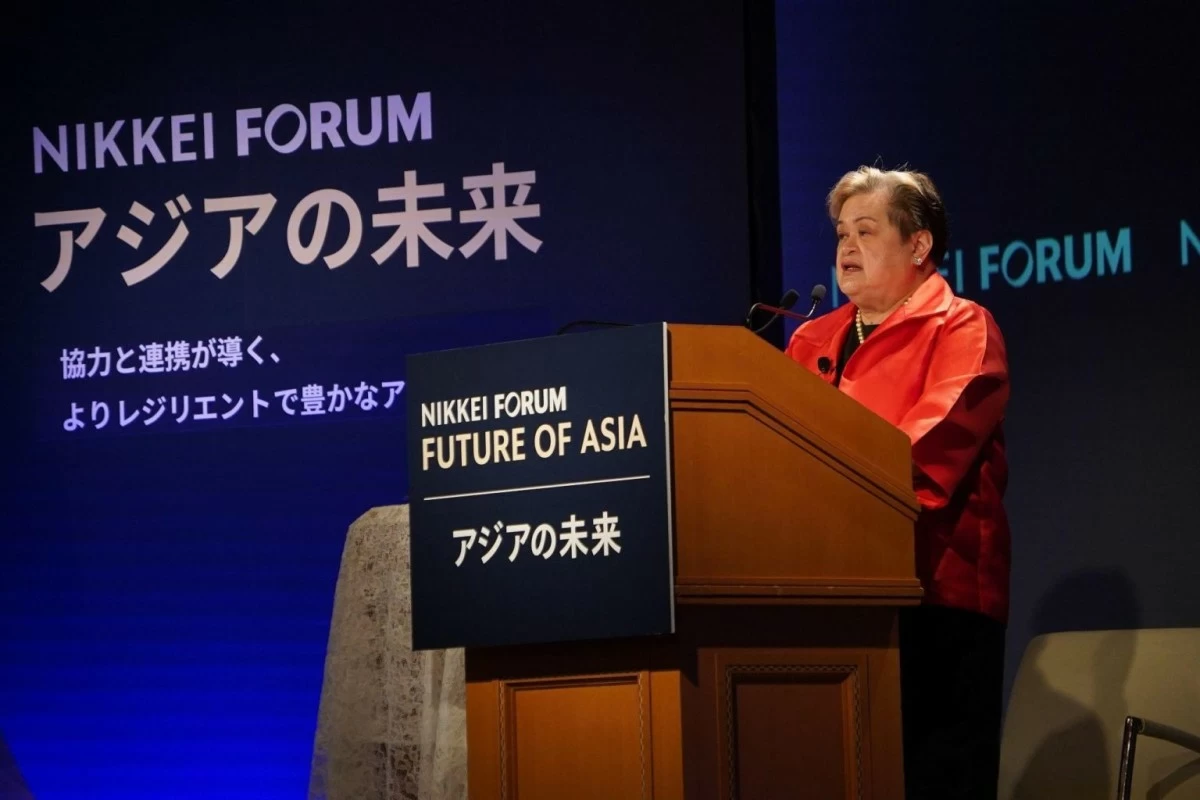
Department of Foreign Affairs (DFA) Secretary Ma. Theresa Lazaro addresses regional leaders at the 31st Nikkei Future of Asia Forum in Tokyo, highlighting regional cooperation, ASEAN centrality, and stronger Philippines-Japan relations amid global challenges. (Courtesy of DFA)
Department of Foreign Affairs (DFA) Secretary Ma. Theresa Lazaro underscored the importance of regional cooperation, solidarity, and adherence to international law as she joined Asian leaders and policymakers at the 31st Nikkei Future of Asia Forum in Tokyo on Wednesday, June 10.
In a statement, the DFA said Lazaro is in Tokyo from June 9 to 11 to participate in the annual forum, one of Asia’s premier conferences on political, economic, and strategic issues affecting the region and the broader Indo-Pacific.
During the forum, themed “Working Together for a More Resilient and Prosperous Asia,” Lazaro said cooperation among nations has become increasingly important amid what she described as a global “polycrisis” marked by political instability, economic uncertainty, climate-related challenges, and rapid technological change.
The foreign affairs chief highlighted the shared values embodied by the Japanese concept of “kizuna,” or bonds of solidarity, and the Filipino spirit of “bayanihan,” emphasizing that collective action is essential in addressing regional and global challenges.
Lazaro also stressed the importance of “collective action, adherence to international law, and regional cooperation in advancing peace, resilience, and shared prosperity.”
She reaffirmed the Philippines’ commitment to strengthening ASEAN centrality, enhancing economic security, promoting rules-based maritime governance, and deepening cooperation with Japan and other like-minded partners.
On the sidelines of the forum, Lazaro met with Nikkei executives and members of the Japanese media to discuss regional developments and opportunities for cooperation.
As part of her Tokyo visit, Lazaro attended a reception hosted by the Philippine Embassy on June 9, marking the 128th Anniversary of Philippine Independence and the 70th anniversary of the normalization of diplomatic relations between the Philippines and Japan.
During the event, she highlighted the longstanding friendship between the two countries and reaffirmed Manila’s commitment to expanding cooperation with Tokyo under the Philippines-Japan Comprehensive Strategic Partnership.
Lazaro likewise met with officials of the ASEAN+3 Macroeconomic Research Office (AMRO) and the Economic Research Institute for ASEAN and East Asia (ERIA) to discuss developments related to the Philippines’ ASEAN chairship this year and broader regional economic cooperation initiatives.
Established in 1995, the Nikkei Future of Asia Forum brings together political leaders, business executives, academics, and policy experts from across the region to discuss pressing economic, political, and security issues and to promote dialogue on Asia’s shared future.