






 Business
Banking & Finance
Fitch downgrades outlook on Philippine banks to 'deteriorating' as US-Iran war threatens lending growth
Business
Banking & Finance
Fitch downgrades outlook on Philippine banks to 'deteriorating' as US-Iran war threatens lending growth
Fitch downgrades outlook on Philippine banks to 'deteriorating' as US-Iran war threatens lending growth
By Derco Rosal


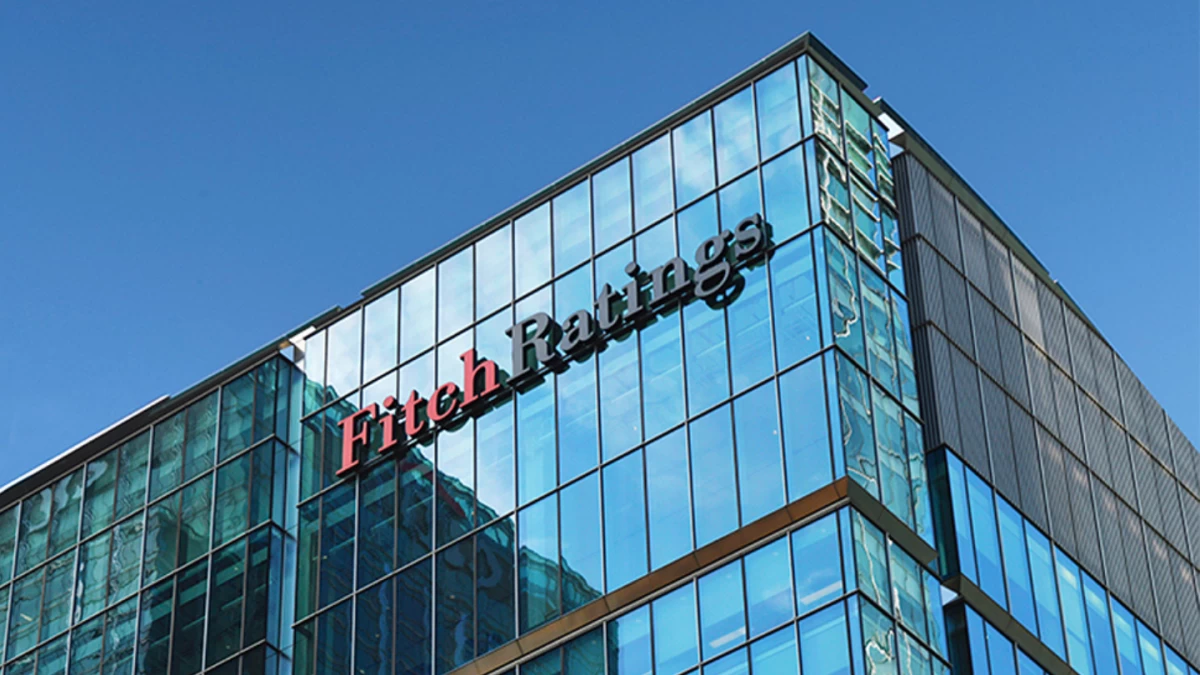
Global debt watcher Fitch Ratings has lowered its outlook on the Philippine banking system to “deteriorating,” warning that exposure to the ongoing United States (US)-Iran war could dampen lending activity, raise credit costs, and squeeze profitability.
Fitch wrote in a June 8 commentary that Asia-Pacific’s (APAC) heavy reliance on oil and gas sourced from the Middle East Gulf “renders the region vulnerable to higher inflation and weaker growth in the wake of the US-Iran conflict.”
This comes as ongoing military hostilities between the US and Iran have effectively weaponized the Strait of Hormuz, a critical chokepoint for global oil shipments through which roughly a fifth of the world’s oil passes.
Ninety-eight percent of the Philippines’ crude oil imports are sourced from the Middle East.
As one of the largest net oil-importing countries relative to gross domestic product (GDP), the Philippines stands to bear the brunt of global oil disruptions.
According to Fitch, this heightened vulnerability prompted a downward revision in the credit rater’s outlook for local banks. In particular, the midyear outlook slipped from “neutral” to “deteriorating,” placing the country among the region’s weaker-performing markets.
“Weaker domestic demand and tighter policy settings are likely to drive credit deterioration in the region’s more vulnerable markets,” Fitch said, adding that overheating inflation is “hurting” the Philippines’ consumption-led economy.
Inflation peaked at a more-than-three-year high of 7.2 percent in April before easing to 6.8 percent in May. While price pressures appeared to be cooling, the latest reading remained above the government’s four-percent ceiling, which is considered manageable and conducive to economic growth.
Domestic economic growth in the first quarter slowed to a five-year low of 2.8 percent, which, alongside higher inflation, sparked debates about whether the Philippines is slipping into a period of stagflation.
Department of Economy, Planning, and Development (DEPDev) Secretary Arsenio M. Balisacan earlier said the weak first-quarter growth was due to a combination of governance issues carried over from 2025, a slump in government spending, and the eruption of the Middle East conflict.
This stagflationary pressure clouded the credit rater’s economic outlook, feeding through to its assessment of the banking sector.
“We also expect weaker loan growth, higher credit costs, and lower operating profitability, even if higher rates provide some support to margins,” Fitch said.
The latest Bangko Sentral ng Pilipinas (BSP) data showed that universal and commercial banks’ (U/KBs) lending accelerated to its fastest expansion in nine months in April, fueled by a sharp rebound in credit demand from corporate borrowers and steady household spending.
Meanwhile, the share of soured loans in domestic lenders’ loan books rose to an eight-month high of 3.37 percent during the month due to the delayed impact of elevated borrowing rates on borrowers.
Losses from foreign exchange (forex) trading dented the banking industry’s earnings in the first quarter of 2026. However, higher income from interest charged on loans lifted the sector’s three-month income to ₱104.8 billion from ₱101.9 billion in the same period in 2025.
The Philippines shared the same outlook downgrade only with Sri Lanka, which also moved from “neutral” to “deteriorating.” Both countries joined Thailand, whose deteriorating outlook remained unchanged from the start of the year.
These were the only three countries in the region with deteriorating outlooks, while their peers maintained a stable “neutral” outlook throughout 2026, including India, Indonesia, Malaysia, and Vietnam.
China, Hong Kong, and Taiwan all entered the year with deteriorating outlooks but had improved to “neutral” by midyear. Japan remained the only major market in the region with an improving outlook throughout the year.