






Manila Bulletin
 Environment and Sustainability
The Ocean Cleanup launches in the Philippines to tackle plastic pollution
Environment and Sustainability
The Ocean Cleanup launches in the Philippines to tackle plastic pollution
Environment and Sustainability
The Ocean Cleanup launches in the Philippines to tackle plastic pollution
The Ocean Cleanup launches in the Philippines to tackle plastic pollution
Published Jun 9, 2026 05:26 am


When asked to describe his journey with The Ocean Cleanup in a single word, Boyan Slat paused only briefly.
"Solvable."
It is perhaps not the answer one would expect from someone who has spent the last 12 years trying to tackle one of the world's biggest environmental challenges.
After all, plastic pollution is often spoken about as if it were inevitable—too vast, too complex, and too deeply embedded in modern life to ever truly fix.
Slat disagrees.
That belief is what has brought The Ocean Cleanup to the Philippines.
By June 2026, the Dutch non-profit organization's first Interceptor barrier in the country is expected to be operational in the Meycauayan River in Bulacan. It will also be the first Interceptor deployment in the Manila Bay region, marking a significant milestone in The Ocean Cleanup's efforts to stop plastic waste before it reaches the sea.
For many Filipinos, Meycauayan is an unlikely place to begin.
The river forms part of the Marilao-Meycauayan-Obando River System, a watershed long associated with pollution, environmental degradation, and the challenges of balancing economic growth with environmental protection. Over the years, the river system has been the subject of numerous rehabilitation efforts and environmental studies examining the impact of industrial activity, domestic waste, and rapid urbanization.
Yet for Slat, places like Meycauayan are exactly where the fight against ocean plastic needs to happen.
Many people know The Ocean Cleanup for its work in the Great Pacific Garbage Patch, where massive systems are designed to remove floating plastic from the ocean. But over the years, Slat's understanding of the problem has evolved.
Cleaning the ocean, he realized, also means preventing plastic from getting there in the first place.
Research conducted by The Ocean Cleanup suggests that around 1,000 rivers are responsible for roughly 80 percent of the plastic flowing from rivers into the world's oceans. If the goal is to reduce marine plastic pollution at scale, stopping it upstream becomes just as important as removing what is already there.
The Philippines is one of the countries where that challenge is particularly visible.
Each year, an estimated 20,000 to 33,000 tons of plastic waste enter the ocean from the country. According to The Ocean Cleanup's Smart River Survey, annual plastic emissions from the Manila Bay region alone are projected at between 3,500 and 4,400 tons.
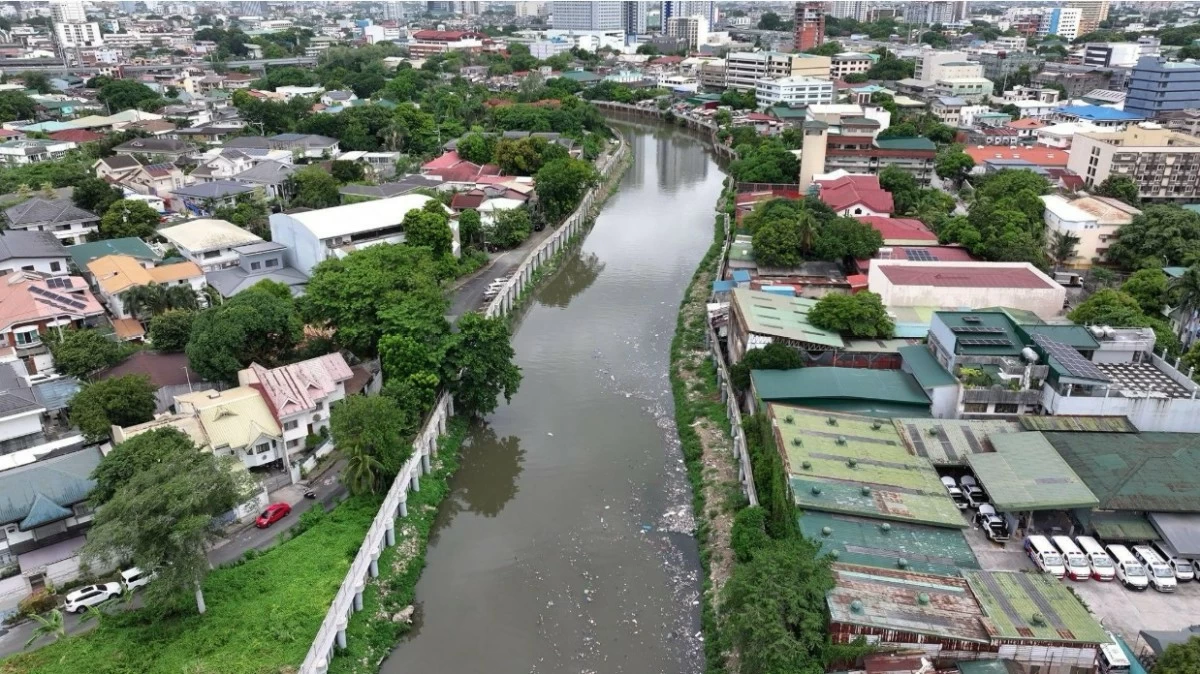
The Meycauayan River contributes to that burden.
Working in partnership with the City Government of Meycauayan and supported by the City Environment and Natural Resources Office (CENRO), The Ocean Cleanup's new Interceptor barrier will replace an existing trash trap and strengthen efforts to capture plastic waste before it reaches Manila Bay. The organization estimates that between 370 and 540 tons of plastic emissions flow annually from the Meycauayan River system into the bay.
For Slat, however, the issue goes far beyond plastic floating in rivers.
One of the biggest lessons he has learned since founding The Ocean Cleanup is that plastic pollution is not simply a consumer problem.
For years, environmental conversations have focused on reducing plastic use, recycling more, and encouraging people to dispose of waste properly. While those actions remain important, Slat believes they tell only part of the story.
In many developing countries, including parts of Asia, the challenge often lies in waste management systems struggling to keep pace with growing populations and increasing consumption.
"Many governments simply can't keep up with waste collection," he said.
It is a perspective that shifts the conversation away from individual blame and toward the larger systems that determine where waste ultimately ends up.
The solution, he argues, cannot rest solely on consumers. It also requires stronger infrastructure, better collection systems, effective policies, funding, and long-term partnerships.
That reality has shaped how The Ocean Cleanup operates today.
The technology itself may be highly visible, but Slat said the harder challenge is often everything surrounding it.
Scaling solutions globally requires permits, operating partners, financing, logistics, and reliable systems for handling the waste once it has been collected. Every river presents different environmental conditions and operational challenges.
The Manila Bay region is no exception.
Flooding patterns, river conditions, and local realities all influence how Interceptor systems are designed and deployed. What works in one country may not necessarily work in another.
That adaptability has become increasingly important as The Ocean Cleanup expands its operations around the world.
The organization has set a goal of removing 90 percent of floating ocean plastic by 2040. Yet Slat believes that the target could potentially be achieved sooner than originally anticipated if support, funding, and deployment efforts continue to accelerate.
The confidence comes from seeing how far the organization has already come.
When The Ocean Cleanup was founded in 2013, many experts questioned whether large-scale ocean cleanup was even possible. Some argued that plastic was too dispersed. Others believed the engineering challenges were simply too great.
Ironically, some of that criticism ultimately helped improve the technology.
Early assumptions about how plastic behaved in the ocean were challenged through research and testing, leading to a better understanding of how waste moves through aquatic environments and how it can be collected more effectively.
What began as a seemingly impossible idea has since grown into a global organization operating across 10 countries. As of March 2025, The Ocean Cleanup has removed more than 50 million kilograms of waste from aquatic ecosystems worldwide.
Still, Slat is reluctant to frame the story as a success already achieved.
The work, he said, is far from over.
That is why partnerships remain central to the organization's approach.
The Meycauayan initiative brings together the City Government of Meycauayan, CENRO, the Embassy of the Philippines in the Netherlands, the Embassy of the Kingdom of the Netherlands in the Philippines, Energies PH, and The Ocean Cleanup itself. The organization also plans to deepen partnerships with local government units and organizations across the country to support research, awareness campaigns, and broader efforts to reduce ocean-bound plastic pollution.
For Meycauayan Mayor Henry Villarica, the collaboration strengthens rehabilitation efforts that have long been underway.
"Our work has never stopped, and this collaboration strengthens our capacity to accelerate meaningful, lasting change," Villarica said in a statement. "We are fully committed to doing everything in our power to rehabilitate our river for the health, dignity, and future of our community."
The deployment of a single Interceptor will not rehabilitate an entire river system.
It will not erase decades of environmental pressures affecting Meycauayan or solve the broader waste challenges facing Manila Bay.
What it does represent is progress.
For a river long associated with pollution statistics and environmental warnings, the arrival of The Ocean Cleanup offers a tangible effort to prevent waste from continuing its journey downstream.
And for Slat, it is another reminder of why he chose the word "solvable."
Because despite the scale of the challenge, the setbacks, and years of scepticism, he still believes the problem can be fixed.
The work is difficult. The timeline is long. But the destination, he believes, remains within reach.
As someone who has spent years covering sustainability and environmental stories, I left the conversation realizing that Slat's journey is about more than cleaning up plastic. It is a story of persistence, innovation, and challenging assumptions about what is possible.
There is much more to his story than what can fit into a single article—and that is a story for another day.
For now, more information about The Ocean Cleanup and its mission to rid the world's oceans of plastic is available at theoceancleanup.com.