






Manila Bulletin
 Business
The Stock Market
RSA: First runway of ₱735-billion airport could open early
Business
The Stock Market
RSA: First runway of ₱735-billion airport could open early
Business
The Stock Market
RSA: First runway of ₱735-billion airport could open early
RSA: First runway of ₱735-billion airport could open early
Published Jun 9, 2026 05:47 pm


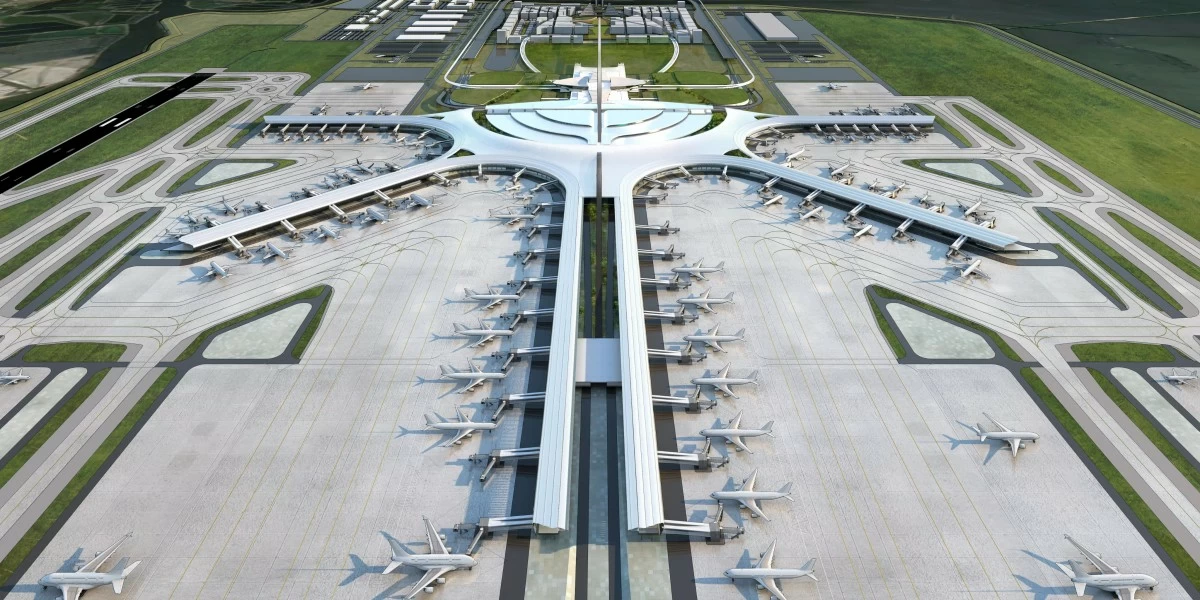
San Miguel Corp. (SMC) may complete the first runway of its ₱735-billion New Manila International Airport ahead of its 2028 timeline, despite construction bottlenecks caused by supply shortages in Manila Bay.
Ramon S. Ang, SMC chairman and chief executive officer, assured shareholders during the firm’s annual meeting that the diversified conglomerate remains on track to deliver this portion of the Bulacan megaproject.
“We are on track to finish the first runway for 2028. In fact, it can even be earlier,” Ang said. “I believe the first runway will be ready by at least the second quarter of 2028. What will delay us a bit is the passenger terminal and the logistics center.”
Ang noted that the logistics center was originally slated for completion by 2025, but is now expected to wrap up by the end of 2026.
He explained that the facility requires about seven million cubic meters of fill sand and has been delayed due to a localized shortage resulting from competing Manila Bay reclamation projects. While the runway faced similar supply constraints, Ang emphasized that it remains insulated from long-term delays and will be operational by 2028.
The New Manila International Airport is envisioned as a major game-changer for the Philippine aviation industry. Strategically located on a vast 2,500-hectare site in Bulakan, Bulacan, the world-class gateway will be developed in phases. Initially designed to handle 35 million passengers annually, it is projected to expand its capacity to 100 million passengers per year upon full completion. This massive private investment aims to significantly ease air traffic congestion at the Ninoy Aquino International Airport (NAIA) and meet the growing demand for air connectivity across the Greater Manila Area and its neighboring regions.
The first phase of the project will lay the groundwork for high-efficiency operations, featuring the construction of two of the planned four parallel runways to allow for simultaneous aircraft movements and accommodate larger commercial planes. A state-of-the-art passenger terminal will also be built during this initial stage, offering top-tier facilities and premium amenities designed to elevate the modern travel experience.
Ultimately, the airport aims to provide safe, convenient, reliable, and efficient air travel services to accommodate both current demands and future growth. Beyond serving the capital, it will cater to the diverse needs of travelers from neighboring economic corridors like Central Luzon and CALABARZON.
The comprehensive project scope spans a wide range of critical infrastructure, including modern airfield facilities, airline support hubs, access roads, dedicated parking structures, utilities, and an integrated airport city. To ensure seamless connectivity, a well-planned transportation network will link the gateway to Metro Manila and various provinces across Luzon, ensuring smooth accessibility for passengers nationwide.