







Education reform must go beyond the classroom
Published Jun 9, 2026 12:05 am
|
Updated Jun 8, 2026 05:18 pm


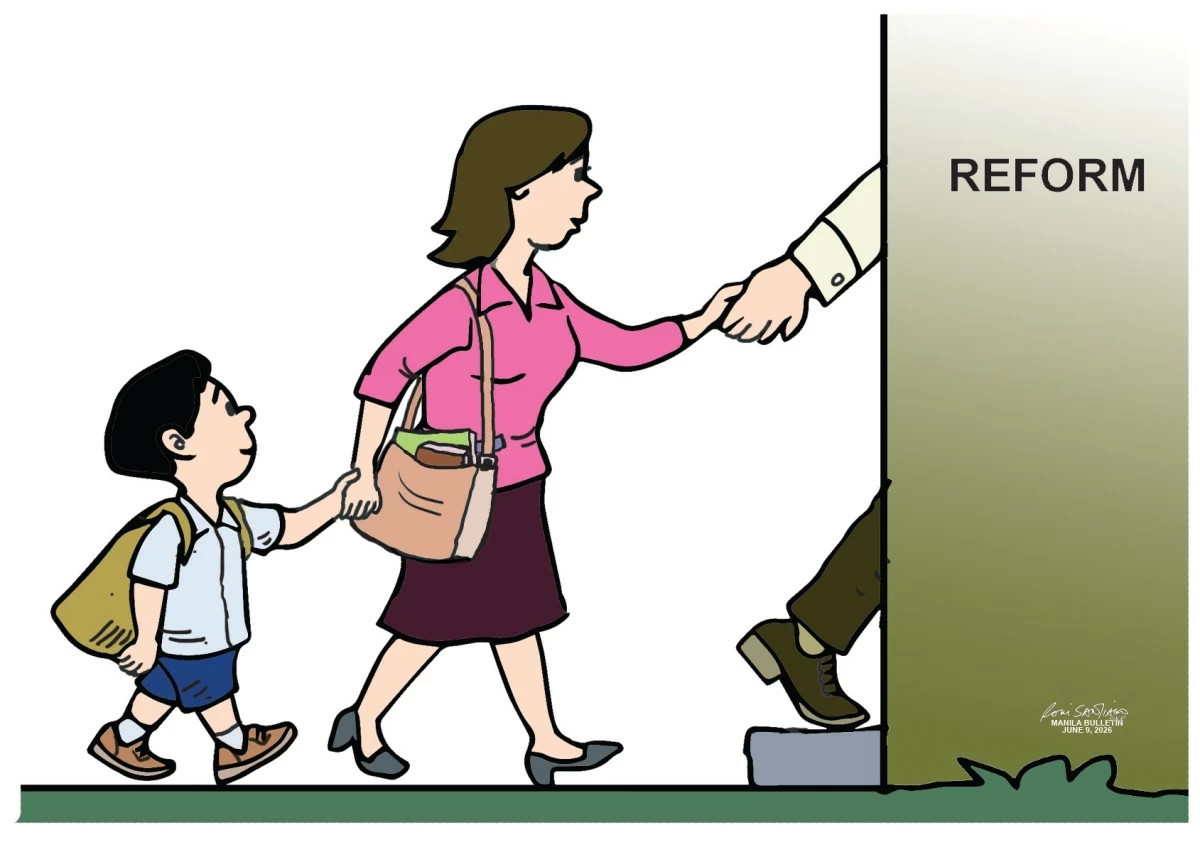
As millions of Filipino learners trooped back to public elementary and secondary schools yesterday, June 8, for the opening of School Year 2026-2027, the nation once again confronts a sobering reality. While access to education has expanded significantly over the decades, the quality of learning remains a persistent challenge.
The latest assessments continue to show Filipino students lagging behind their regional peers in reading, mathematics, and science. Learning losses accumulated during the pandemic years have not been fully reversed. Classroom congestion, teacher workload, resource gaps, and uneven learning outcomes remain stubborn concerns despite the best efforts of education officials and frontline educators.
Against this backdrop, the reforms being pursued by the Department of Education (DepEd) deserve careful attention and sustained support.
The adoption of the Three-Term School Calendar seeks to improve the pacing of instruction, provide more opportunities for remediation, and allow schools greater flexibility in responding to local conditions. If properly implemented, it could help reduce learner fatigue while enabling teachers to focus more effectively on mastery of competencies.
The Learning Continuity in Emergencies framework reflects a hard lesson from the pandemic. Education must continue even during crises. Whether the disruption comes from typhoons, earthquakes, health emergencies, or other unforeseen events, schools must be prepared with alternative delivery modes that ensure learning does not stop.
Equally important are the revised Lesson Planning and Learning Design guidelines. Teachers have long lamented excessive paperwork that consumes time better devoted to actual teaching. By streamlining administrative requirements and encouraging more responsive learning designs, DepEd is moving toward a system that places greater emphasis on classroom engagement and learner outcomes.
The updated Assessment and Grading Policy likewise signals a welcome shift. For too long, grades have often measured compliance rather than genuine understanding. More authentic and competency-based assessments can help educators identify learning gaps earlier and provide timely interventions.
Perhaps the most consequential reform is the Strengthened Senior High School Curriculum. The original K-to-12 program promised graduates who were either college-ready, employment-ready, or entrepreneurship-ready. Yet, many employers and higher education institutions found that these objectives were not consistently achieved. The strengthened curriculum seeks to address this disconnect by focusing on foundational competencies, work readiness, and stronger alignment with industry and higher education requirements.
These reforms, however, will succeed only if they are viewed not as DepEd programs alone but as national responsibilities.
Parents must become active partners in learning rather than mere observers of school performance. Communities, local government units, civil society organizations, faith-based groups, and the private sector must contribute resources, expertise, and support systems that complement classroom instruction. Businesses can help strengthen work immersion programs. Universities can assist in teacher development. Community organizations can support literacy and tutoring initiatives.
Most importantly, a culture of learning must extend beyond school grounds. Education cannot be confined to the classroom, nor can teachers alone be expected to solve problems rooted in poverty, nutrition, digital inequality, and weak family support systems.
The opening of a new school year offers more than a ceremonial fresh start. It presents an opportunity to redefine education as a shared national endeavor. DepEd’s reforms provide a promising framework, but lasting transformation will depend on the collective commitment of government, families, communities, and learners themselves.
The future of Philippine education, upon which the future of the nation rests, demands nothing less.