






Manila Bulletin
 Business
Trade & Industry
DOTr targets one-week recovery for GenSan airport after earthquake
Business
Trade & Industry
DOTr targets one-week recovery for GenSan airport after earthquake
Business
Trade & Industry
DOTr targets one-week recovery for GenSan airport after earthquake
DOTr targets one-week recovery for GenSan airport after earthquake
Published Jun 9, 2026 05:04 pm


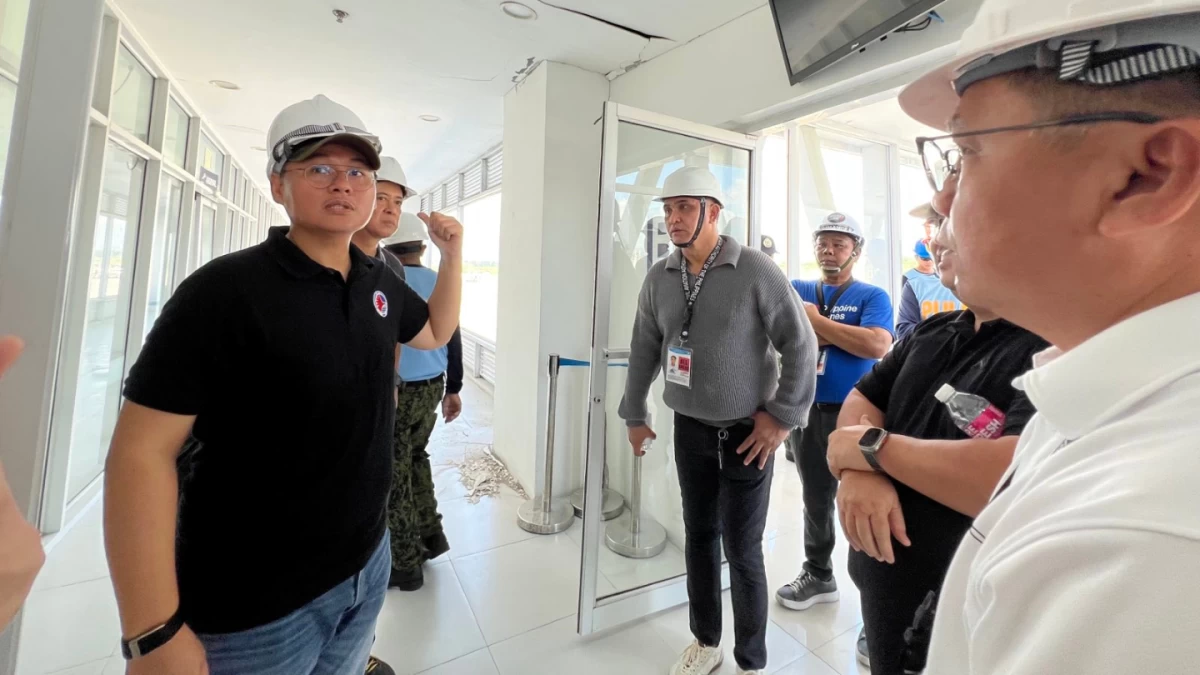
Transportation Secretary Banoy Lopez led the assessment of a severely damaged ceiling at the General Santos Airport passenger terminal building on Tuesday, following a magnitude 7.8 earthquake. The government has halted commercial operations for one week to conduct structural integrity checks and electrical repairs while keeping the runway open for emergency and humanitarian flights. (DOTr photo)
The General Santos Airport reopened for military, humanitarian, government, and cargo flights on Tuesday, June 9, following a powerful 7.8-magnitude earthquake that struck the region.
In a statement, Transportation Secretary Banoy Lopez announced the limited reopening while fast-tracking rehabilitation efforts to restore full commercial operations within a week.
The terminal building sustained visible damage from the tremor, prompting inspections that revealed collapsed ceilings, cracked walls, and shattered glass panels in the airport's control tower.
Following a directive from President Ferdinand Marcos Jr. to assess and secure the structural integrity of transport hubs in the affected areas, Lopez ordered a thorough engineering review.
Repair teams are focusing on the passenger terminal building and the restoration of damaged electrical wiring ahead of the targeted commercial resumption.
“I am giving the Civil Aviation Authority of the Philippines and our personnel here one week to fix a dedicated area so that we can at least resume commercial operations in General Santos City,” Lopez said during a site inspection on Tuesday.
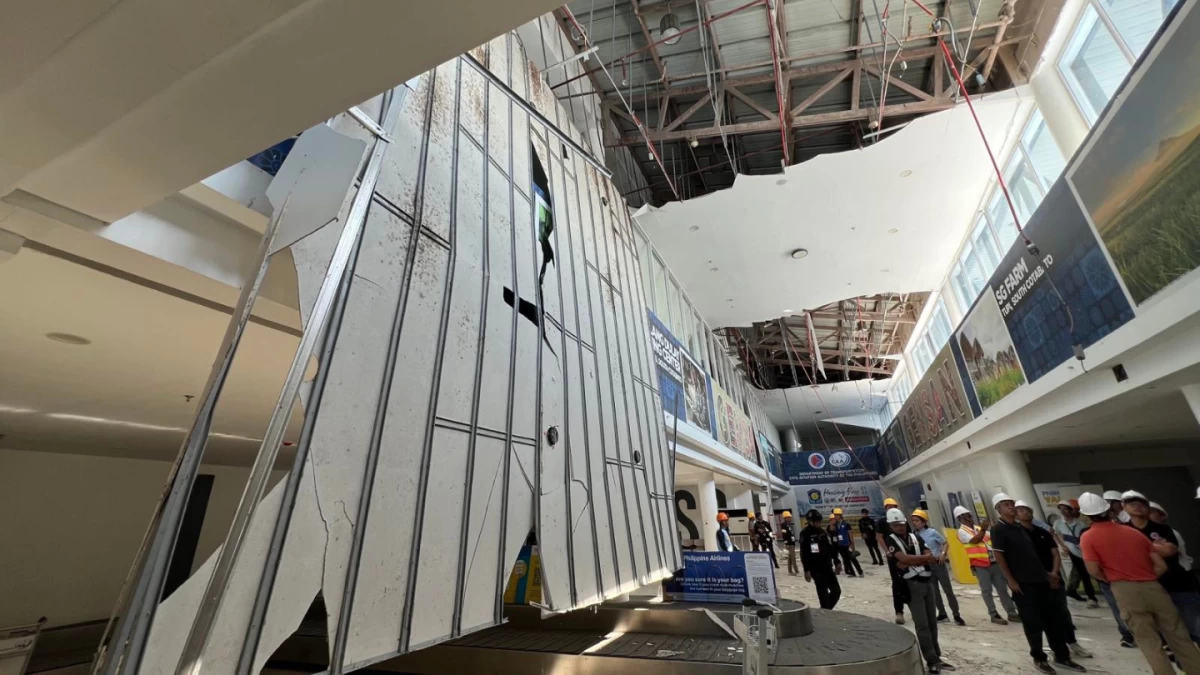
Transportation Secretary Banoy Lopez led the assessment of a severely damaged ceiling at the General Santos Airport passenger terminal building on Tuesday, following a magnitude 7.8 earthquake. The government has halted commercial operations for one week to conduct structural integrity checks and electrical repairs while keeping the runway open for emergency and humanitarian flights. (DOTr photo)
The Department of Transportation and the Civil Aviation Authority of the Philippines are coordinating the safety assessments. Officials emphasized that structural safety would not be compromised for the sake of speed, even as the government aims to quickly reconnect the province to broader commercial networks.
President Marcos instructed transport officials to immediately assess the situation on the ground to ensure relief and logistics channels remain functional. While the administration wants a swift recovery, ensuring the safety of employees and passengers remains the primary concern, Lopez said.
A high-level delegation accompanied the transportation secretary during the inspection, including Senior Undersecretary for Road Transport and Infrastructure Mark Steven Pastor, Undersecretary for Aviation and Airports Jim Sydiongco, Undersecretary for Planning Teodorico Delfin, CAAP Director General Raul Del Rosario, and Deputy Director General Danjun Lucas.
The transportation department has ordered civil aviation authorities to ensure that initial rehabilitation expenses are managed within existing emergency frameworks, though formal cost estimates for the total damage to the facility have yet to be finalized. Officials did not immediately disclose the exact budget allocation required for the reconstruction, but indicated that resources would be deployed rapidly to meet the seven-day timeline.