






 Business
Trade & Industry
Chinese imports unlikely to displace Philippine manufacturing—Moody's
Business
Trade & Industry
Chinese imports unlikely to displace Philippine manufacturing—Moody's
Chinese imports unlikely to displace Philippine manufacturing—Moody's
By Derco Rosal


At A Glance
- Chinese imports are unlikely to displace the Philippine manufacturing base, as these sectors have limited direct trade overlap with the country's exports, according to global debt watcher Moody's Ratings.
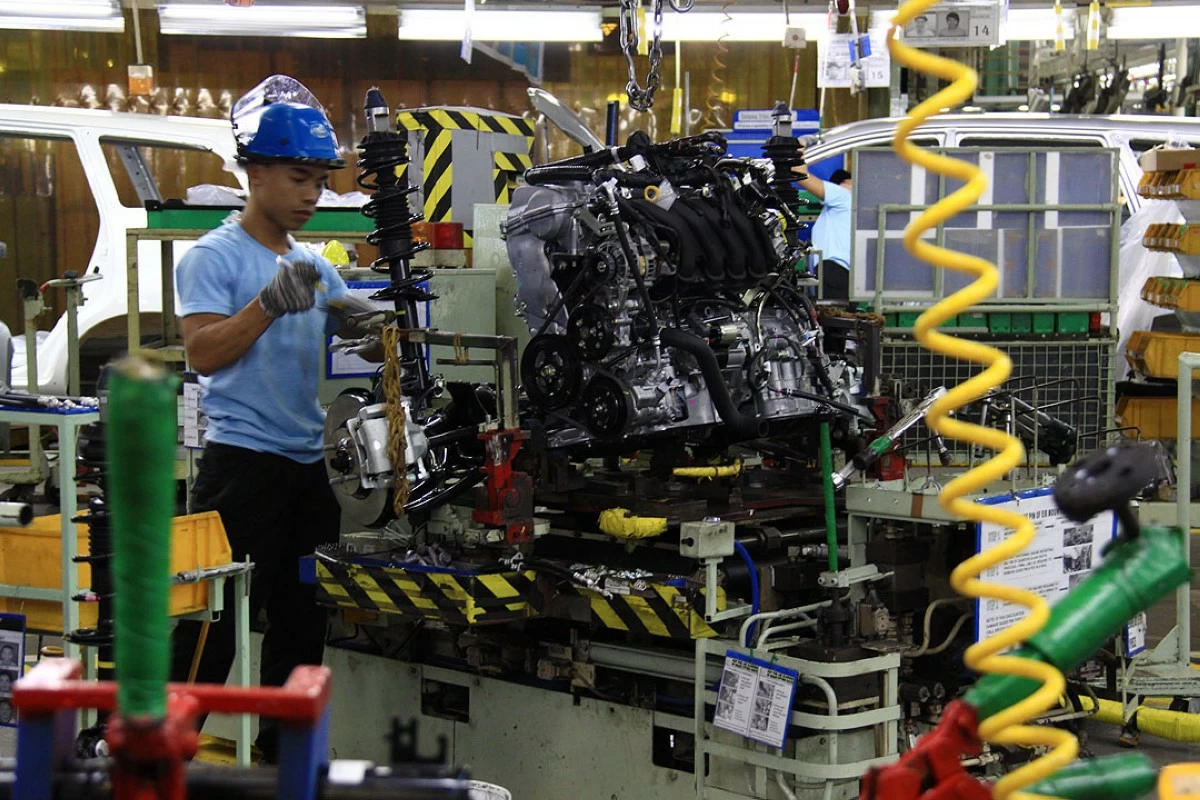
Chinese imports are unlikely to displace the Philippine manufacturing base because many sectors have limited direct trade overlap with the country’s exports, according to global debt watcher Moody’s Ratings.
Measured through the manufacturing vulnerability index (MVI), Moody’s found that the Philippines has a high concentration of industries with low-to-medium exposure to Chinese competition.
Moody’s wrote in a June 9 report that the Philippines “has the second-largest share of low-risk sectors, with most of its manufacturing base in the low-to-medium range.”
“Higher-risk readings are concentrated in coke and refined petroleum and basic and fabricated metals, which account for a relatively small share of total output,” the report said.
Moody’s explained that this favorable position can be attributed to contained direct trade exposure rather than a reflection of superior industrial competitiveness.
“Domestically oriented sectors, particularly food, beverages and tobacco and wood and related products, remain broadly resilient... supported by stable domestic demand and limited overlap with Chinese export categories,” the report added.
Furthermore, the electrical and optical equipment sector provides a partial offset to competitive pressures through its strong global export potential.
The report also noted that the country’s exposure is lower than that of Indonesia and Thailand, which have the largest shares of high-risk sectors. This means those countries have a higher concentration of sectors vulnerable to Chinese import penetration and price compression.
This relative insulation comes at a time when the region is facing risks from China’s export reorientation.
Moody’s data showed that more than half of the Philippines’ exports overlap with Chinese exports. The electrical and optical equipment sector is the largest area of competition, accounting for 29 percent of the Philippines’ export similarity with China.
While this reflects high direct competition, it is partially offset by the country’s ability to attract “China+1” investments.
“Export potential in electrical and optical equipment provides a partial offset, particularly for Malaysia, Vietnam and the Philippines,” Moody’s said. Industries absorbing relocated production under China+1 dynamics tend to have lower overall vulnerability.
Machinery accounts for the second-largest segment of overlap at nine percent. This remains lower than the machinery overlap seen in Thailand at 16 percent and Vietnam at 12 percent.
Other sectors, including food, beverages, tobacco, refined petroleum, and wood products, account for nine percent of the overlap.
Smaller industrial segments account for the remaining trade overlaps. Textiles and apparel, as well as basic and fabricated metals, each account for around three percent. Metals are considered a high-risk segment, but they represent only a small portion of total output.
Motor vehicles and equipment account for roughly two percent, while chemicals and related products have the lowest share at about one percent.