

ADVERTISEMENT

Cat renal disease drug nearing practical use in Japan

Published Jun 9, 2026 01:36 pm
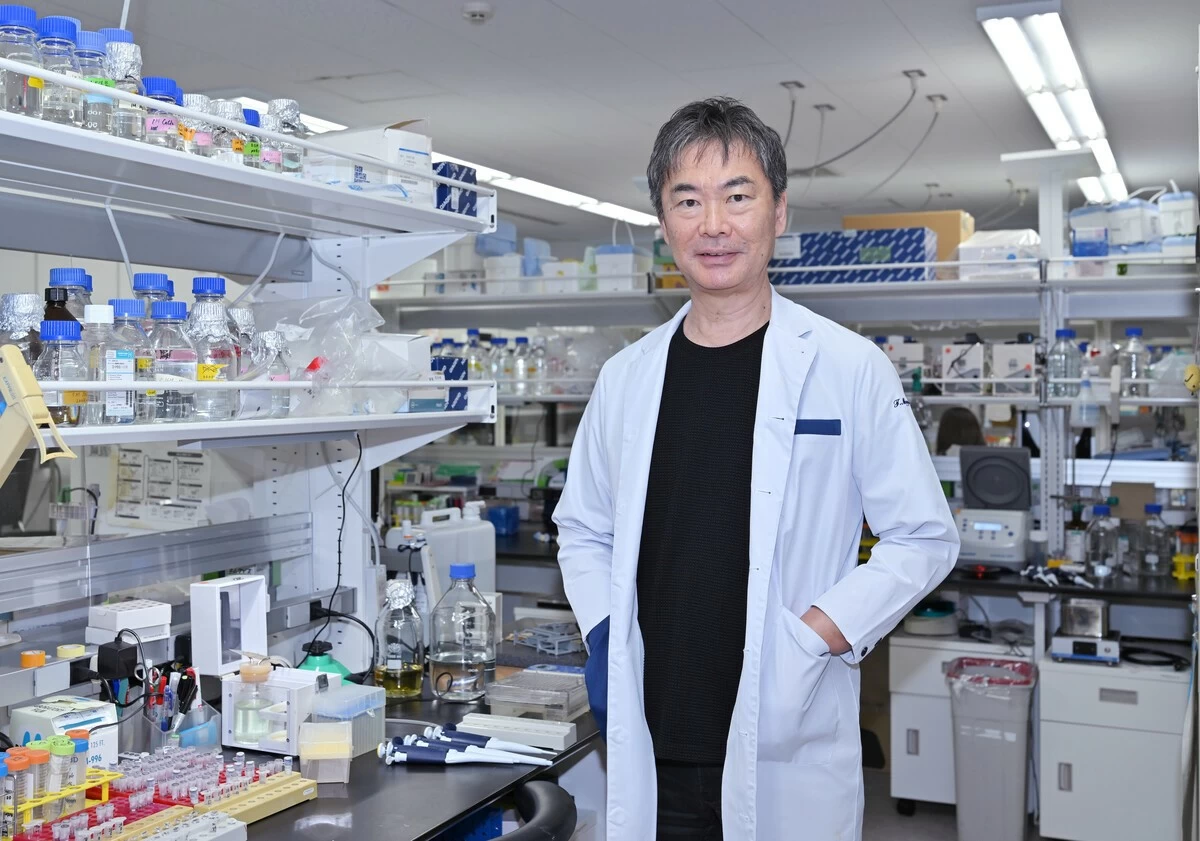
Toru Miyazaki, head of the Institute for AIM Medicine, speaks at an interview in Tokyo on May 20.
TOKYO (Jiji Press) -- A drug to treat kidney diseases in cats has entered its final stage before being put into practical use in Japan.
An application for approval of the drug's manufacturing and sales was submitted to the agriculture ministry in April, fueling expectations that the remedy will be approved as early as this year.
Backed by support mainly from cat owners, Toru Miyazaki, president and director of the Tokyo-based Institute for AIM Medicine who leads the development of the drug, said that he hopes to put the drug on sale "as soon as possible."
He also voiced hopes to start a clinical trial for a renal disease treatment for humans soon as well.
The drug for cats was developed by focusing on apoptosis inhibitor of macrophage, or AIM, a type of protein existing in the blood that helps clean up waste in the body.
Unlike in humans and dogs, the protein does not work properly in cats. Many cats die from kidney diseases because their kidneys, which filter waste, are prone to accumulating toxins.
In its clinical trials, the institute injected a drug containing functioning AIM into cats with near-terminal chronic kidney disease a total of six intravenous injections administered every two weeks.
Without the treatment, half of such cats would normally die after six months and about 80 pct would die after one year.
During the clinical trials, however, none of the cats died in six months after receiving the treatment. "We recognized a remarkable effect, as we saw the same outcome after a year," Miyazaki said of the treatment.

Yoshiaki Tamura's cat undergoing treatment for kidney failure (Courtesy of Tamura)
As protein drugs are expensive to manufacture, Miyazaki hopes to cut personnel costs through a small-scale development structure, in order to make the drug as affordable as possible. He expects six rounds of AIM drug injections to cost between around 100,000 yen and 150,000 yen.
If the drug's efficacy and safety are confirmed under the ministry's screening, it can be manufactured and sold.
While the screening process for many drugs takes more than a year, the ministry is working to quickly approve highly novel or highly sought-after drugs.
The institute consulted the ministry prior to the clinical trials, according to Miyazaki, "We hope to receive approval this year," he said.
Many cat owners are waiting in anticipation for the drug to be put into practical use.
Yoshiaki Tamura, a resident of Takarazuka, Hyogo Prefecture, western Japan, who has a cat with kidney failure, launched an online petition last month to back the drug's approval. A month later, the petition has over 26,000 signatures.
The drug provides "a great deal of hope," Tamura said.
For kidney diseases in humans, an experimental AIM drug is expected to be completed this year. If all goes well, it is expected to be put into practical use in three or four years, according to Miyazaki.


Related Tags

world news Japan cat renal disease drug
ADVERTISEMENT
.most-popular .layout-ratio{ padding-bottom: 79.13%; } @media (min-width: 768px) and (max-width: 1024px) { .widget-title { font-size: 15px !important; } }

{{ articles_filter_1561_widget.title }}

.most-popular .layout-ratio{ padding-bottom: 79.13%; } @media (min-width: 768px) and (max-width: 1024px) { .widget-title { font-size: 15px !important; } }

{{ articles_filter_1562_widget.title }}

.most-popular .layout-ratio{ padding-bottom: 79.13%; } @media (min-width: 768px) and (max-width: 1024px) { .widget-title { font-size: 15px !important; } }

{{ articles_filter_1563_widget.title }}

{{ articles_filter_1564_widget.title }}

.mb-article-details { position: relative; } .mb-article-details .article-body-preview, .mb-article-details .article-body-summary{ font-size: 17px; line-height: 30px; font-family: "Libre Caslon Text", serif; color: #000; } .mb-article-details .article-body-preview iframe , .mb-article-details .article-body-summary iframe{ width: 100%; margin: auto; } .read-more-background { background: linear-gradient(180deg, color(display-p3 1.000 1.000 1.000 / 0) 13.75%, color(display-p3 1.000 1.000 1.000 / 0.8) 30.79%, color(display-p3 1.000 1.000 1.000) 72.5%); position: absolute; height: 200px; width: 100%; bottom: 0; display: flex; justify-content: center; align-items: center; padding: 0; } .read-more-background a{ color: #000; } .read-more-btn { padding: 17px 45px; font-family: Inter; font-weight: 700; font-size: 18px; line-height: 16px; text-align: center; vertical-align: middle; border: 1px solid black; background-color: white; } .hidden { display: none; }
function initializeAllSwipers() { // Get all hidden inputs with cms_article_id document.querySelectorAll('[id^="cms_article_id_"]').forEach(function (input) { const cmsArticleId = input.value; const articleSelector = '#article-' + cmsArticleId + ' .body_images'; const swiperElement = document.querySelector(articleSelector); if (swiperElement && !swiperElement.classList.contains('swiper-initialized')) { new Swiper(articleSelector, { loop: true, pagination: false, navigation: { nextEl: '#article-' + cmsArticleId + ' .swiper-button-next', prevEl: '#article-' + cmsArticleId + ' .swiper-button-prev', }, }); } }); } setTimeout(initializeAllSwipers, 3000); const intersectionObserver = new IntersectionObserver( (entries) => { entries.forEach((entry) => { if (entry.isIntersecting) { const newUrl = entry.target.getAttribute("data-url"); if (newUrl) { history.pushState(null, null, newUrl); let article = entry.target; // Extract metadata const author = article.querySelector('.author-section').textContent.replace('By', '').trim(); const section = article.querySelector('.section-info ').textContent.replace(' ', ' '); const title = article.querySelector('.article-title h1').textContent; // Parse URL for Chartbeat path format const parsedUrl = new URL(newUrl, window.location.origin); const cleanUrl = parsedUrl.host + parsedUrl.pathname; // Update Chartbeat configuration if (typeof window._sf_async_config !== 'undefined') { window._sf_async_config.path = cleanUrl; window._sf_async_config.sections = section; window._sf_async_config.authors = author; } // Track virtual page view with Chartbeat if (typeof pSUPERFLY !== 'undefined' && typeof pSUPERFLY.virtualPage === 'function') { try { pSUPERFLY.virtualPage({ path: cleanUrl, title: title, sections: section, authors: author }); } catch (error) { console.error('ping error', error); } } // Optional: Update document title if (title && title !== document.title) { document.title = title; } } } }); }, { threshold: 0.1 } ); function showArticleBody(button) { const article = button.closest("article"); const summary = article.querySelector(".article-body-summary"); const body = article.querySelector(".article-body-preview"); const readMoreSection = article.querySelector(".read-more-background"); // Hide summary and read-more section summary.style.display = "none"; readMoreSection.style.display = "none"; // Show the full article body body.classList.remove("hidden"); } document.addEventListener("DOMContentLoaded", () => { let loadCount = 0; // Track how many times articles are loaded const offset = [1, 2, 3, 4, 5, 6, 7, 8, 9, 10]; // Offset values const currentUrl = window.location.pathname.substring(1); let isLoading = false; // Prevent multiple calls if (!currentUrl) { console.log("Current URL is invalid."); return; } const sentinel = document.getElementById("load-more-sentinel"); if (!sentinel) { console.log("Sentinel element not found."); return; } function isSentinelVisible() { const rect = sentinel.getBoundingClientRect(); return ( rect.top < window.innerHeight && rect.bottom >= 0 ); } function onScroll() { if (isLoading) return; if (isSentinelVisible()) { if (loadCount >= offset.length) { console.log("Maximum load attempts reached."); window.removeEventListener("scroll", onScroll); return; } isLoading = true; const currentOffset = offset[loadCount]; window.loadMoreItems().then(() => { let article = document.querySelector('#widget_1690 > div:nth-last-of-type(2) article'); intersectionObserver.observe(article) loadCount++; }).catch(error => { console.error("Error loading more items:", error); }).finally(() => { isLoading = false; }); } } window.addEventListener("scroll", onScroll); });

Sign up by email to receive news.