







Philippines and Vietnam: Partners for a changing Asia
Published Jun 8, 2026 12:05 am
|
Updated Jun 7, 2026 03:52 pm


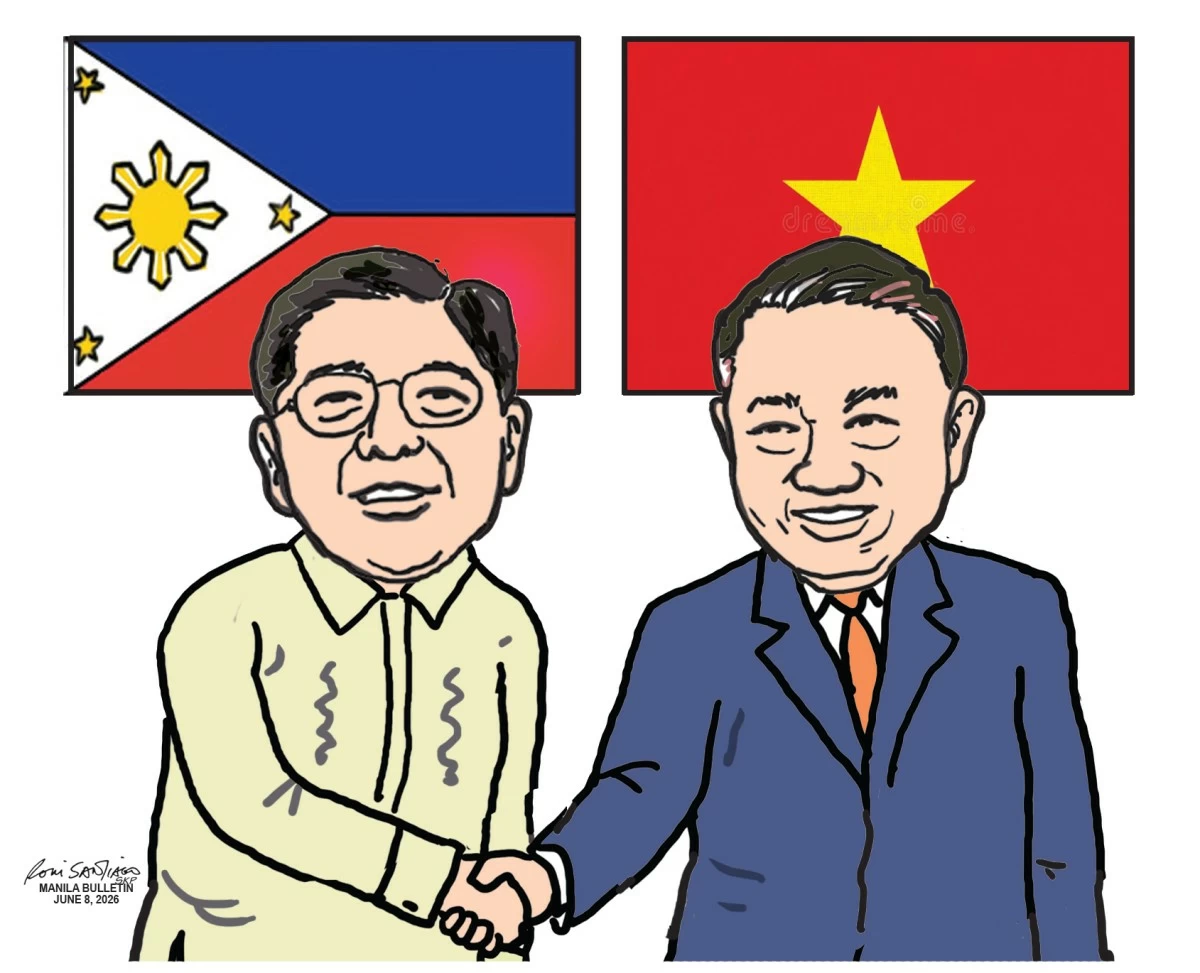
The state visit of Vietnamese President and Communist Party General Secretary Tô Lâm to the Philippines from May 31 to June 1 was far more than a ceremonial exchange marking the 50th anniversary of diplomatic relations between Manila and Hanoi. It represented a strategic investment in the future of two Southeast Asian nations whose interests are increasingly converging amid a rapidly changing geopolitical landscape.
President Ferdinand R. Marcos Jr. and President Tô Lâm elevated bilateral ties to an Enhanced Strategic Partnership, the first to be entered into by the Philippines with a Southeast Asian neighbor. This signals a shared determination to deepen cooperation across a broad spectrum of areas, from defense and maritime security to trade, food security, education, tourism, and digital transformation.
The significance of this development cannot be overstated.
The Philippines and Vietnam occupy vital positions in Southeast Asia. Both are maritime nations, dynamic economies, and active members of ASEAN. More importantly, both face common challenges arising from tensions in the South China Sea. While the two countries have overlapping maritime claims, they have consistently managed these differences through dialogue and cooperation rather than confrontation. Their shared commitment to peace, stability, freedom of navigation, and a rules-based international order provides a strong foundation for closer strategic coordination.
At a time when geopolitical rivalries are intensifying across the Indo-Pacific, the strengthening of Philippine-Vietnam relations contributes not only to bilateral interests but also to regional stability. The message sent by Manila and Hanoi is clear: ASEAN nations can work together to safeguard peace while pursuing mutual prosperity.
Equally important are the economic opportunities arising from the upgraded partnership.
Vietnam has emerged as one of Asia’s fastest-growing economies and is increasingly becoming a manufacturing and technology hub. The Philippines, meanwhile, seeks to accelerate industrialization, attract investments, and strengthen food security. During the visit, both leaders expressed the desire to expand bilateral trade beyond the current level of over $7 billion and move toward the $10-billion target. Business leaders from both countries were encouraged to pursue new ventures in agriculture, manufacturing, logistics, energy, tourism, and digital services.
Food security deserves particular attention. Vietnam has long been a reliable supplier of rice to the Philippines. As climate change, supply disruptions, and global uncertainties continue to threaten food systems, stronger agricultural cooperation can help ensure stable supplies while promoting technological exchanges that benefit farmers in both countries.
The agreements signed during the visit covering defense cooperation, education, tourism, and information technology likewise create pathways for long-term collaboration. Educational exchanges can cultivate a new generation of Filipino and Vietnamese leaders familiar with each other’s cultures and aspirations. Tourism cooperation can stimulate economic activity and strengthen people-to-people ties. Digital transformation initiatives can help both countries remain competitive in an increasingly technology-driven global economy.
As the Philippines and Vietnam celebrate five decades of diplomatic relations, they are not merely looking back on a history of friendship. They are laying the groundwork for a future defined by strategic cooperation, economic resilience, and regional leadership.
The Golden Jubilee observance thus marks not the end of an era, but a new beginning. In strengthening their partnership, the Philippines and Vietnam demonstrate how neighboring nations can transform shared challenges into shared opportunities. This is an example worthy of emulation across ASEAN and the broader Indo-Pacific region.