






Manila Bulletin
 World
Israel strikes Beirut's southern suburbs days after US-supported ceasefire deal
World
Israel strikes Beirut's southern suburbs days after US-supported ceasefire deal
World
Israel strikes Beirut's southern suburbs days after US-supported ceasefire deal
Israel strikes Beirut's southern suburbs days after US-supported ceasefire deal
Published Jun 8, 2026 12:33 am


MREIJEH, Lebanon (AP) — Israel struck Beirut's southern suburbs without warning on Sunday, days after a ceasefire agreement in Washington went into effect and despite a U.S. request not to attack Lebanon 's capital. Lebanon's state-run national news agency said two people were killed and 11 wounded in a preliminary count.
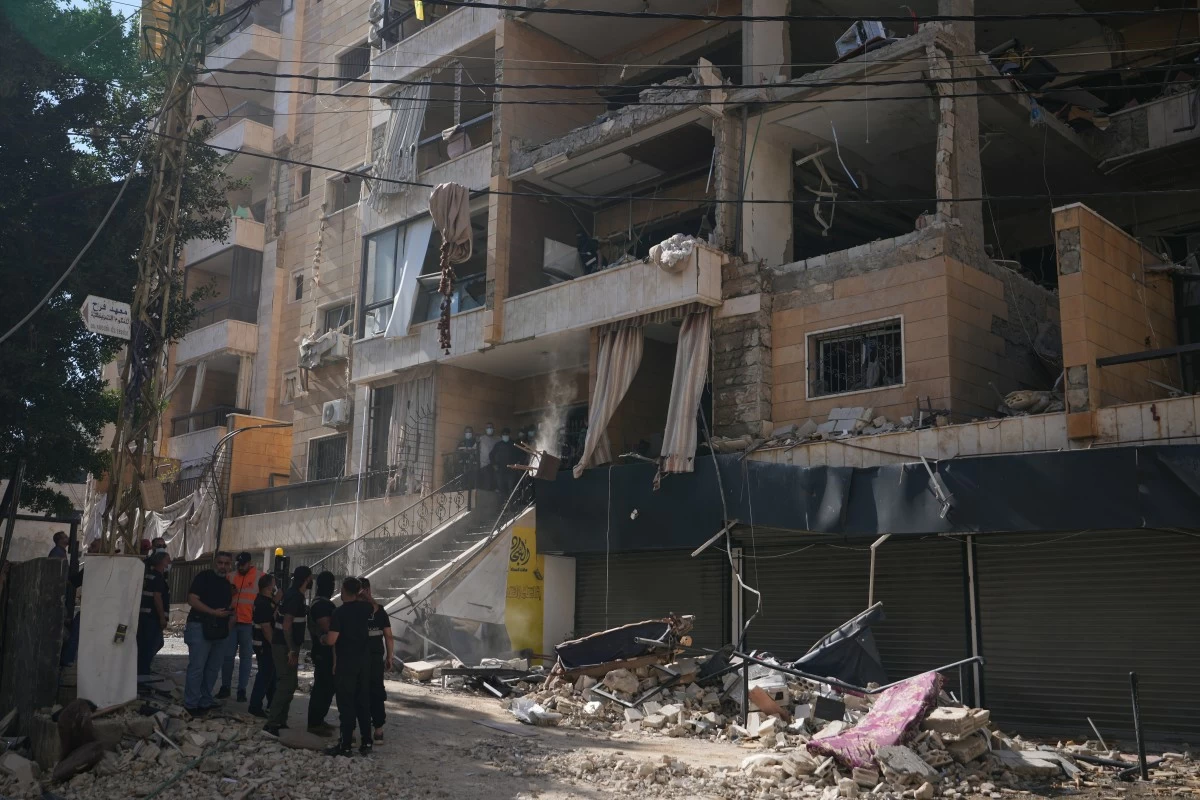
Lebanese security officers gather at the site where an Israeli airstrike hit a building in Dahiyeh, Beirut's southern suburb, Lebanon, Sunday, June 7, 2026. (AP Photo/Hassan Ammar)
Iran had warned that an attack on Beirut would renew full-scale war across the Mideast, even as Pakistan tries to restart talks between Tehran and Washington. Iran wants a deal to include ending the war in Lebanon.
Iran's powerful parliament speaker hinted at retaliation. "The (U.S.) naval blockade imposed against the Iranian people, together with Washington's green light today to the Zionist regime, makes U.S. and Israeli bases and assets in the region legitimate targets," Mohammad Bagher Qalibaf said on X.
There was no immediate White House comment. A senior U.S. official said "we were not surprised" by the attack in Beirut. The official, who spoke on condition of anonymity due to the sensitivity of the matter, would not say if the U.S. had been given a heads-up on the strike.
The strike hit a residential building, damaging four of its seven floors. An unexploded weapon was found in the rubble.
Netanyahu wants to remove Hezbollah as a threat
Israeli Prime Minister Benjamin Netanyahu's office said it was in retaliation for the Iranian-backed Hezbollah militant group firing at northern Israel earlier, and that Israel targeted "command centers" in the sprawling urban neighborhoods.
"We are striking them very hard, and we know that Hezbollah is on the run," Netanyahu told his Cabinet.
Hezbollah did not immediately claim responsibility for firing at Israel.
Israel on Monday announced it would strike the southern suburbs after Hezbollah claimed attacks in northern Israel, but urgent talks via Washington halted the attacks on the condition that Hezbollah stop targeting Israeli border towns. Lebanon and Israel later renewed a ceasefire agreement in talks that Beirut hopes will end the fighting.
The first such agreement took effect on April 17, days after a 10-minute Israeli bombardment of Beirut killed over 300 people. Israel struck Beirut's southern suburbs twice following that deal. Israeli strikes over southern Lebanon continue daily, and Israeli forces have seized around a fifth of Lebanon in a ground invasion.
Netanyahu, who faces elections later this year, wants to press ahead with Israel's offensive until he believes Hezbollah no longer poses a threat.
Trump wants attack on Hezbollah to be 'more surgical'
Hezbollah has scathingly rejected the U.S.-brokered deal and urged Lebanon to end its direct talks with Israel. Instead, it backs Iran's inclusion of a ceasefire in Lebanon as a condition in negotiations with the U.S.
The fighting threatens efforts to end the Iran war and reopen the Strait of Hormuz, a key transit point for oil and gas and related products like fertilizer. Its closure has jolted the world economy and spiked warnings of hunger in vulnerable regions.
U.S. President Donald Trump, in an interview taped Friday and aired Sunday with NBC's "Meet the Press," said that "I'd like to see Lebanon have a better life. I'd like to see a more surgical attack on Hezbollah. I think it should be more surgical."
Trump added that he is "not demanding" that Lebanon be part of the short-term deal to extend the ceasefire in the Iran war.
More than 3,500 people have been killed in Lebanon since the war began March 2 when Hezbollah fired rockets at northern Israel, two days after Israel and the U.S. began attacking Iran. More than 1 million people in Lebanon have been displaced. The fighting has killed at least 31 Israeli soldiers and three civilians.
Lebanon's army commander, Gen. Rodolphe Haikal, went to Pakistan on Saturday at the invitation of Pakistan's army chief, who has been involved in mediating talks between the U.S. and Iran. The Lebanese army did not say whether the visit is related to those mediation efforts.
Pakistan's interior minister visits Iran
Pakistan's interior minister was in Tehran on Sunday in a fresh bid to restart negotiations between Iran and the U.S.
Mohsin Naqvi was delivering a message to Iranian Supreme Leader Ayatollah Mojtaba Khamenei from Pakistan's army chief Field Marshal Asim Munir, according to Iran's state-run IRNA news agency. There were no details on the message's contents.
Khamenei has not been seen in public since he was named the Islamic Republic's ruler after his father was killed on Feb. 28, the first day of the war.
Naqvi met with Iranian Interior Minister Eskandar Momeni late Saturday and Foreign Minister Abbas Araghchi on Sunday, according to official Iranian media.
Pakistani authorities have said Islamabad, with support from regional countries including Qatar, Turkey and Egypt, is working to help bridge differences between the United States and Iran.
In Cairo, Egyptian Foreign Minister Bader Abdelatty and Qatari counterpart Sheikh Mohammed bin Abdulrahman Al Thani discussed "proposed elements" of a potential agreement between the U.S. and Iran, the Egyptian foreign ministry said, without details.
Meanwhile, the U.S. military said it shot down two more Iranian drones over the Strait of Hormuz that it said threatened international maritime traffic.
The heaviest fighting ended with a preliminary ceasefire on April 8, but Washington and Tehran have not agreed on a long-term end to the war.
The U.S. military has kept up its blockade on Iranian ports in response to Tehran's grip on the Strait of Hormuz. Energy prices have spiked, posing political problems for Trump's Republican Party ahead of midterm congressional elections in November.