







Marcos backs key satellite programs —Palace
Published Jun 7, 2026 03:44 pm


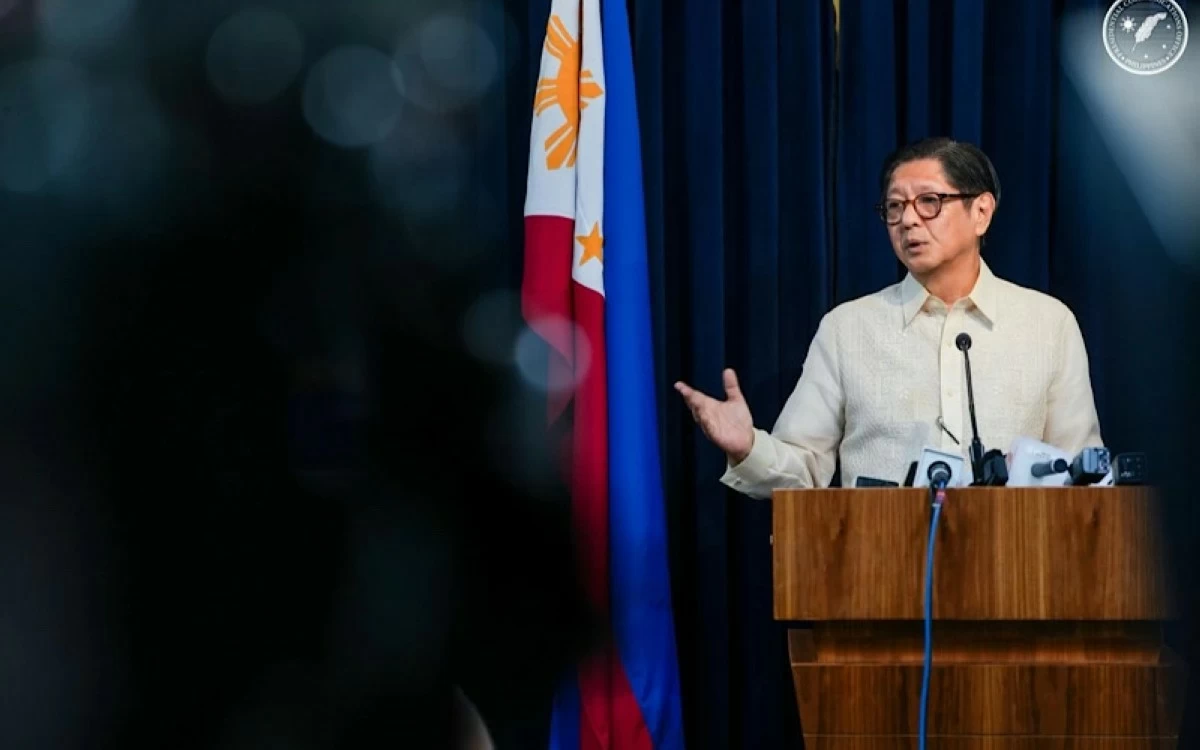
President Ferdinand “Bongbong” Marcos Jr. (PCO)
Key initiatives aimed at strengthening the country’s space science and technology capabilities earned the support of President Marcos during the 9th Philippine Space Council meeting at Malacañan Palace, Malacañang said.
During the meeting, the council reviewed recent developments in the Philippine space sector, including ongoing satellite programs, space infrastructure projects, and efforts to enhance the use of space-based data in government operations.
The Philippine Space Agency (PhilSA) reported progress on the Multispectral Unit for Land Assessment (MULA) satellite, which is targeted for launch as early as April 2027 and is expected to support disaster management, agricultural monitoring, and environmental mapping.
The council approved a resolution declaring the proposed MULA Constellation Program a national priority undertaking to expand the country’s sovereign Earth observation capabilities through locally developed satellites.
The council also approved the establishment of a Philippine Sovereign Geostationary Telecommunications Satellite Program, which seeks to provide secure and reliable communications services under Philippine control.
The proposed satellite system would help address connectivity gaps in remote areas, strengthen disaster resilience, and support mission-critical government operations.
Another resolution adopted by the council seeks to harmonize satellite data requirements across government agencies to improve planning, monitoring, and decision-making while reducing duplication of resources.
The council likewise approved a national Orbital Debris Response Protocol that will guide government agencies in responding to incidents involving space debris and rocket reentries within Philippine territory and maritime zones.
PhilSA reported that it has monitored 90 space vehicle drop zones in Philippine waters and airspace from June 2022 to May 2026, underscoring the growing need for coordinated space safety measures.
The agency also updated the council on plans to conduct a sounding rocket test launch in Lal-lo, Cagayan, between December 2026 and February 2027 as part of efforts to develop indigenous space launch capabilities.
Space cooperation with Japan
Meanwhile, PhilSA and the Japan Aerospace Exploration Agency (JAXA) signed a Joint Declaration of Interest in Space Cooperation, reaffirming their shared goals and objectives, and their interest in exploring cooperation and industry partnerships in satellite joint mission partnership and data applications, space exploration and human spaceflight, and space sustainability.
The declaration was signed by PhilSA Ad Interim Director General Gay Jane P. Perez and JAXA President Hiroshi Yamakawa during Marcos' state visit to Japan.
“As we mark the 10th anniversary of the launch into orbit of the Diwata-1 microsatellite from the Japanese module of the International Space Station this year, we are reminded of how our partnership has quite literally reached new heights, symbolizing our shared commitment to innovation, science, and the industries of the future,” Marcos said at the summit meeting with Japanese Prime Minister Takaichi Sanae.
In November 2025, PhilSA and JAXA co-organized the 31st Asia-Pacific Regional Space Agency Forum (APRSAF-31) in Cebu, the largest space forum in the region.
The partnership with Japan also extends to space education and outreach, PhilSA leads the Philippines’ participation in JAXA’s Kibo Asian Beneficial Collaboration (Kibo-ABC), which provides Filipino researchers and students with opportunities to design experiments to be conducted aboard the International Space Station’s (ISS) Japanese Experiment Module “Kibo”.
This includes regular involvement in the Asian Try Zero-G where several Philippine experiments have been conducted by astronauts in the Kibo module of ISS since 2022; sharing space-exposed seeds to Philippine schools for research through Asian Herb in Space (AHIS); and the Kibo Robot Programming Challenge (Kibo_RPC) where the Philippines recently won 3rd place.
Beyond disaster management and space education, the recent Philippines-Japan Joint Statement on the Elevation to a Comprehensive Strategic Partnership articulated that Marcos and Prime Minister Sanae "shared the view that development and cooperation harnessing technological innovation are essential to sustainable prosperity, and also decided to deepen cooperation in the fields of space and digital transformation towards attaining food security."