







The ledger of the unbanked
Published Jun 6, 2026 10:02 am



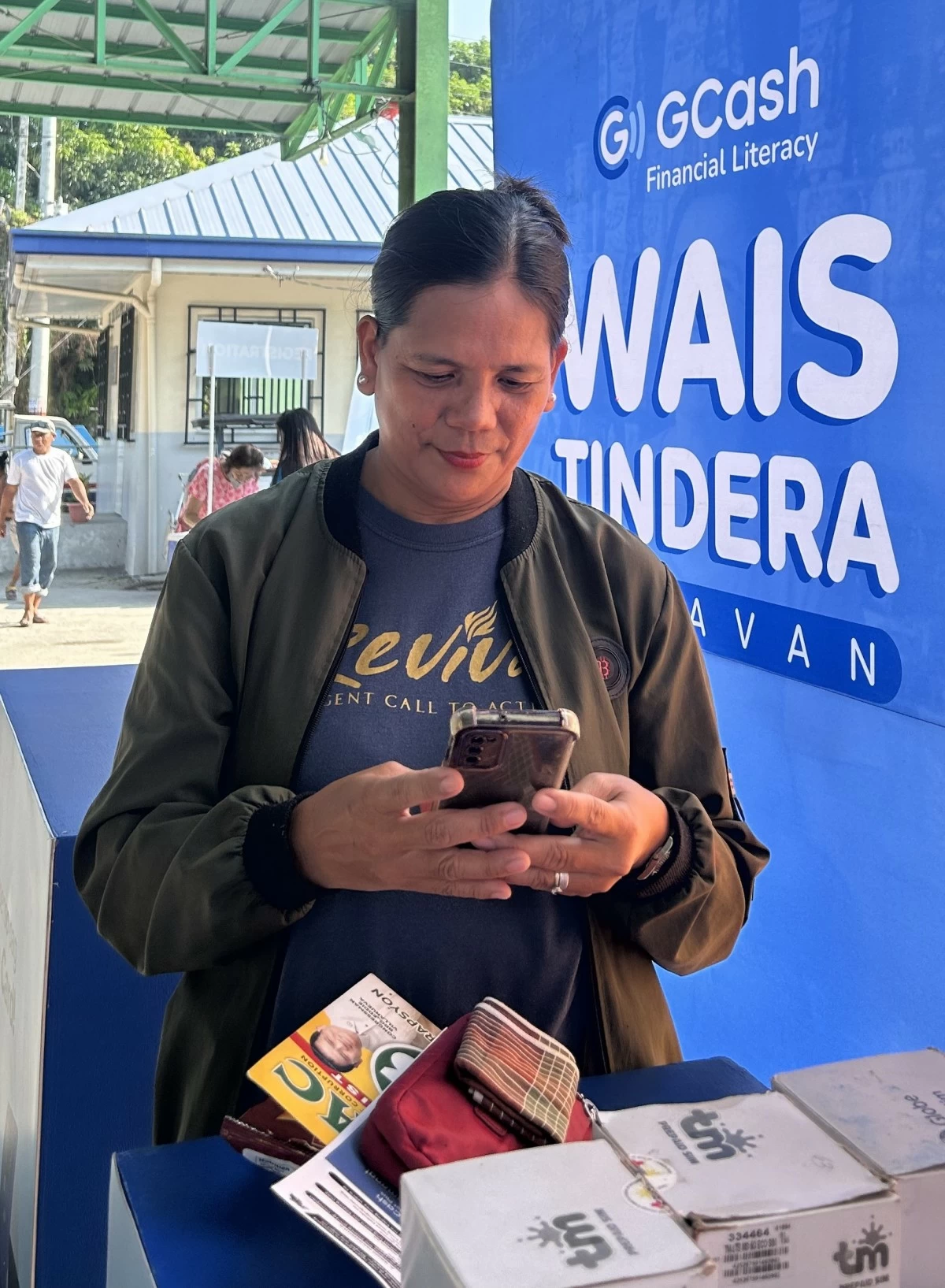
Ivy Tomasar participates in the kick-off of Wais Tindera Caravan held in Brgy. Commonwealth, Quezon City.
In the middle of Barangay Bagong Silangan, a crowded neighborhood in Quezon City, the regular sound of a commercial freezer door opening and closing tells you everything you need to know about the local economy.
Two years ago, Ivy Joy Tomasar did not exist as far as the local banking system was concerned. The 33-year-old mother of three had no bank account, no credit history, and no property to offer as collateral. To traditional banks, she was invisible—one of millions of Filipinos locked out of the formal financial system.
Today, Tomasar runs her own retail business.
Driven by the need to support her family as living costs rose, she skipped the traditional banking route entirely and turned to her smartphone. Using GLoan, the digital lending arm of the popular mobile wallet GCash, she got the initial cash she needed to open a frozen food store in 2023.
“Many women here are unemployed, just like I was,” Tomasar said. “I tried borrowing from GLoan and put it straight into the business. Now, I’m not just staying at home. I’m running a shop and helping my husband support our kids.”
Tomasar’s experience is becoming a common template for survival and growth among small vendors in the Philippines. Micro and small businesses are the actual backbone of the country’s economy. They make up 99.6 percent of all registered companies and employ two-thirds of the workforce. Women run more than half of these small enterprises.
Yet, these are the exact businesses that traditional banks routinely ignore.
Data shows that 79 percent of micro-enterprises in the Philippines constantly run out of cash to keep their operations going. For women, the hurdle is even higher. An Asian Development Bank survey found that 58 percent of women entrepreneurs say finding financing is their biggest problem, compared to 37 percent of men.
When small shopkeepers cannot get a simple bank loan, they usually end up turning to informal lenders. In the country, this often means the notorious “5-6” system. These are unlicensed lenders who give you five pesos today and demand six back later, which works out to a brutal 20 percent interest rate per month. For a small vendor, taking that deal often means trading long-term survival for short-term cash.
Algorithms over paperwork
Digital platforms are trying to change this by changing how credit is measured. Fuse Financing, which runs GCash’s lending products, offers loans directly inside the app without requiring land titles, tax returns, or stack of paperwork.
Instead of traditional documents, they use a system called GScore. The tool looks at how people use the app—like whether they pay their utility bills on time, how much money they send to family, and how often they use the wallet. It uses this digital footprint to decide if someone is safe to lend to.
The process takes minutes, and the money lands right in the app. For most people using it, this is their very first interaction with a real financial institution. In fact, 90% of Fuse’s borrowers are using formal credit for the first time, and a third of them are small business owners using the money for daily operations.
Further south in Zambales province, 50-year-old Amelyn Rafael uses these loans to keep her online food business running. She sells tokwa-sisig, a local tofu dish, to take care of her four children and her father, who needs regular dialysis.
Amelyn Rafael visits the GLoan booth during the Wais Tindera Caravan in Brgy. Taugtog, Botolan, Zambales.
Her business relies on buying fresh ingredients daily and paying her suppliers only after she makes her sales.
“GLoan is a massive help,” Rafael said. “The key is making sure you actually use the money for the business, or to earn a living for the family. When you use it the right way, it changes your situation.”
Big backing for small loans
The shift toward digital micro-loans has caught the attention of major international institutions. Earlier this year, Fuse secured a ₱1.75 billion credit line from the ADB. The money is specifically set aside to expand loans to small businesses, women entrepreneurs, and people living in poorer regions.
“We wanted to build a lifeline for millions of Filipinos,” said Tony Isidro, President and CEO of Fuse Financing. “By closing the gap for people who have been underserved, we are seeing small businesses move from just trying to survive to actually succeeding.”
The partnership is a notable milestone for the region. It connects the financial muscle of a major development bank with the everyday digital network of a local mobile app.
There are still plenty of risks. The digital lending market in the Philippines is crowded, and it includes plenty of predatory, unregulated apps. Many of these bad actors use aggressive collection tactics, hide massive fees in the fine print, and trap low-income users in cycles of debt they can never pay off.
Because of this, the push for transparent, fair lending is central to how digital wallets plan to survive long-term. By basing loans on real usage data rather than impossible collateral requirements, the goal is to make credit a tool that helps people build stability, rather than a trap that pulls them under.
For small business owners like Tomasar and Rafael, the big-picture economic theories matter less than the balance showing up on their screens. As long as the freezer door keeps opening and closing in Bagong Silangan, the local economy keeps moving forward, one small loan at a time.