







The immortal capital and the mortal CEO
Manuel V. Pangilinan (MVP)
Published Jun 6, 2026 09:20 am


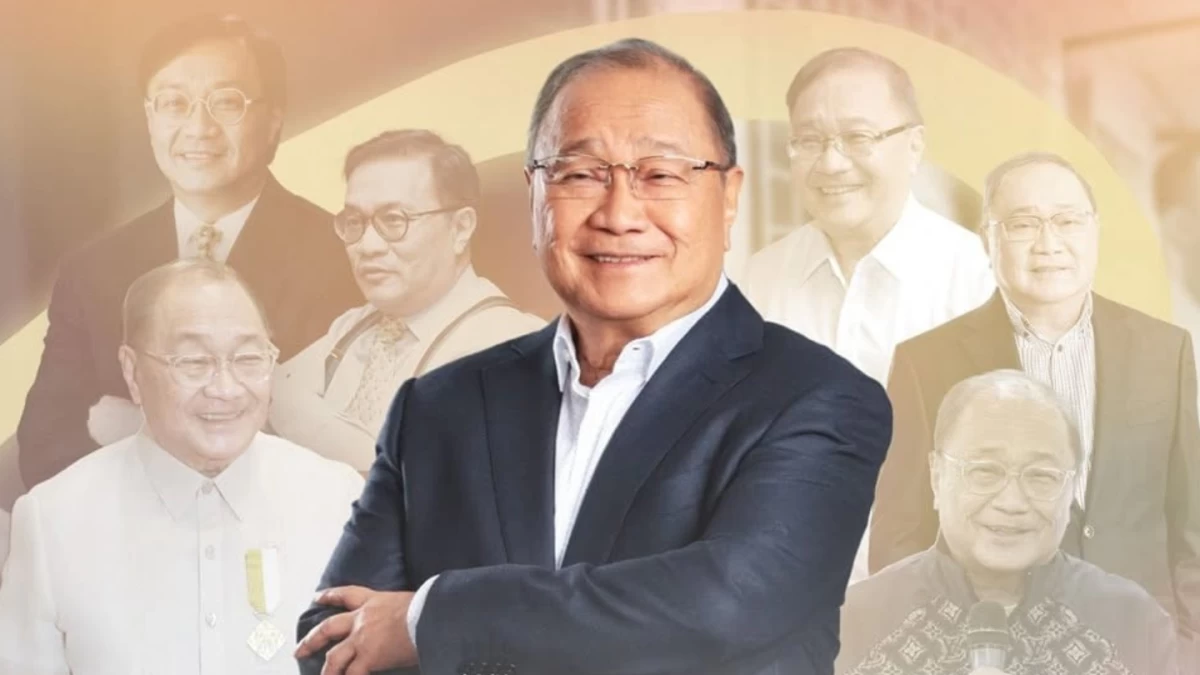
Industrialist Manuel V. Pangilinan. Reflecting on his decades of steering major conglomerates, the 79-year-old tycoon said that while ambition builds empires, the lasting legacy requires passion, adaptive leadership, and the steadfast commitment to managing market complexities.
The Meralco Theater in Pasig City is built to showcase spectacle, but on a late May evening, the most arresting sight was the man in the wheelchair.
Manuel V. Pangilinan—the 79-year-old tycoon, known by his initials, MVP—was celebrating the 45th anniversary of First Pacific Co., the Hong Kong-listed investment powerhouse he co-founded and built into an empire.
For decades, Pangilinan’s name has been synonymous with relentless corporate engineering. His group provides the water that millions of Filipinos use, the electricity that lights their homes, the tollways they drive on, and the digital networks they use to communicate.
But that tonight, the architect of the massive and interconnected grid of infrastructure was contemplating a much smaller, and intensely stubborn piece of anatomy: his own knees.
Following a major knee surgery whose broader health implications he admitted he failed to assess beforehand fully, Pangilinan is facing the reality of physical limitation. The man who spent nearly half a century dictating terms to markets and boards was now navigating a world where a few paces across a room is a major achievement.
“You know what? This experience reminds us that no matter how successful we become, our knees remain completely unimpressed,” MVP told an audience of employees, directors, and lifelong allies. “Comfort, strength, and mobility are blessings we often take for granted until they are taken away.”
It was the moment of vulnerability for a legendary dealmaker, but it also revealed the deeper and inescapable truth that modern markets are beginning to reckon with. Capital may be immortal, constantly recycling itself through corporate vehicles and holding structures, but the people who direct it are not. For First Pacific, Pangilinan’s candid reflection on his health casts a bright light on the post-MVP horizon—a looming corporate transition for one of Southeast Asia’s most influential conglomerates.
Architecture of an empire
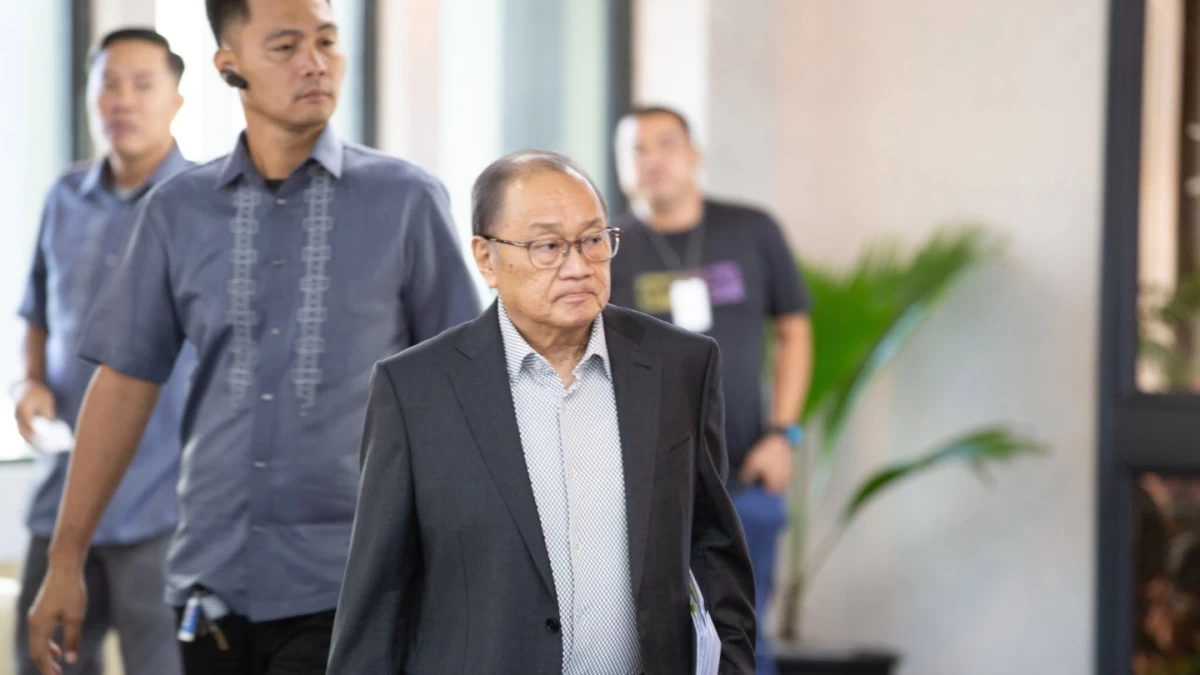
While capital can perpetually recycle itself through corporate vehicles, the First Pacific co-founder notes that institutional survival hinges on the human element— a leadership model that embraces flexibility and structural resilience.
To understand the weight of Pangilinan's physical slowing down is to understand the sheer velocity at which he spent his youth. In the summer of 1981, Pangilinan and his co-founder, Bob Meyer, stepped into a 50-square-meter office on Pedder Street in Hong Kong’s Central district. They had rented furniture, a staff of four, and very little money.
What they did have was an almost promiscuous appetite for risk. In its early, exuberant decades, First Pacific was a dizzying, global mosaic of assets. Pangilinan bought and sold trading companies in Amsterdam, banks in California and Hong Kong, a potato factory in China, and telecom outfits in India. In the Philippines, the group owned everything from consumer brands like Dial Soap and Tanduay Rhum to the massive tract of land that would eventually become Bonifacio Global City (BGC).
Eventually, the scattered dots began to form a coherent picture. First Pacific pivoted from a pure investment house to a hands-on management company, deep-rooting itself in systemic utilities like PLDT Inc., the nation’s dominant telecom provider, and Manila Electric Co. (Meralco).
“I know that it takes ambition and power to build empires,” Pangilinan reflected. “But equally, it requires passion for your work, and the love and care of your people to build a lasting legacy of an empire.”
That legacy is massive, but it has also created a key-man risk. For decades, investors have viewed First Pacific and its Philippine subsidiaries as an extension of Pangilinan’s personal vision, political navigation, and work ethic. When a single individual becomes the primary connective tissue between government regulators, foreign capital, and local operations, their personal well-being becomes the material market variable.
Thrice-depreciated van
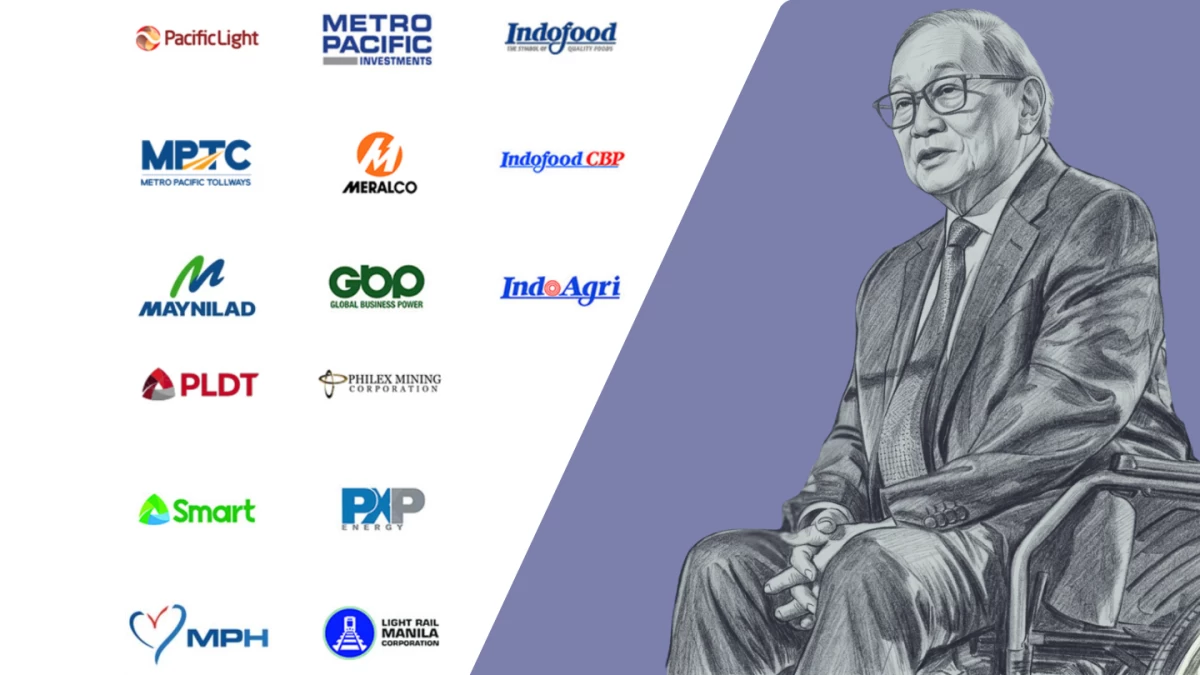
For over four decades, Pangilinan’s vision shaped the Philippine infrastructure landscape, an interconnected empire that powers, connects, and services millions of Filipinos.
The corporate world often mistakes institutional momentum for permanence. Analysts build financial models that stretch into perpetuity, forecasting cash flows decades into the future while glossing over the human fragility of the executives signing off on the capital expenditure.
Pangilinan’s current daily routine offers the counter-narrative to the executive suite aesthetic. The luxury cars that typically ferry captains of industry remain parked in his garage.
“Today, the vehicle that matters most for me is a 16-year-old, thrice-depreciated van,” Pangilinan said, flashing a bit of his characteristic dry wit. “Because it is the only one that can carry me, my wheelchair, and my hope for recovery.”
The image of the region’s most formidable dealmaker traveling in an old, utilitarian van is a powerful metaphor for the humanization of capital. It strips away the armor of corporate stature, leaving a leader to confront the realities of aging and recovery. Yet, far from a surrender, Pangilinan frames this chapter as an exercise in resilience—and lesson in institutional patience.
“Tonight is not a story about loss or about pain,” he said. “It is a story about resilience. About courage. About learning to slow down, to heal, and to appreciate the people who stand beside us when life changes course.”
For First Pacific, the critical question is what the post-MVP era looks like. How does an organization that was built on the raw energy of a young Pangilinan, and sustained by his mature stewardship, function when he ultimately steps back?
The answer, according to Pangilinan, lies not in finding a successor who mimics his certainty, but in cultivating leaders who embrace the unknown. Drawing an unexpected parallel to the film Conclave, in which a cardinal prays for a leader who doubts, Pangilinan suggested that corporate rigidity is the true enemy of longevity.
“Business abhors uncertainty and the unknown,” Pangilinan noted. "But if all things were certain in our world, there is no need for projections or forecasts; there would be no need for CFOs or even CEOs... We shouldn’t dislike the mystery brought by the unknown in our lives.”
For a conglomerate navigating the rapidly shifting geopolitical and macroeconomic landscape in Southeast Asia, this philosophy is the shift from rigid five-year plans to an adaptive management style. The complexity of modern infrastructure—balancing renewable energy transitions, digital transformation, and shifting regulatory frameworks—requires a leadership cohort that can manage what Pangilinan calls “increasingly immeasurable complexity.”
“The 45 years we celebrate today is the First Pacific of the past,” he said, looking out at the theater. "We must now put our face forward, and look towards the First Pacific of the future. I hope and pray that we are able to develop leaders who doubt. That I doubt freely—and even proudly—has made me a better person, and a better leader.”
Pangilinan is not stepping down just yet. He expressed an eager desire to return to his previous pace, to get back to the office full-time, and even to return to the badminton court.
The foundations of First Pacific are set in stone and steel across the Philippines. The task for the next generation of leadership will be to steer that massive weight forward, accepting the vulnerability of the human hands that built it, while embracing the creative uncertainty of what comes next.