






Manila Bulletin
 Philippines
National
Philippines, US reaffirm economic, security partnership in bilateral meeting
Philippines
National
Philippines, US reaffirm economic, security partnership in bilateral meeting
Philippines
National
Philippines, US reaffirm economic, security partnership in bilateral meeting
Philippines, US reaffirm economic, security partnership in bilateral meeting
Lazaro-Rubio talks underscore shared commitment to economic cooperation and maritime collaboration
Published Jun 6, 2026 08:39 am
|
Updated Jun 6, 2026 02:19 pm


At A Glance
- Lazaro and Rubio reaffirmed economic cooperation, maritime collaboration, and regional security during talks in Washington.
- Both officials discussed South China Sea security, ASEAN priorities, and regional peace efforts.
- The U.S. reiterated support for the Luzon Economic Corridor and deeper cooperation amid key diplomatic milestones in 2026.
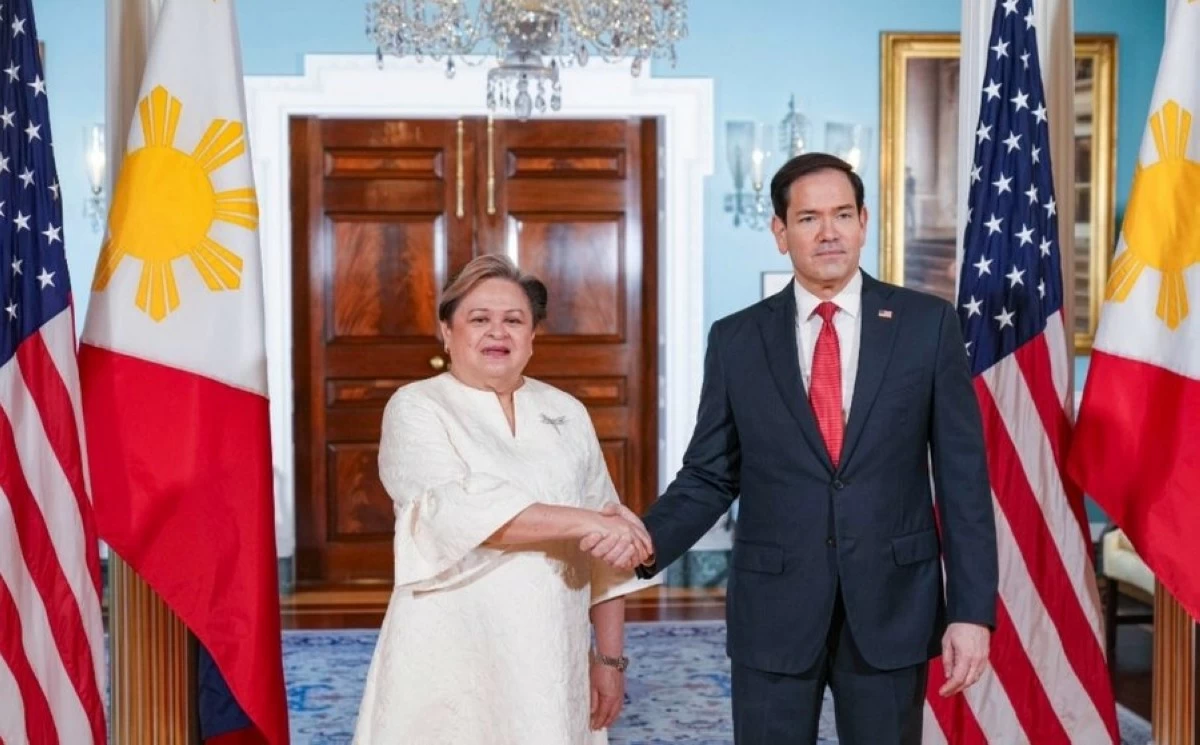
Foreign Affairs Secretary Ma. Theresa P. Lazaro meets with U.S. Secretary of State Marco Rubio in Washington, D.C., on June 5, 2026, where both officials discussed economic cooperation, maritime security, ASEAN priorities, and regional peace and stability. (Photo courtesy of DFA Sec. Tess Lazaro/X)
The Philippines and the United States reaffirmed their commitment to strengthening economic cooperation, maritime collaboration, and regional security following a meeting between their top diplomats.
Philippine Foreign Affairs Secretary Ma. Theresa P. Lazaro met with U.S. Secretary of State Marco Rubio in Washington, D.C., on June 5.
In a post on X, Lazaro described her bilateral meeting with Rubio as “productive,” saying both officials discussed ways to further enhance the long-standing strategic partnership between Manila and Washington.
“We engaged in discussions on our strategic partnership across multiple fronts. Our dialogue focused on strengthening economic diplomacy,” Lazaro said.
According to the foreign affairs chief, their dialogue focused on strengthening economic diplomacy, reaffirming maritime cooperation, and maintaining peace and stability in the region.
“We also reaffirmed our strong maritime cooperation and shared commitment to maintaining regional peace and stability, emphasizing the importance of diplomatic channels to de-escalate tensions,” she added.
In a separate post on X, Rubio also shared details of the meeting with Lazaro, saying it aimed to “advance a range of bilateral priorities,” including issues concerning the South China Sea.
“The United States and Philippines continue to deepen our partnership as we celebrate 80 years of diplomatic relations and 75 years of our Alliance,” Rubio said in his post.
The meeting was held at the U.S. Department of State as both countries mark significant milestones in their bilateral relations in 2026, including 80 years of diplomatic relations and 75 years as treaty allies.
Efforts to advance peace, security
In a readout shared by the U.S. Embassy in the Philippines, U.S. Department of State Spokesperson Tommy Pigott said Rubio and Lazaro discussed a “range of bilateral economic and security priorities,” including the Philippines’ chairmanship of the Association of Southeast Asian Nations (ASEAN).
The two officials, Pigott said, also tackled efforts to advance peace and security in the South China Sea, an issue that remains a key concern for both nations amid continuing regional tensions.
Pigott noted that Rubio likewise reaffirmed Washington’s commitment to the development of the Luzon Economic Corridor, a flagship initiative aimed at boosting infrastructure connectivity, economic growth, and investment opportunities in the Philippines.
The U.S. Secretary of State also expressed interest in exploring solutions to address energy challenges in the region.
“The Secretary emphasized the strength of the United States-Philippines Alliance and continued close cooperation as the two countries commemorate 80 years of diplomatic relations and 75 years as allies in 2026,” Pigott added.
The meeting underscored the enduring alliance between Manila and Washington, which both governments continue to view as vital to promoting economic prosperity, regional stability, and a rules-based international order in the Indo-Pacific.
As the Philippines assumes a more prominent role in regional diplomacy through its ASEAN chairmanship, both countries have signaled their intention to deepen collaboration on economic development, security, and regional peace initiatives.