






Manila Bulletin
 Property and Living
From hotel to cafe: Creative interior ideas transform apartment balconies
Property and Living
From hotel to cafe: Creative interior ideas transform apartment balconies
Property and Living
From hotel to cafe: Creative interior ideas transform apartment balconies
From hotel to cafe: Creative interior ideas transform apartment balconies
Budget-friendly interior designs for transforming balconies
Published Jun 6, 2026 01:30 pm


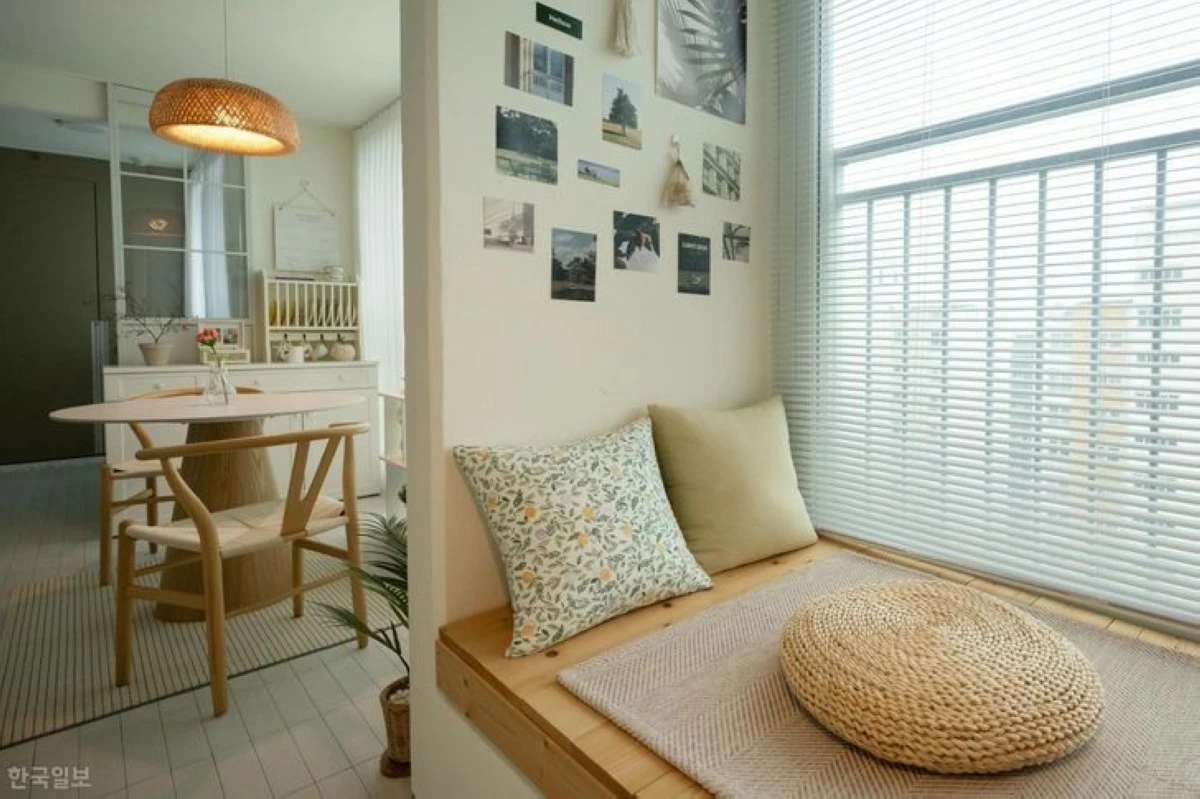
Kim Ri-ha's apartment balcony in Gimpo, Gyeonggi Province, serves as a home cafe. (Photo: The Korea Times/Kang Ye-jin)
By Hankookilbo
A balcony sits between an apartment's interior and the outdoors. Enclosing balconies to expand living rooms became a mainstream interior trend in Korea long ago as residents seek to maximize space.
However, an unenclosed balcony offers something special as the area closest to the outdoors. Because doors separate it from the main rooms, residents can easily decorate it as a distinct space. By discarding the misconception that balconies are only for storing belongings and hanging laundry, residents can make the most of the area's potential.
Here are the ways three households utilized their balconies.
Checking into balcony lounge
Yoon Ji-in, 44, who asked to use a pseudonym, vividly remembers her childhood habit of asking her parents to visit restaurants with yellow lighting simply for the atmosphere. Yoon's family of four moved into their Daegu apartment five years ago. The home featured a long, continuous balcony attached to the main bedroom, the living room and a small room.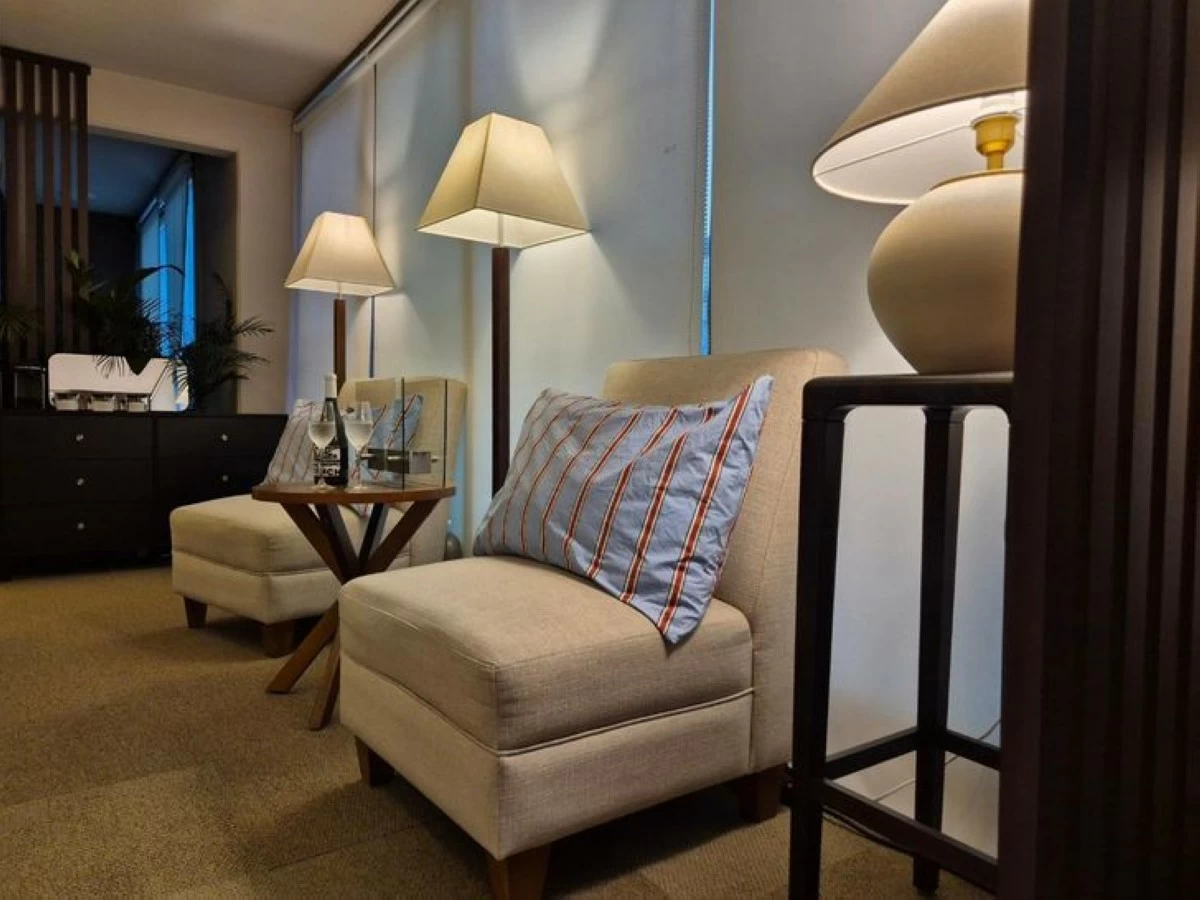
Yoon Ji-in, a pseudonym, transforms her apartment balcony into a hotel-style lounge using carpet tiles, a single sofa, a table and lighting. A slatted wood partition and storage unit separate the area from the adjacent bedroom balcony. (Photo: The Korea Times/Yoon Ji-in)
She decided against enclosing it. Removing the balcony required replacing window frames, which drastically increases costs. She also worried about insulation and condensation problems.
Instead, she turned the balcony into a hotel lounge-like space. She laid carpet tiles and painted the walls with ivory waterproof paint. She divided the long space with a slatted wood partition and storage units. She placed two single sofas and a table on the living room side, and a long sofa on the bedroom side. To create a hotel feel, she placed an unplugged capsule coffee machine and a cordless telephone on the table.
"Styling cost about 1.2 million won ($800) for lighting, carpet tiles, furniture and partitions," Yoon said.
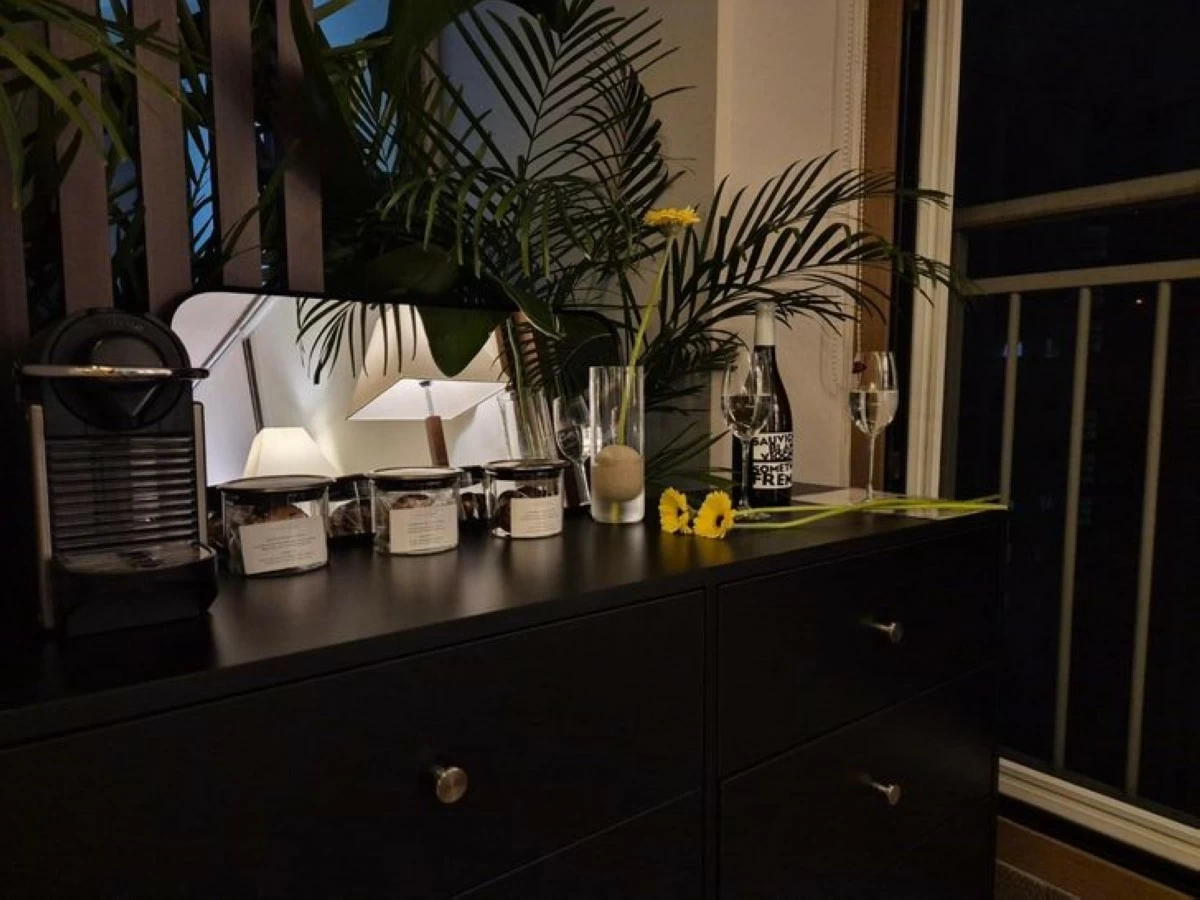
A black storage unit divides the living room and bedroom balconies in Yoon Ji-in's apartment. (Photo: The Korea Times/Yoon Ji-in)
She arranged the single sofas to face the living room rather than the outdoors. Because an apartment building stands directly across from her home, facing outside felt uncomfortable, Yoon said. The inward-facing layout also transformed the view from the living room itself.
"In a way, the balcony becomes the living room view," Yoon said. "Even when I am not using the balcony, it pleases my eyes."
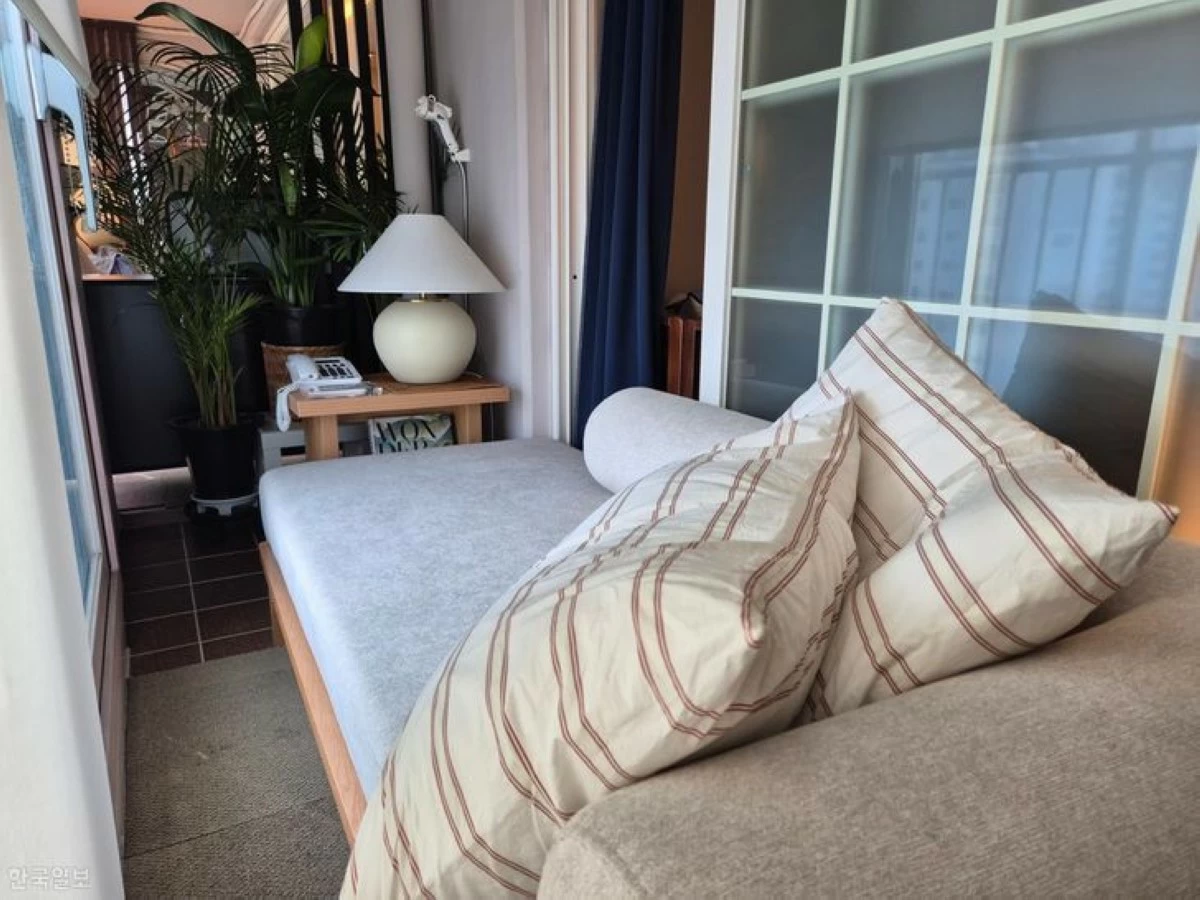
Yoon Ji-in styles her bedroom balcony with a long sofa, cushions and a table. The unplugged telephone serves as a prop to complete the hotel aesthetic. (Photo: The Korea Times/Kim Na-yeon)
Secret escape at home
Oh Jung-won, 28, also made the most of her balconies when she moved into her newlywed home in Jecheon, North Chungcheong Province, two years ago. The home featured four balconies. She enclosed one to create a dressing room, while the remaining balconies were tranformed for different purposes.She turned the remaining spaces into a litter area for four cats and two distinct hideouts. By keeping the living room's original folding door, she created a cafe and a photo zone. The bedroom balcony features a deep forest theme. Oh laid a dark green moss and flower rug, adding a wooden desk, artificial plants and vintage items.
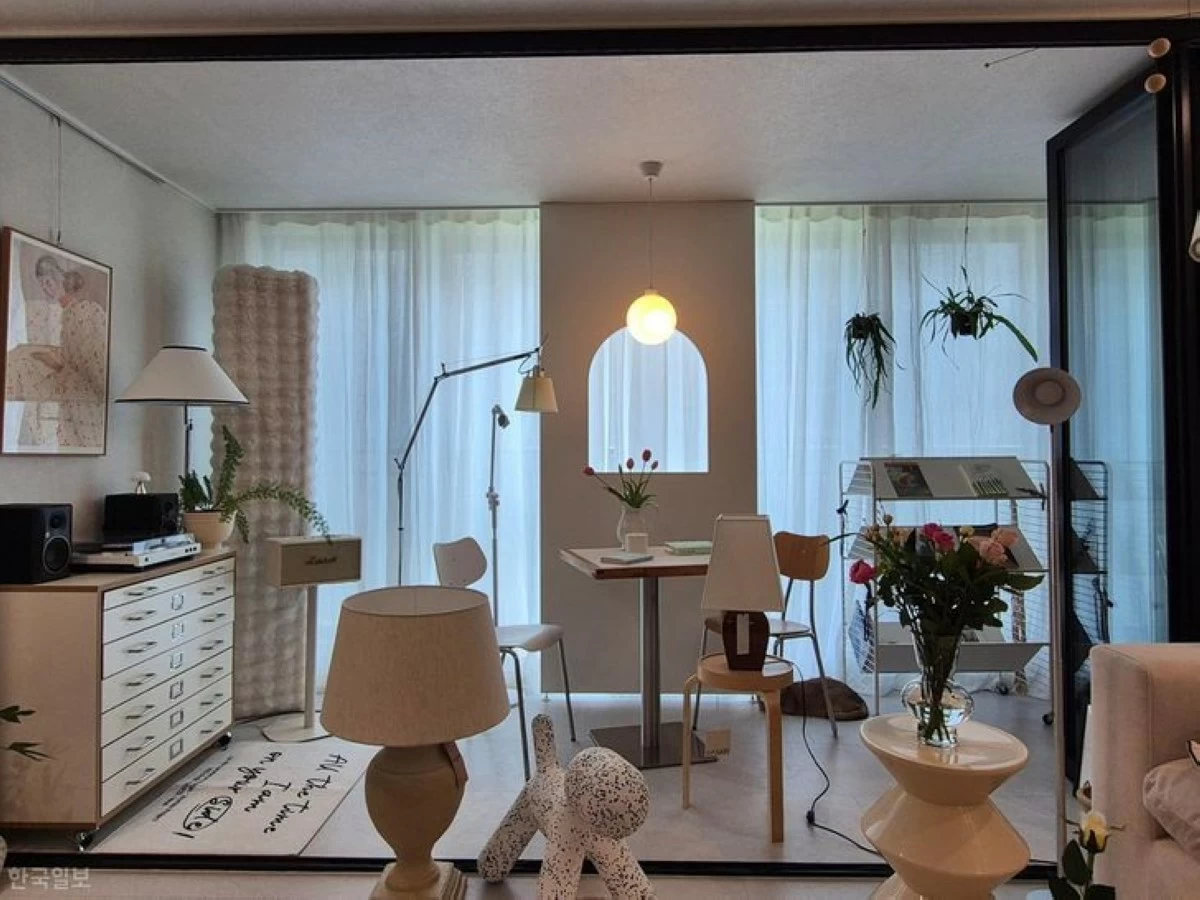
The expanded living room balcony in Oh Jung-won's apartment serves as a separate space by keeping the existing folding doors. She furnished the area with a table, storage unit and magazine rack to create a home cafe and photo zone. (Photo: The Korea Times/Kim Na-yeon)
"I write in my diary or read books here," Oh said. "It is my own hideout that I especially look for on rainy days."
The study balcony provides a bright and fresh atmosphere. She placed plants around the space and set up a cat tower in the corner. She hung plants toxic to cats high out of reach to protect her pets, which love the space and enter whenever the door is open. Oh uses the space all year round. In winter, she relies on a space heater and a blanket, noting the small area warms up quickly. She also specifically selects cold-tolerant plants.
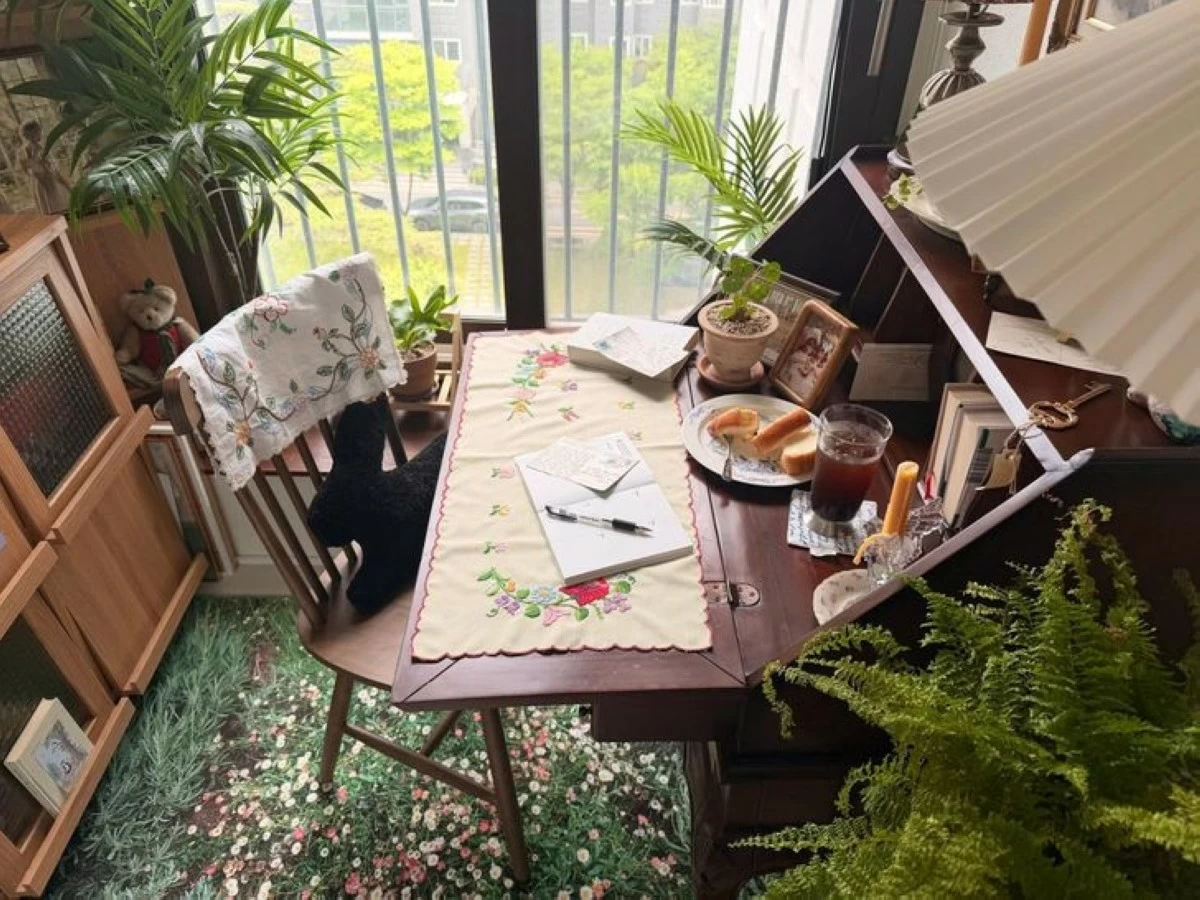
Oh Jung-won transforms her bedroom balcony into a personal hideout, decorating it with a forest-themed rug, a wooden desk, a storage unit and vintage props. (Photo: The Korea Times/Oh Jeong-won)
The interior styling for the two hideouts offered good value, costing about 1 million won. She spent 970,000 won to fill the space with furniture. She saved money by purchasing a secondhand desk and using a rug and cat tower she already owned.
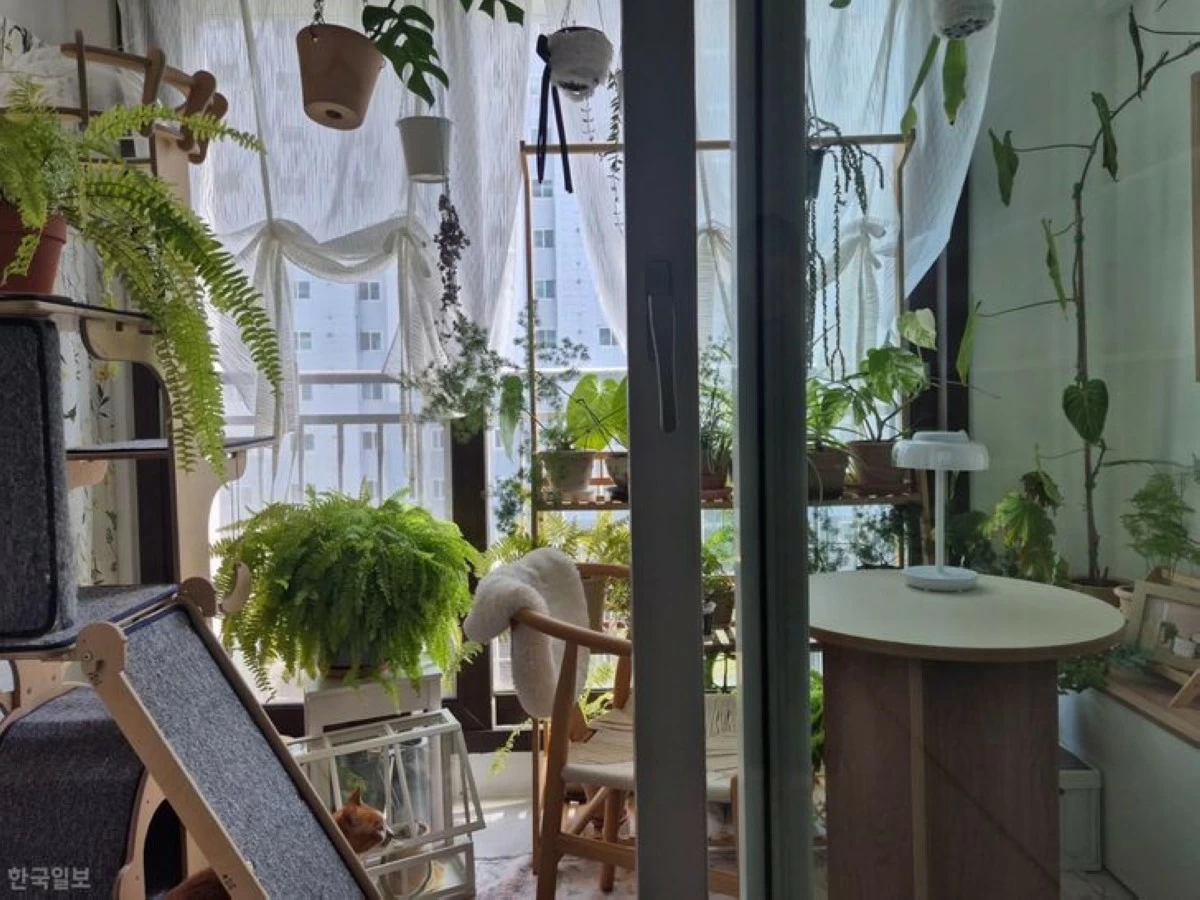
Oh Jung-won's study balcony, her cats' favorite spot (Photo: The Korea Times/Oh Jung-won)
Sunlit home cafes
Kim Ri-ha, 39, has a long balcony running from the study to the living room and bedroom at her home in Gimpo, Gyeonggi Province. The interior measures roughly 640 square feet, and the balcony measures about 210 square feet. The unexpanded space accounts for a quarter of the apartment's total floor space.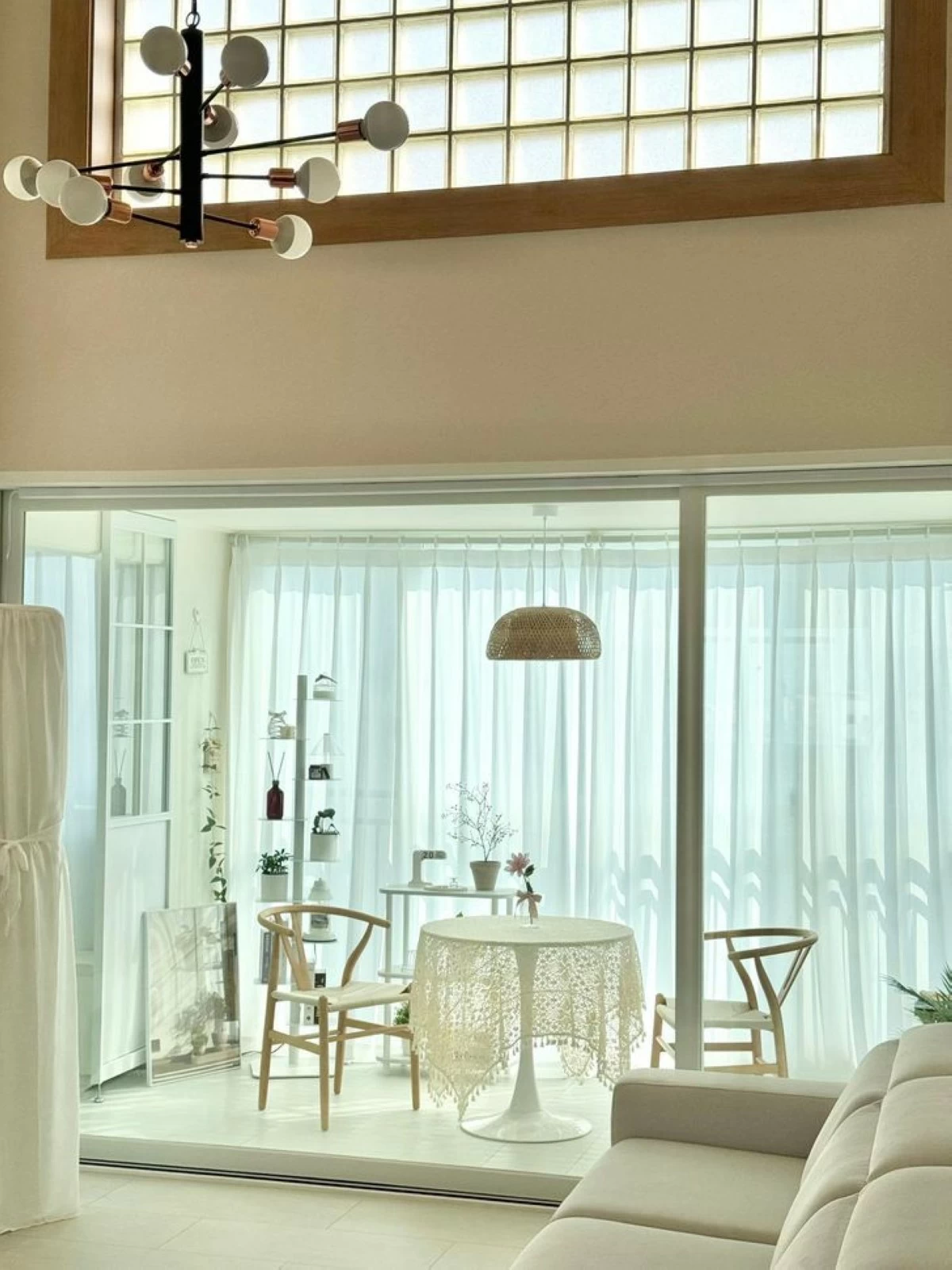
Kim Ri-ha's living room balcony (Photo: The Korea Times/Kim Ri-ha)
Kim considered enclosing it but decided against it. Because the apartment sits on the top floor, the living room features high ceilings, while the balcony ceiling remains low. Enclosing the balcony would make the connected space look disjointed, so she decided to use the structural difference to decorate the spaces differently.
"Instead of going to cafes, I work on the balcony, so the time I stay at home has increased a lot," Kim said.
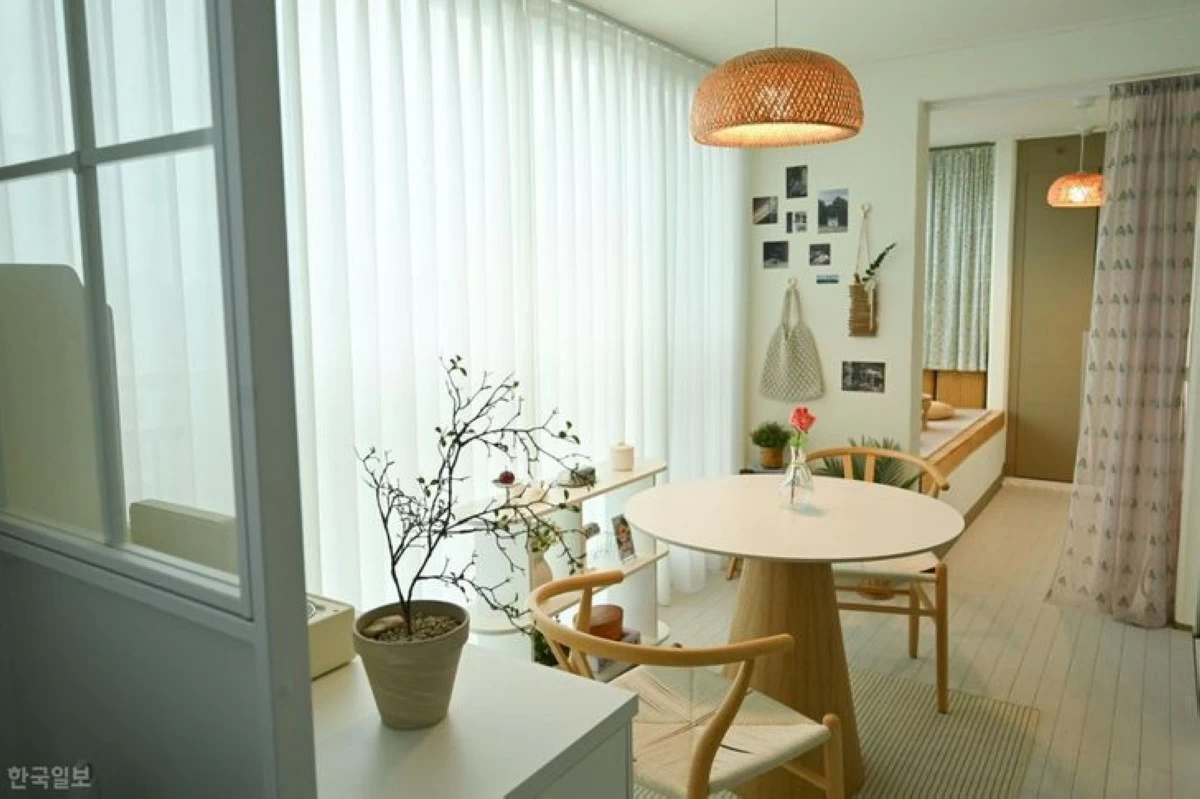
Kim Ri-ha transforms her living room balcony in Gimpo, Gyeonggi Province, into a sunlit home cafe furnished with a table, chairs and vintage props. She separates the long, continuous balcony space using a partition wall and curtains. (Photo: The Korea Times/Kang Ye-jin)
Kim used a partition wall and curtains to divide the balcony into three sections. She uses the study side for a robot vacuum and recycling bins. She turned the other two areas into home cafes. She laid interlocking floor tiles matching the interior and filled empty gaps with white pebbles to create an outdoor feel.
The living room balcony features a table, chairs, rattan lighting, vintage plates and artificial flowers. Kim uses this cozy spot to work from home. She turned the bedroom balcony into a raised wooden deck inspired by a trip to Jeju Island. Kim mainly uses the living room balcony when working on a laptop, and she moves to the wooden deck to read or listen to music.
Enclosing a balcony and replacing window frames easily costs more than 10 million won, but Kim styled her two home cafes for roughly 2.8 million won. She spent 1.1 million won to wrap the door's cherry molding in vinyl film, 400,000 won on interlocking floor tiles and 460,000 won on a DIY wooden deck.
Balcony's appeal
All three residents shared their thoughts on the common practice of enclosing balconies. They agreed that enclosing them is a good choice depending on personal taste, but unenclosed balconies possess special charms.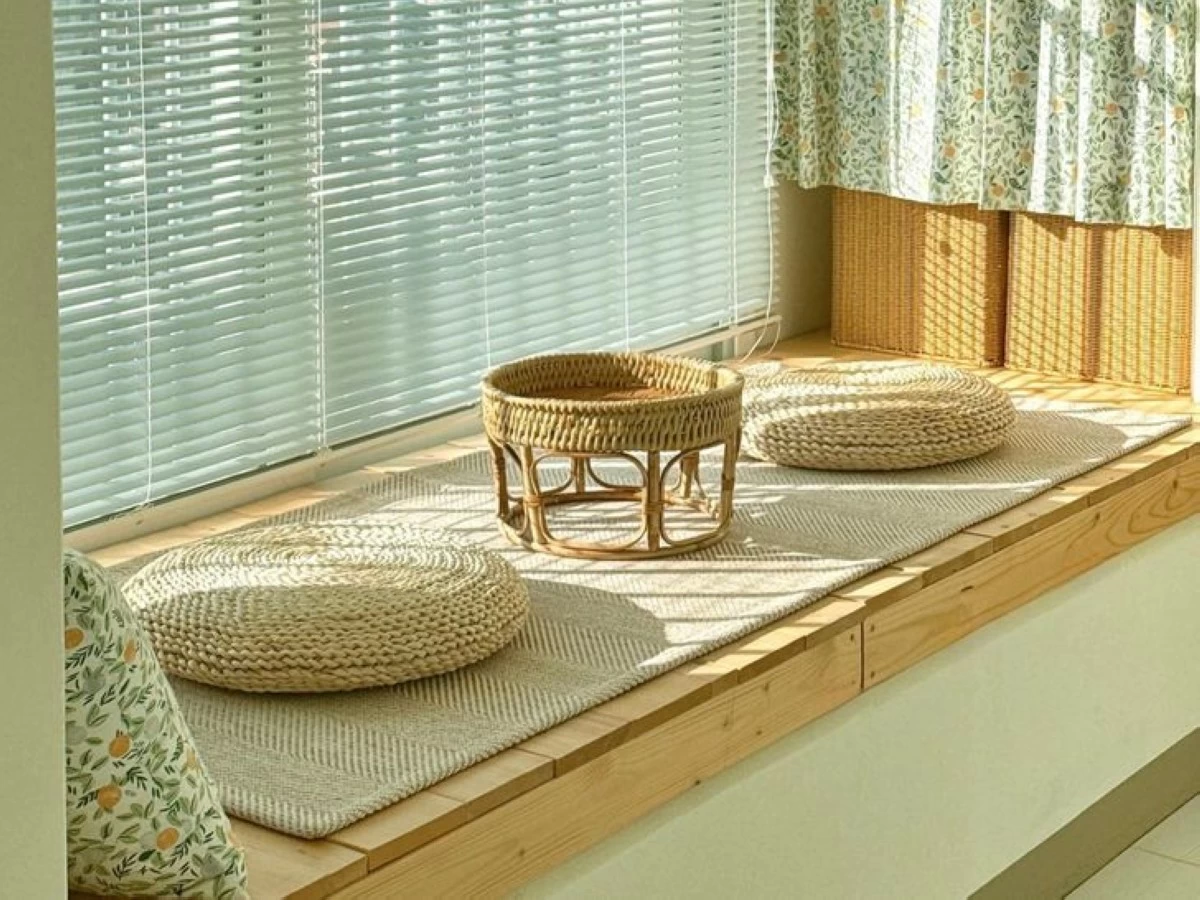
Kim Ri-ha transforms a built-in flower bed on her bedroom balcony into a raised wooden deck to serve as a home cafe. (Photo: The Korea Times/Kim Ri-ha)
"A well-designed balcony feels like adding an entirely new room to your home," Oh said. "Even if I move, I would rather get creative with the balcony than simply enclose it."
"The charm of a balcony is that you can step right out of your living room and instantly enter a completely different atmosphere," Yoon said.
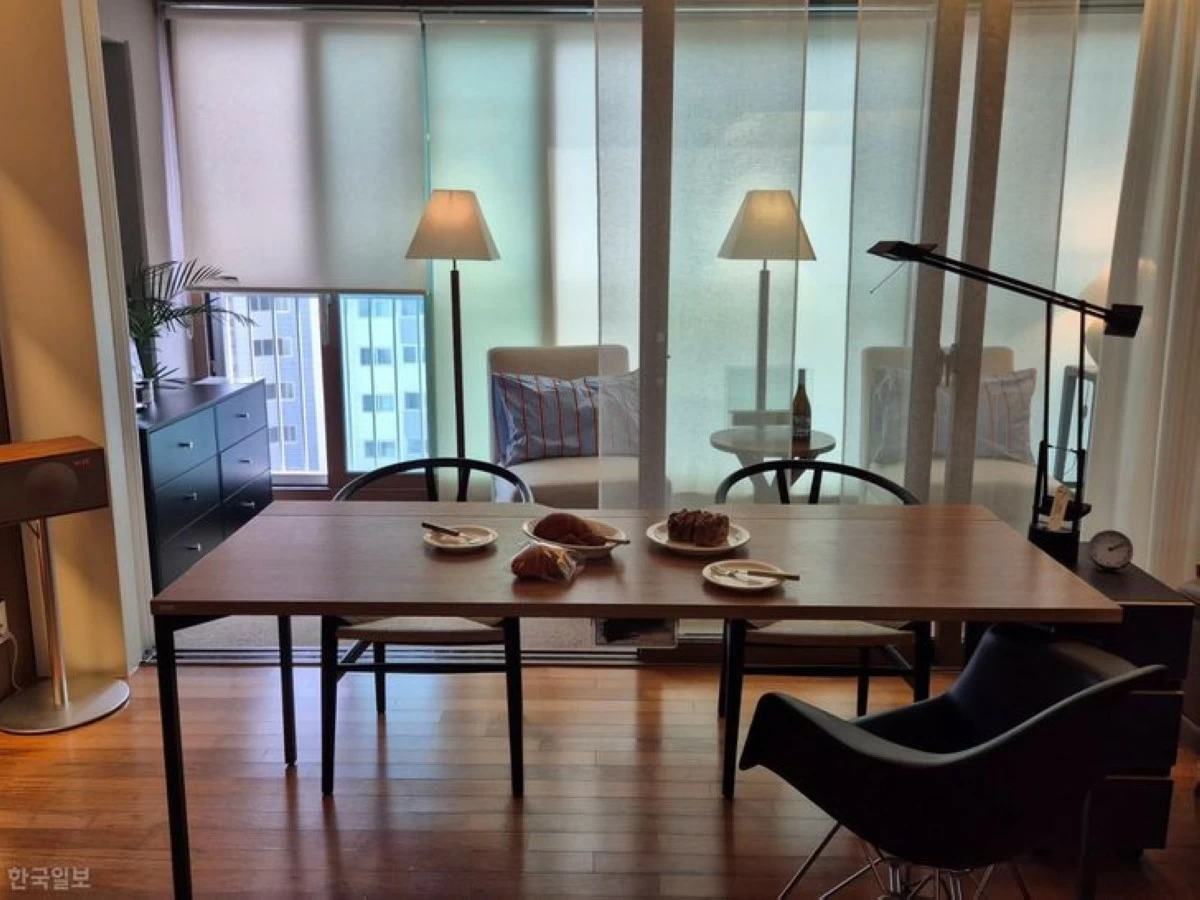
Yoon Ji-in's living room balcony is seen from inside her apartment. Blinds cover the windows to block the view of the neighboring building, while the single sofa and table face inward toward the living room. (Photo: The Korea Times/Kim Na-yeon)
"The balcony is special because it bridges the indoors and outdoors, letting in the breeze and sunlight," Kim said. "If you want to create a unique space that reflects your personal style, I highly recommend making the most of it."
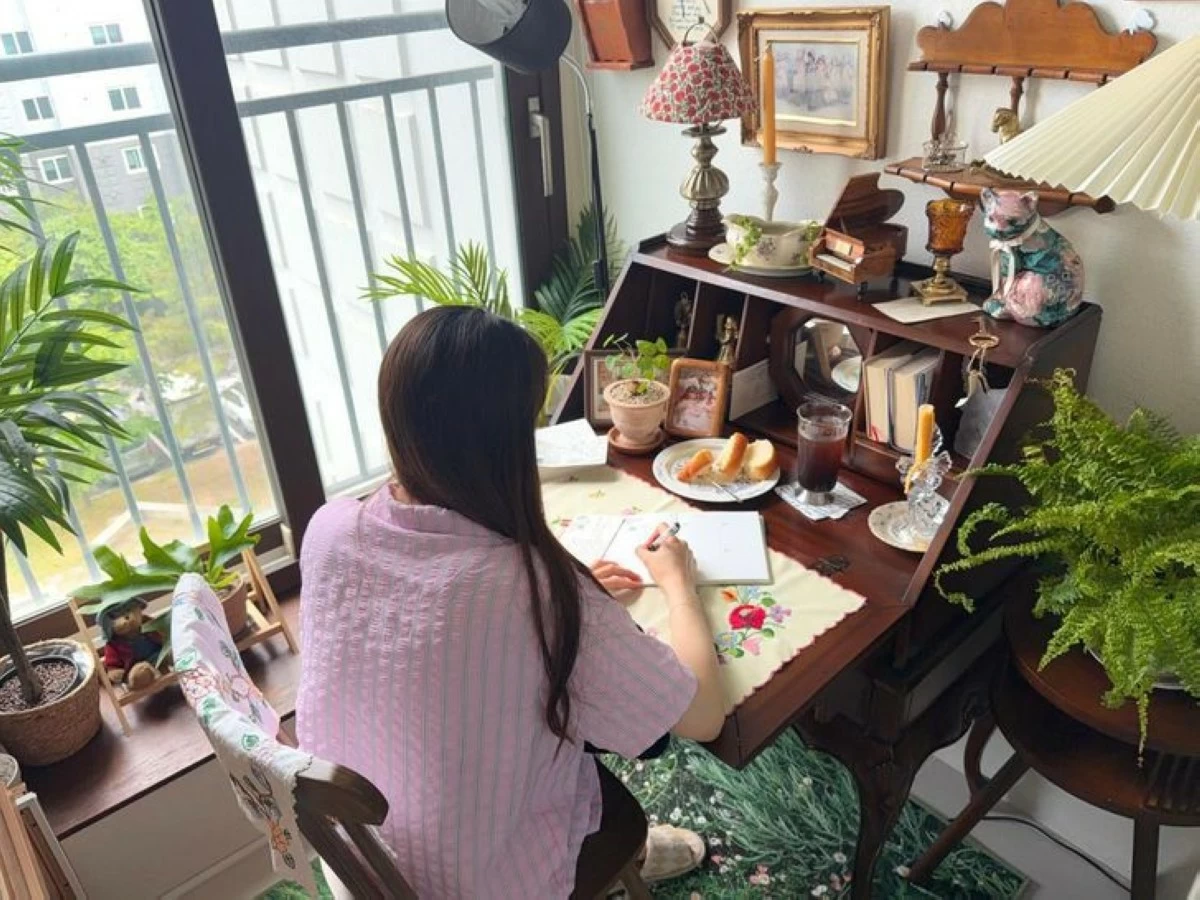
Oh Jung-won writes in her journal on her bedroom balcony. She calls the space, decorated with her favorite vintage items, her personal hideout. (Photo: The Korea Times/Oh Jung-won)
This article from the Hankook Ilbo, the sister publication of The Korea Times, is translated by a generative AI system and edited by The Korea Times.