







DOH stresses proper earthquake safety measures
Published Jun 6, 2026 01:49 pm


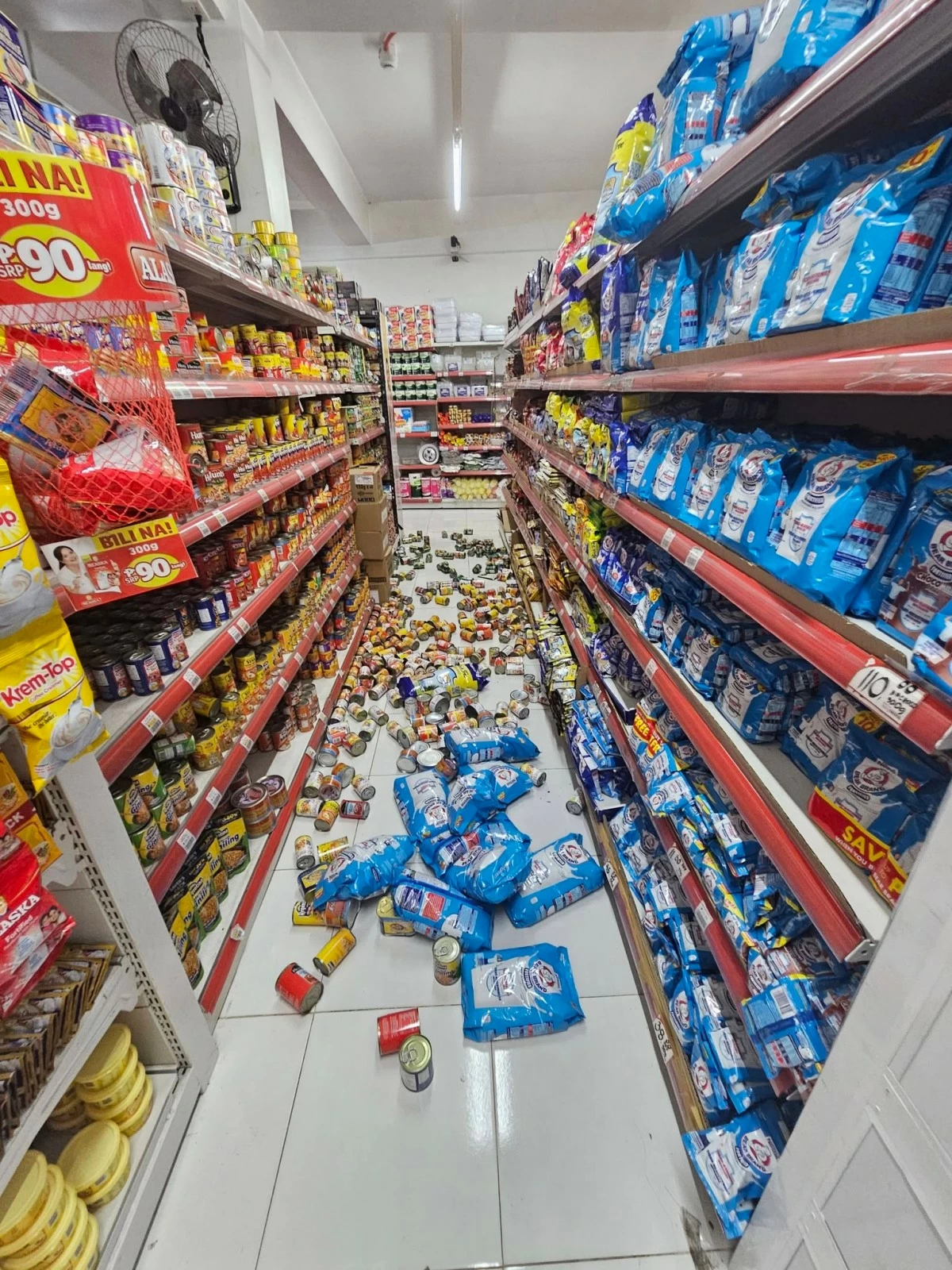
GROCERIES fall off shelves during an earthquake in the Bicol region Friday night. (Grocer8 FB)
The Department of Health (DOH) reminded residents to observe proper safety measures before, during, and after an earthquake, following a magnitude-5.3 earthquake shook the Bicol region at 9:57 p.m. on Friday.
In an advisory on Saturday, the DOH emphasized the importance of preparedness and awareness to reduce the risk of injuries and other health-related emergencies during seismic events.
The agency urged the public to identify the nearest and safest emergency exits in their homes, offices, and other buildings, as well as designated evacuation areas and the quickest routes leading to them.
It also advised the public to prepare an emergency supply kit or “go bag” containing food, water, toiletries, medicines, first-aid supplies, personal protective equipment, clothing, bedding, flashlights, batteries, and other essential items that can be readily accessed during emergencies.
The DOH further encouraged families to familiarize themselves with the proper use of first-aid kits, fire extinguishers, and alarms, and to know how to safely shut off water lines, gas tanks, and electrical circuit breakers.
It advised the public to remain calm and alert during an earthquake and follow the “Duck, Cover, and Hold” procedure by taking shelter under sturdy furniture and protecting themselves from falling objects.
It reminded people to stay away from glass windows, mirrors, doors, walls, and hanging objects that may fall or shatter. The use of elevators should be avoided while shaking is ongoing.
People outdoors should move to open areas away from buildings, trees, power lines, and other structures, while motorists are advised to stop in a safe location and avoid bridges, flyovers, and overpasses.
Once the shaking stops, the DOH said, residents should immediately proceed to the nearest safe evacuation area and monitor official announcements through radio, television, or government information channels.
Before returning home, families should inspect their houses for structural damage, cracks, electrical hazards, and damaged utilities.
The department also warned against using electrical switches or appliances if power lines are suspected to have been damaged.
The DOH urged the public to remain alert and follow official advisories to ensure their safety and that of their families during possible aftershocks and future seismic events.
The Philippine Institute of Volcanology and Seismology (Phivolcs) traced the tremor's epicenter at 15 kilometers south of Santo Domingo, Albay, with a depth of nine kilometers.
Intensity V was felt in Santo Domingo and Legazpi City, Albay; and Intensity IV in Tabaco City, Ligao City, and Malilipot town in Albay, as well as in Cogon, Irosin, and Donsol in Sorsogon.
Meanwhile, Intensity III was felt in Naga City and Malinao in Albay, as well as in Sorsogon City, Prieto Diaz, and Juban in Sorsogon; and Intensity II in Goa, Camarines Sur and Bulan, Sorsogon.
Meanwhile, Phivolcs logged the following instrumental intensities:
Intensity VI – City of Tabaco, Albay;
Intensity V – Castilla, Sorsogon;
Intensity IV – Sorsogon City, Iriga City, both in Camarines Sur; Intensity III – Prieto Diaz, Sorsogon; Monreal, Masbate; Sagñay, Sipocot, and Pili, Camarines Sur; and Mercedes, Camarines Norte.
Reported intensity is the traditional way of determining intensity based on reports from people who felt the earthquake.
Instrumental intensity, on the other hand, is measured using the intensity meter that measures ground acceleration.
Phivolcs said both aftershocks and damage are expected from the earthquake.