






Manila Bulletin
 Philippines
National
DepEd issues new emergency response guidelines for schools ahead of SY 2026-2027
Philippines
National
DepEd issues new emergency response guidelines for schools ahead of SY 2026-2027
Philippines
National
DepEd issues new emergency response guidelines for schools ahead of SY 2026-2027
DepEd issues new emergency response guidelines for schools ahead of SY 2026-2027
By Jel Santos
Published Jun 6, 2026 03:03 pm


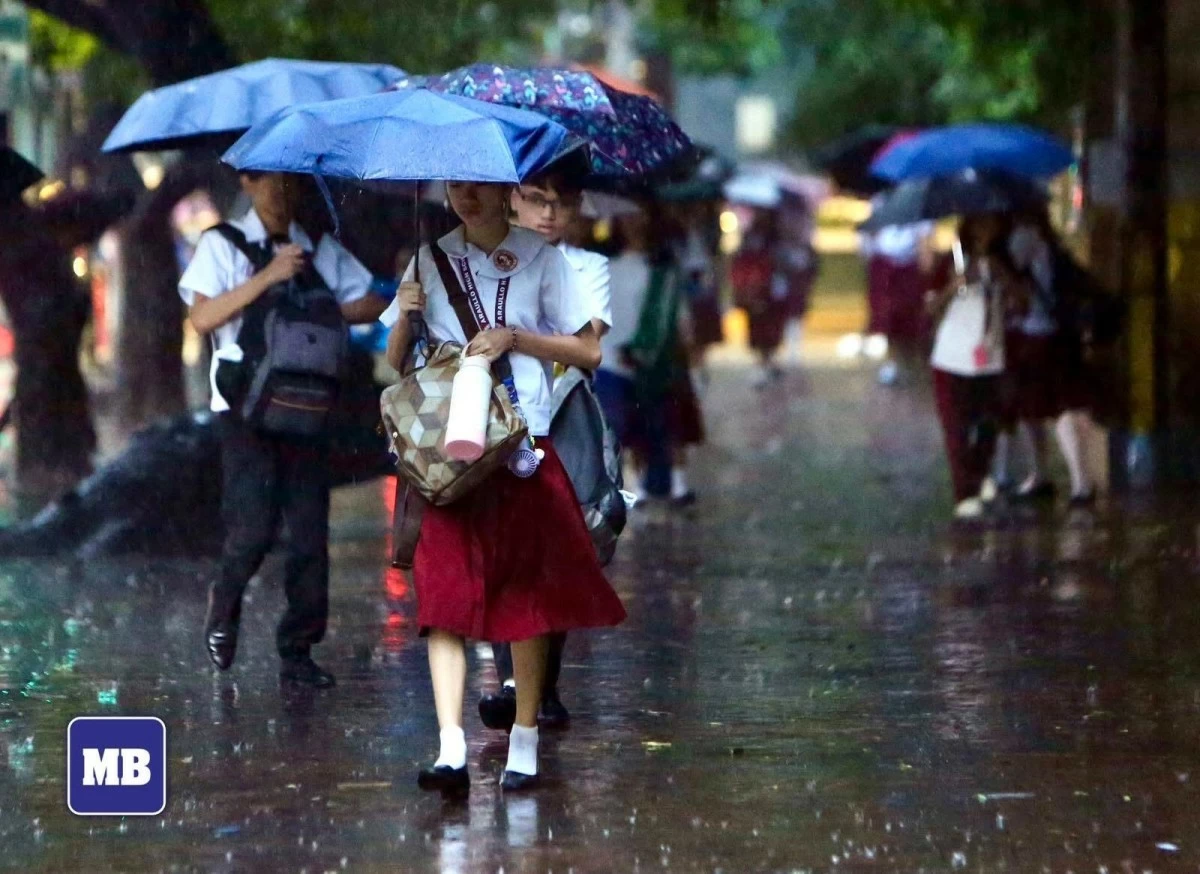
(MB FILE PHOTO)
With the opening of School Year 2026-2027 just around the corner, the Department of Education (DepEd) has rolled out new guidelines designed to help schools sustain learning during emergencies without compromising the safety and well-being of learners and education workers.
Under DepEd Order No. 14, series of 2026, the Guidelines on Learning Continuity in Emergencies establish a clearer decision-making framework for school heads, Division Alternative Learning System Focals, and Schools Division Superintendents when classes are disrupted by typhoons, floods, earthquakes, extreme heat, health emergencies, violence, armed conflict, and other crisis situations.
According DepEd Secretary Juan Edgardo “Sonny” Angara, the first consideration during emergencies should be the safety of students and teachers, as well as their readiness to resume learning and teaching.
“Hindi pwedeng pareho ang hinihingi natin sa kanila kapag normal ang sitwasyon at kapag may pinagdadaanan silang panganib, takot, o pagkawala (It is not reasonable to expect the same from them when conditions are normal and when they are dealing with danger, fear, or loss),” he went on.
Angara said that learning continuity should never come at the expense of safety.
“Ang tunay na learning continuity ay may malasakit—alam kung kailan magpapatuloy, kailan babagal, kailan magche-check in, at kailan kailangang huminto muna para unahin ang kaligtasan (True learning continuity is rooted in compassion—it knows when to move forward, when to slow down, when to check in, and when to pause in order to prioritize safety).”
DepEd said the policy is anchored on the principle that the well-being of learners and teachers is essential to effective learning and teaching, and introduces a levels-based Learning Continuity Framework to help schools determine appropriate responses during emergencies.
“The four levels are Hayo or Continue, where regular in-person learning proceeds when stakeholders are safe; Hinay or Ease-in, where learning continues at a slower and more flexible pace during mild disruptions; Hinga or Check-in, where academic demands are reduced and well-being checks are prioritized; and Hinto or Stop, where academic learning is halted because safety and basic needs are at risk,” the agency stated.
DepEd explained that the framework allows school heads to work closely with schools division superintendents and local government units (LGUs) to implement localized class suspensions based on actual conditions in their communities.
“This ensures that decisions are tailored strictly to affected classrooms or specific grade levels, doing away with the usual generic, division-wide ‘no classes for all’ cancellations,” it said.
As such, the education department said the guidelines outline standards for the development and use of emergency learning resources, such as learning packets, print and digital modules, broadcast materials, family kits, check-in guides, home-based learning support, and emergency learning kits, according to DepEd.
“These are intended to sustain learning without placing unnecessary pressure on learners and teachers,” the agency added.
Per DepEd, the policy works alongside EduKahon, which serves as the department’s standard school recovery package for sustaining learning during disasters.
“These specialized, pre-positioned kits contain essential teaching and learning materials tailored to sustain education even when classrooms are inaccessible or damaged.”
In addition, the agency said that schools are directed to update their Learning and Service Continuity Plans annually before the school year and every term, conduct capability mapping of learners and teachers, establish emergency call trees, and orient parents and guardians on learning continuity during the Opening Block of the school year under the three-term school calendar.
“For teachers, the policy provides for capacity building on trauma-informed teaching, psychological first aid, and learning delivery across different emergency levels,” said DepEd.
“Regional Offices and Schools Division Offices are also directed to support teacher mental health and emergency assistance, especially in high-risk or under-resourced areas.”