






 Philippines
National
Chinese envoy seeks visa-free travel to Boracay and Bohol, says tourism fosters Philippines-China ties
Philippines
National
Chinese envoy seeks visa-free travel to Boracay and Bohol, says tourism fosters Philippines-China ties
Chinese envoy seeks visa-free travel to Boracay and Bohol, says tourism fosters Philippines-China ties


At A Glance
- Chinese Ambassador Jing Quan said increased tourism and people-to-people exchanges can help address misunderstandings between the Philippines and China.
- The envoy revealed discussions on expanding visa-free arrangements to Boracay and Bohol.
- Chinese tourist arrivals to the Philippines have increased by 63 percent since January, he said.
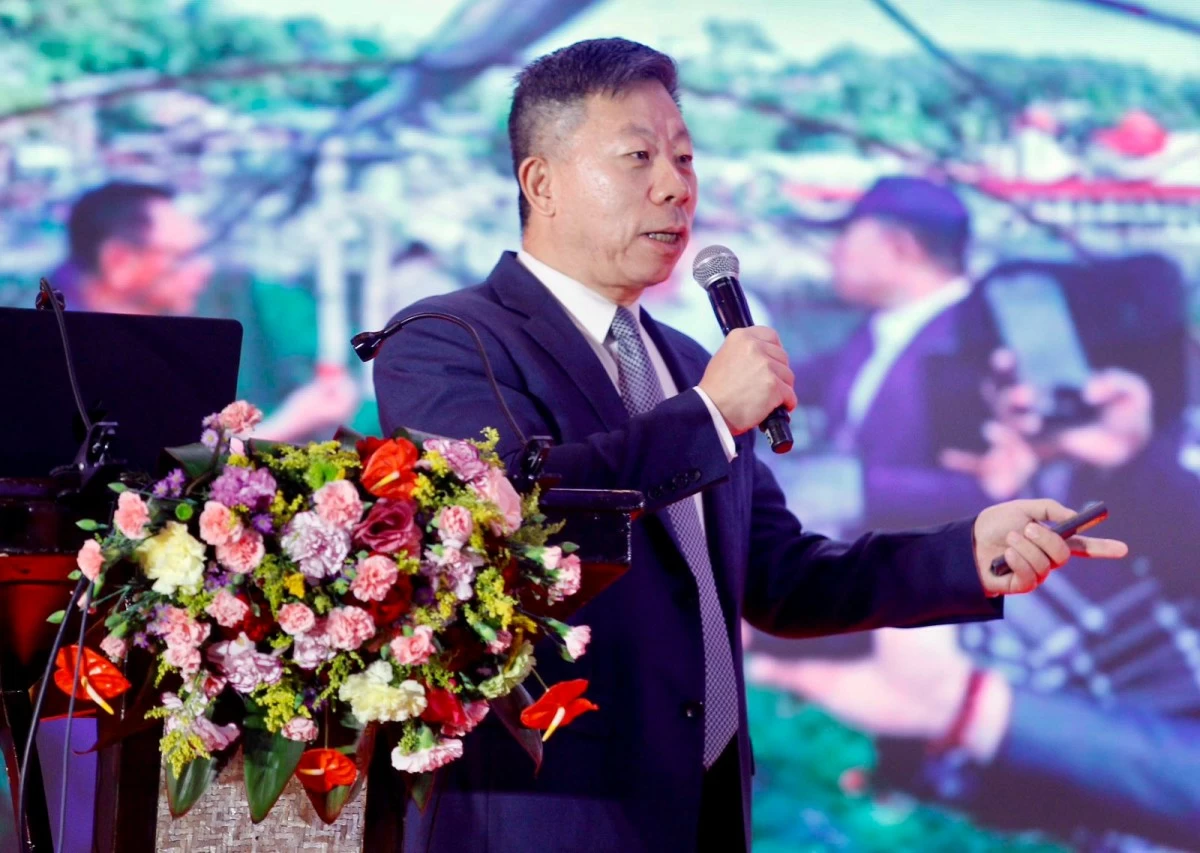
Chinese Ambassador Jing Quan said increased tourism and people-to-people exchanges could help ease misunderstandings between the Philippines and China, as he disclosed ongoing discussions with Philippine officials on a proposal to extend visa-free arrangements to visitors traveling to Boracay and Bohol.
Speaking at an event in Manila on June 3, Jing said greater interaction between Filipinos and Chinese would help foster better understanding despite differences between the two countries.
“And also, we currently, our embassy, we work very hard to boost the people-to-people exchange,” Jing said during the Awards for Promoting Philippines-China Understanding (APPCU) at the Manila Hotel.
“And we think when people visit each other more, that kind of misunderstanding, misperception will eventually disappear. That's my strong belief,” he added.
Visa-free access being discussed
The ambassador said he recently discussed with the Department of Foreign Affairs (DFA) and the Department of Tourism (DOT) the possibility of extending visa-free arrangements to Boracay and Bohol to encourage more Chinese visitors.
Jing said local tourism stakeholders in Boracay had appealed for help in restoring charter flights from China.
“When I visited there, people there, they say, ‘Oh, Ambassador, could you please help us to bring the charter flights back?’” he said.
“But I said, if you want me to bring the charter flights back, we have to extend the visa-free policy to Boracay and Bohol,” he added.
The envoy said discussions are ongoing and could eventually cover other Philippine destinations.
“So recently, I talked to the DFA and the Department of Tourism. And try to extend the visa-free policy to those two cities, and maybe some other cities,” he said.
“And then I can bring more direct flights to Boracay, Bohol, and other places,” he added.
The Chinese ambassador said visitor arrivals from China to Boracay are beginning to recover after the pandemic.
According to Jing, around 430,000 Chinese tourists visited Boracay in 2019.
That figure fell to only 17,000 in 2025.
However, he noted that 16,000 Chinese tourists already visited Boracay during the first quarter of 2026 alone.
Chinese arrivals up 63%
Jing also reported a sharp increase in Chinese tourist arrivals following the Philippines' implementation of visa-free entry for Chinese tour groups earlier this year.
“You know what? Since January until now, Chinese tourists… increased 63 percent compared with last year,” he said.
The ambassador likewise noted growing interest among Filipinos in visiting China.
“The number of Filipino people visiting China also increased by 20 percent,” he said.
“Last year, over 1 million visited China,” he added.
More direct flights
Jing said both countries have expanded air connectivity in recent months.
He cited newly opened direct routes between Cebu and Fujian, Manila and Chongqing, and Manila and Hangzhou.
The envoy also announced plans for a new direct flight connecting Manila and Haikou in China's Hainan province.
“So remember, Hainan province now is visa-free, 30 days visa-free for Filipino citizens, and duty-free,” Jing said.
“So I think it's good for Filipino people to visit Hainan and do shopping there,” he added.
Social media influence
Jing also highlighted the role of social media in driving tourism between the two countries.
He cited a dance performance by hotel staff in Boracay that has become popular on Chinese social media platforms.
“Many people are waiting there, watching their performance, shooting a video, and publishing on TikTok,” he said.
“So they're very popular now on TikTok in China,” he added.
The ambassador also noted that China recently invited Filipino content creators to Chongqing to promote tourism and cultural exchanges between the two countries.
He said such initiatives help encourage travel while strengthening people-to-people ties between Filipinos and Chinese.