







A month when music belongs to everyone
Published Jun 6, 2026 12:30 pm


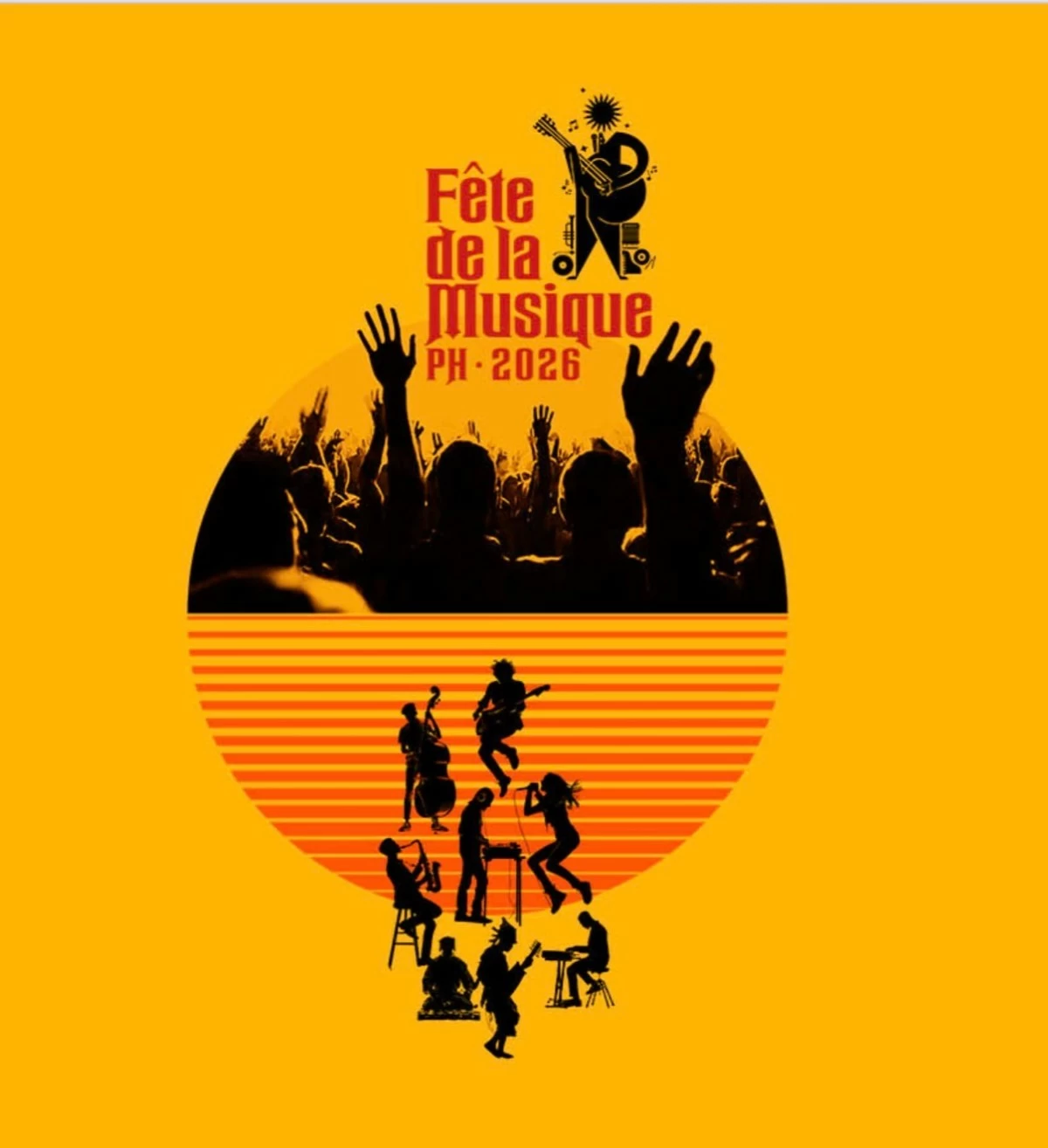
For the people, by the people. “Fête de la Musique” returns for its 32nd year. (Artwork: Alliance Française de Manille)
One of the most remarkable things about “Fête de la Musique” is how little it asks of its audience.
No ticket. No dress code. No membership. No invitation. Everyone is invited to simply show up.
For more than three decades in the Philippines, that simple premise has helped transform what began as a French cultural initiative into one of the country’s most enduring celebrations of music. This June, “Fête de la Musique” returns for its 32nd Philippine edition, bringing with it a month-long calendar of performances, workshops, pocket stages, and community events stretching across Luzon, Visayas, and Mindanao.
At a time when access to culture often comes with financial barriers, the festival continues to insist on a different idea: that music belongs to everyone. That principle sits at the heart of this year’s theme, “For the People, By the People.”
“Culture belongs to everybody,” said Olivier Dintinger, Executive Director of Alliance Française de Manille. “It shouldn’t be only accessible for the most privileged people.”
For Dintinger, that commitment to accessibility remains one of the festival’s most important achievements. What started in 1994 with a single stage has evolved into a nationwide cultural movement. This year alone, Fête de la Musique will activate dozens of stages across the country, bringing together professional musicians, emerging artists, community performers, volunteers, local governments, cultural institutions, bars, cafés, and public spaces.
“It’s really important to democratize music,” Dintinger said. “Whatever the social status is, people can discover all kinds of acts—from jazz, hip hop, rock, classical music.”
The festival’s French roots remain evident. Created in France in 1982, Fête de la Musique was built around a deceptively simple idea: music should be everywhere and accessible to everyone. Since then, it has expanded to more than 100 countries, becoming one of France’s most successful cultural exports.
Yet the Philippine edition has developed a distinct identity of its own.
Speaking during the launch, French Embassy Cultural Counsellor Mathilde Séjourné noted that few countries have embraced the spirit of the festival as enthusiastically as the Philippines.
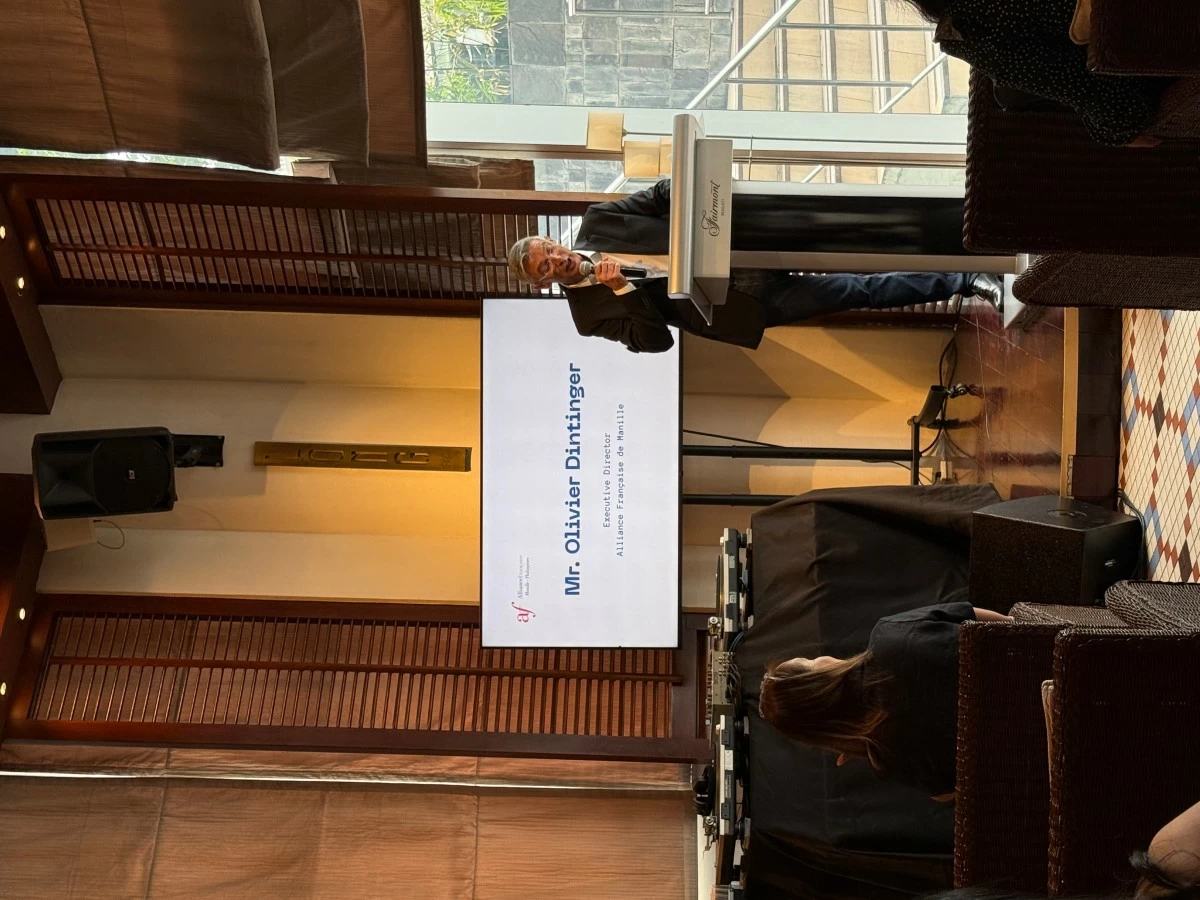
Alliance Française de Manille Director Olivier Dintinger says one of the major beliefs of the French people is that the arts should be democratized. (Photo: Carolyn Ramoran Hamilton)
“The success of Fête de la Musique here in the Philippines is a testament to the passion of Filipino musicians, their incredible talents and creativity and musical expression,” she said.
For many Filipinos, music is less an occasional pastime than part of everyday life. It spills out of homes, fills neighborhood gatherings, accompanies celebrations, and turns strangers into temporary audiences. Dintinger sees that shared cultural instinct as one of the reasons the festival continues to resonate.
“Music is a universal language,” he said. “It’s an opportunity to connect together during this Fête de la Musique.”
The centerpiece of this year’s celebration will take place on June 20 at Ayala Triangle Gardens, where OPM favorites Lola Amour, Radioactive Sago Project, Morobeats, and the Jewelmer Jazz Band will headline the Main Stage. French artists will also be part of the festivities, including “krautrock” trio Meule and French-Vietnamese harpist Héloïse La Harpe.
Beyond the headline performances, however, the scale of the festival becomes more apparent through the events surrounding it. The month opens with Music Heals, a sound healing festival on June 10. French pianist Maxime Zecchini will perform intimate recitals on June 14 and 15, while the Asia-France Music Bridge Workshops on June 19 will bring together creative entrepreneurs and industry professionals for discussions on intellectual property and artistic growth.
Throughout June, pocket stages and destination stages will activate across the country, culminating in a nationwide network that stretches far beyond Metro Manila. This year, organizers are mounting 23 NCR stages and 33 destination stages across Luzon, Visayas, and Mindanao, extending the festival’s reach to communities that may never have attended the original Makati celebration.
For organizers, that expansion matters. What began as a celebration of French music has become something broader: a platform for cultural diversity, artistic discovery, and community participation. Or as Dintinger describes it, “a true community of communities.”
Perhaps that is why Fête de la Musique continues to endure after 32 years. What began as a French cultural initiative has evolved into something much larger—a platform where established artists, emerging musicians, and audiences meet on equal footing. The festival may have started in France, but its longevity in the Philippines was molded by the communities that continue to make it their own.