






Manila Bulletin
 Business
The Stock Market
Stocks rise as inflation slows, boosting hopes for smaller rate hikes
Business
The Stock Market
Stocks rise as inflation slows, boosting hopes for smaller rate hikes
Business
The Stock Market
Stocks rise as inflation slows, boosting hopes for smaller rate hikes
Stocks rise as inflation slows, boosting hopes for smaller rate hikes
Published Jun 5, 2026 04:59 pm


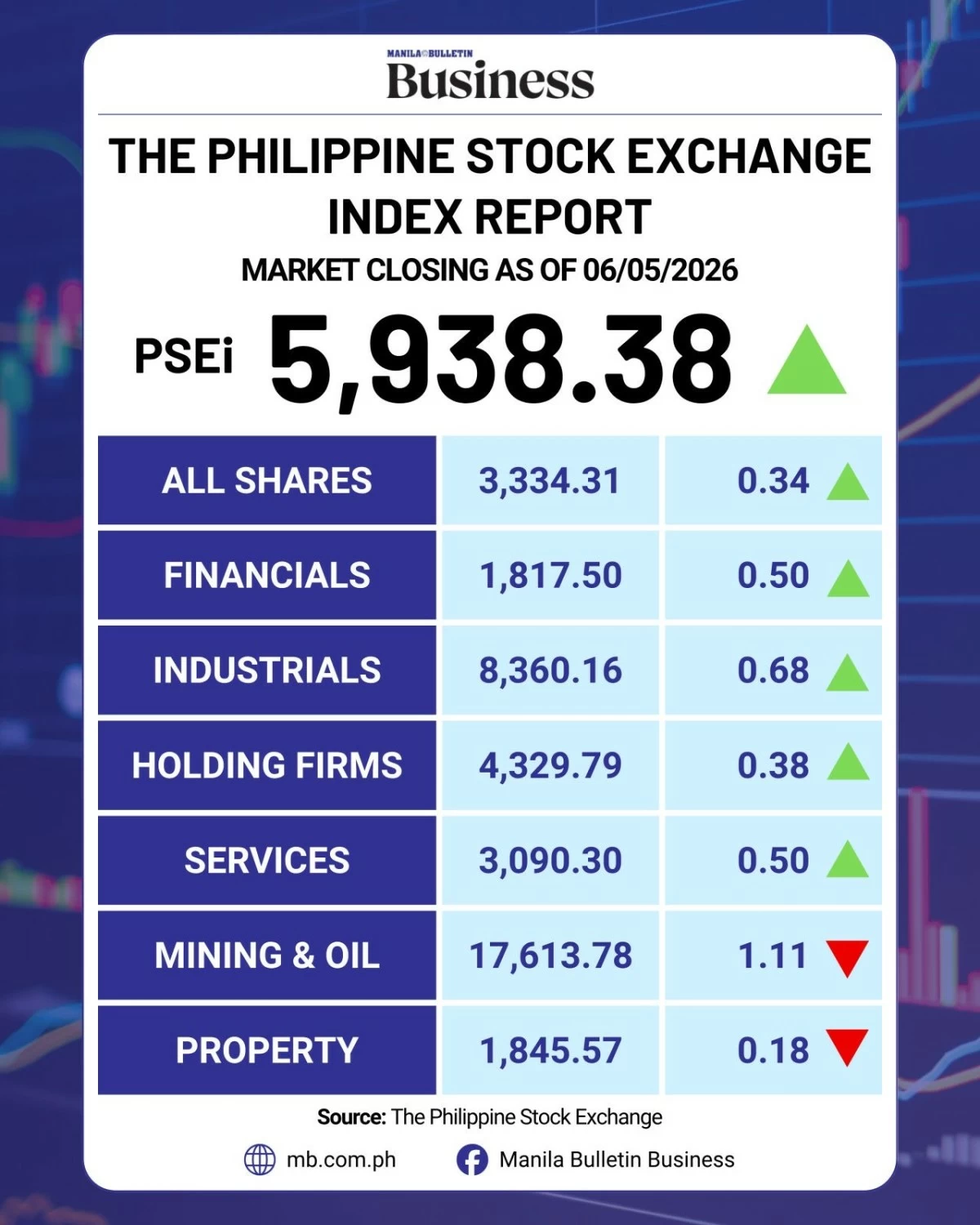
Local equities advanced as consumer price growth slowed more than economists anticipated, tempering fears of prolonged aggressive monetary tightening, but gains were capped later in the session amid escalating geopolitical tensions in the Middle East.
The benchmark Philippine Stock Exchange index (PSEi) rose 26.45 points, or 0.45 percent, to settle at 5,938.38 on Friday, June 6. The Industrial index spearheaded the advance, offsetting declines in the Mining and Property sectors.
Trading turnover remained steady, with 489 million shares changing hands valued at ₱7.24 billion. Market breadth was positive, as 97 stocks advanced, 84 declined, and 55 ended unchanged.
The rally was triggered by domestic data showing May inflation cooled to 6.8 percent, decelerating from the 7.2 percent pace recorded in April. The reading fell below the Bangko Sentral ng Pilipinas’ projected forecast range of 7.1 percent to 7.9 percent for the month.
“The PSEi ended higher after inflation came in better than expected, boosting investor sentiment,” said Luis Limlingan, managing director at Regina Capital Development Corp. “Improved price data encouraged selective buying as confidence in the near-term outlook strengthened.”
Limlingan added that while the consumer price data provided clear fundamental catalyst, broader market participation maintained measured, cautiously optimistic tone due to lingering macroeconomic uncertainties.
Domestic equities have been under pressure in recent weeks amid volatile currency environment and risks of imported inflation via global energy markets. The cooler inflation print offers a reprieve for local corporate earnings, which have been strained by elevated borrowing costs.
“The local market bounced back as investors cheered the latest inflation print,” said Japhet Tantiangco, research manager at Philstocks Financial Inc. He noted that the lower-than-expected print raises the probability that the central bank will be less aggressive in its policy trajectory moving forward.
Despite the positive inflation data, institutional buying stayed selective as traders monitored the friction between the US and Iran, which has threatened to disrupt global oil corridors. The defensive positioning ahead of the weekend underscores persistent anxiety that a renewed energy shock could quickly undo recent domestic price stabilization.