ADVERTISEMENT

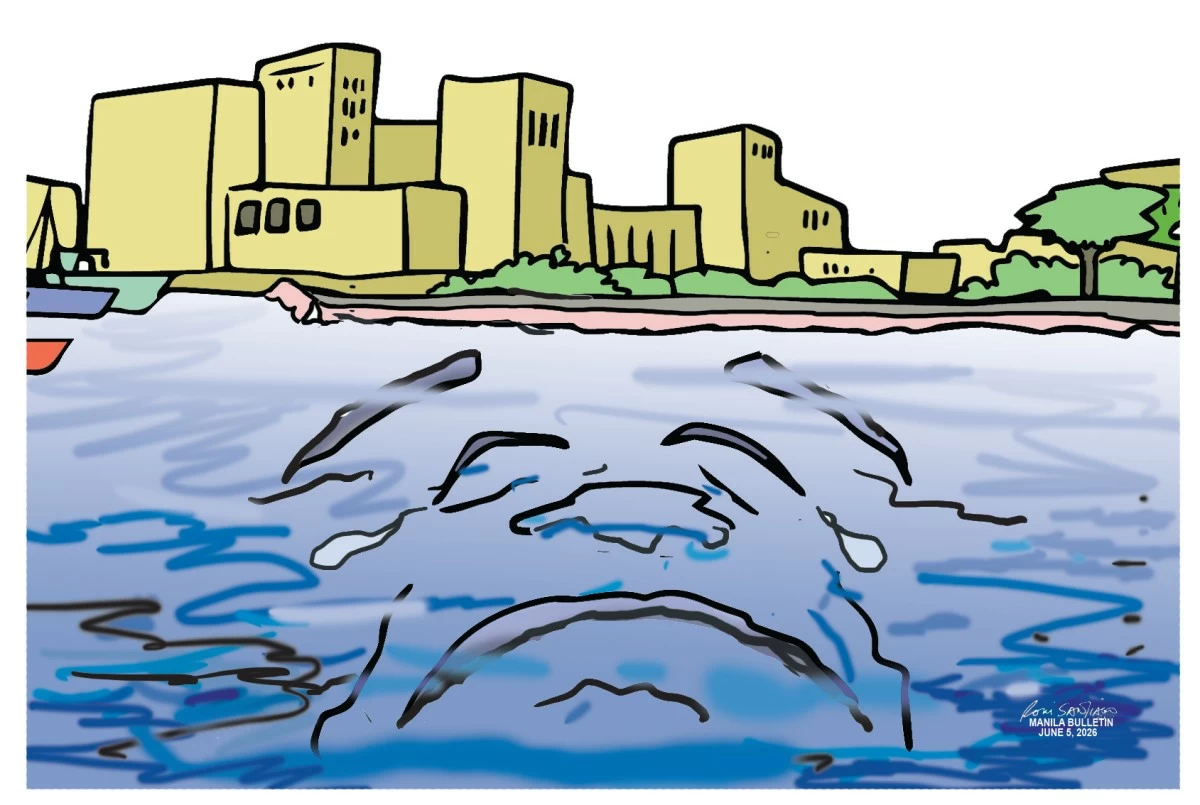
Manila Bay: Can we restore what we continue to bury?

Published Jun 5, 2026 12:05 am  |  Updated Jun 4, 2026 05:27 pm
Today, as the world observes World Environment Day, the international community is reminded that the future of our planet depends on the choices we make now. The annual observance is a call to action, not merely a celebration of environmental awareness. In the Philippines, that call carries a special urgency because of the continuing struggle to restore and protect Manila Bay, one of the nation’s most important yet most threatened natural resources.
In 2008, the Supreme Court issued a landmark Writ of Continuing Mandamus directing 13 government agencies to clean up, rehabilitate, preserve, and restore Manila Bay. The High Court’s objective was clear. It directs the return of the bay’s waters to SB classification standards to make it suitable for swimming, skin-diving, and other forms of contact recreation. Let’s be clear, the ruling was not a suggestion but a continuing legal obligation imposed upon the government.
Against this backdrop, the recent announcement by the Philippine Reclamation Authority that two major reclamation projects—the Bacoor Inner Island project, now reduced to 67.4 hectares; and the 318-hectare Manila Waterfront City project—may soon resume raises serious and legitimate questions. Can reclamation and rehabilitation coexist? Do these projects advance or undermine the Supreme Court’s mandate? Are we witnessing compliance with the continuing mandamus, or a gradual departure from its spirit and purpose?
These questions deserve honest and evidence-based answers. Reclamation is often justified as a driver of economic growth, investment, employment, and urban expansion. Such objectives are important. Yet development cannot be measured solely in hectares created or revenues generated. The true measure of progress is whether economic gains can be achieved without sacrificing ecosystems that sustain life, protect communities from climate-related disasters, and provide future generations with a livable environment.
The issue, therefore, is not whether development should occur, but whether it complies with environmental law, scientific evidence, and the Supreme Court’s continuing directive. Any reclamation project that worsens water quality, disrupts natural coastal processes, destroys marine habitats, increases flood risks, or impedes the restoration of Manila Bay would be difficult to reconcile with the High Court's mandate. Government agencies must demonstrate, not merely assert, that every approved project contributes to, or at the very least does not compromise, the bay’s rehabilitation.
The burden now falls heavily on the 13 agencies covered by the continuing mandamus. They must strengthen environmental monitoring, ensure transparency of impact assessments, rigorously enforce environmental regulations, publicly disclose compliance data, and place scientific findings above political or commercial pressures. Their duty is not only to facilitate development but also to safeguard the public trust embodied in Manila Bay.
The private sector likewise has to play a critical role. Responsible businesses must move beyond minimum legal compliance and embrace genuine environmental stewardship. Investments should incorporate sustainability, climate resilience, biodiversity protection, and community welfare. Profit and environmental responsibility must no longer be treated as competing goals.
Since this mission spells the survival of humanity, every Filipino has a stake here. Environmental protection begins with simple but meaningful actions. These include proper waste management, reducing plastic use, participating in community cleanups, supporting conservation efforts, and demanding accountability from public officials and corporations. Citizens must remain vigilant because environmental protection is ultimately a shared responsibility.
World Environment Day reminds us that there is still time to change course. More than just a body of water, Manila Bay is a national inheritance. The Supreme Court's continuing mandamus remains both a legal command and a moral challenge. The question is not whether we can afford to protect the environment. Rather, it is whether we can afford not to. Without a healthy environment, every promise of progress becomes fragile. Preserving it must remain paramount, for it is the foundation upon which all human development ultimately depends.

Related Tags

Editorial
ADVERTISEMENT
.most-popular .layout-ratio{ padding-bottom: 79.13%; } @media (min-width: 768px) and (max-width: 1024px) { .widget-title { font-size: 15px !important; } }

{{ articles_filter_1561_widget.title }}

.most-popular .layout-ratio{ padding-bottom: 79.13%; } @media (min-width: 768px) and (max-width: 1024px) { .widget-title { font-size: 15px !important; } }

{{ articles_filter_1562_widget.title }}

.most-popular .layout-ratio{ padding-bottom: 79.13%; } @media (min-width: 768px) and (max-width: 1024px) { .widget-title { font-size: 15px !important; } }

{{ articles_filter_1563_widget.title }}

{{ articles_filter_1564_widget.title }}

.mb-article-details { position: relative; } .mb-article-details .article-body-preview, .mb-article-details .article-body-summary{ font-size: 17px; line-height: 30px; font-family: "Libre Caslon Text", serif; color: #000; } .mb-article-details .article-body-preview iframe , .mb-article-details .article-body-summary iframe{ width: 100%; margin: auto; } .read-more-background { background: linear-gradient(180deg, color(display-p3 1.000 1.000 1.000 / 0) 13.75%, color(display-p3 1.000 1.000 1.000 / 0.8) 30.79%, color(display-p3 1.000 1.000 1.000) 72.5%); position: absolute; height: 200px; width: 100%; bottom: 0; display: flex; justify-content: center; align-items: center; padding: 0; } .read-more-background a{ color: #000; } .read-more-btn { padding: 17px 45px; font-family: Inter; font-weight: 700; font-size: 18px; line-height: 16px; text-align: center; vertical-align: middle; border: 1px solid black; background-color: white; } .hidden { display: none; }
function initializeAllSwipers() { // Get all hidden inputs with cms_article_id document.querySelectorAll('[id^="cms_article_id_"]').forEach(function (input) { const cmsArticleId = input.value; const articleSelector = '#article-' + cmsArticleId + ' .body_images'; const swiperElement = document.querySelector(articleSelector); if (swiperElement && !swiperElement.classList.contains('swiper-initialized')) { new Swiper(articleSelector, { loop: true, pagination: false, navigation: { nextEl: '#article-' + cmsArticleId + ' .swiper-button-next', prevEl: '#article-' + cmsArticleId + ' .swiper-button-prev', }, }); } }); } setTimeout(initializeAllSwipers, 3000); const intersectionObserver = new IntersectionObserver( (entries) => { entries.forEach((entry) => { if (entry.isIntersecting) { const newUrl = entry.target.getAttribute("data-url"); if (newUrl) { history.pushState(null, null, newUrl); let article = entry.target; // Extract metadata const author = article.querySelector('.author-section').textContent.replace('By', '').trim(); const section = article.querySelector('.section-info ').textContent.replace(' ', ' '); const title = article.querySelector('.article-title h1').textContent; // Parse URL for Chartbeat path format const parsedUrl = new URL(newUrl, window.location.origin); const cleanUrl = parsedUrl.host + parsedUrl.pathname; // Update Chartbeat configuration if (typeof window._sf_async_config !== 'undefined') { window._sf_async_config.path = cleanUrl; window._sf_async_config.sections = section; window._sf_async_config.authors = author; } // Track virtual page view with Chartbeat if (typeof pSUPERFLY !== 'undefined' && typeof pSUPERFLY.virtualPage === 'function') { try { pSUPERFLY.virtualPage({ path: cleanUrl, title: title, sections: section, authors: author }); } catch (error) { console.error('ping error', error); } } // Optional: Update document title if (title && title !== document.title) { document.title = title; } } } }); }, { threshold: 0.1 } ); function showArticleBody(button) { const article = button.closest("article"); const summary = article.querySelector(".article-body-summary"); const body = article.querySelector(".article-body-preview"); const readMoreSection = article.querySelector(".read-more-background"); // Hide summary and read-more section summary.style.display = "none"; readMoreSection.style.display = "none"; // Show the full article body body.classList.remove("hidden"); } document.addEventListener("DOMContentLoaded", () => { let loadCount = 0; // Track how many times articles are loaded const offset = [1, 2, 3, 4, 5, 6, 7, 8, 9, 10]; // Offset values const currentUrl = window.location.pathname.substring(1); let isLoading = false; // Prevent multiple calls if (!currentUrl) { console.log("Current URL is invalid."); return; } const sentinel = document.getElementById("load-more-sentinel"); if (!sentinel) { console.log("Sentinel element not found."); return; } function isSentinelVisible() { const rect = sentinel.getBoundingClientRect(); return ( rect.top < window.innerHeight && rect.bottom >= 0 ); } function onScroll() { if (isLoading) return; if (isSentinelVisible()) { if (loadCount >= offset.length) { console.log("Maximum load attempts reached."); window.removeEventListener("scroll", onScroll); return; } isLoading = true; const currentOffset = offset[loadCount]; window.loadMoreItems().then(() => { let article = document.querySelector('#widget_1690 > div:nth-last-of-type(2) article'); intersectionObserver.observe(article) loadCount++; }).catch(error => { console.error("Error loading more items:", error); }).finally(() => { isLoading = false; }); } } window.addEventListener("scroll", onScroll); });

Sign up by email to receive news.