







Factory output expands faster in April despite Middle East war


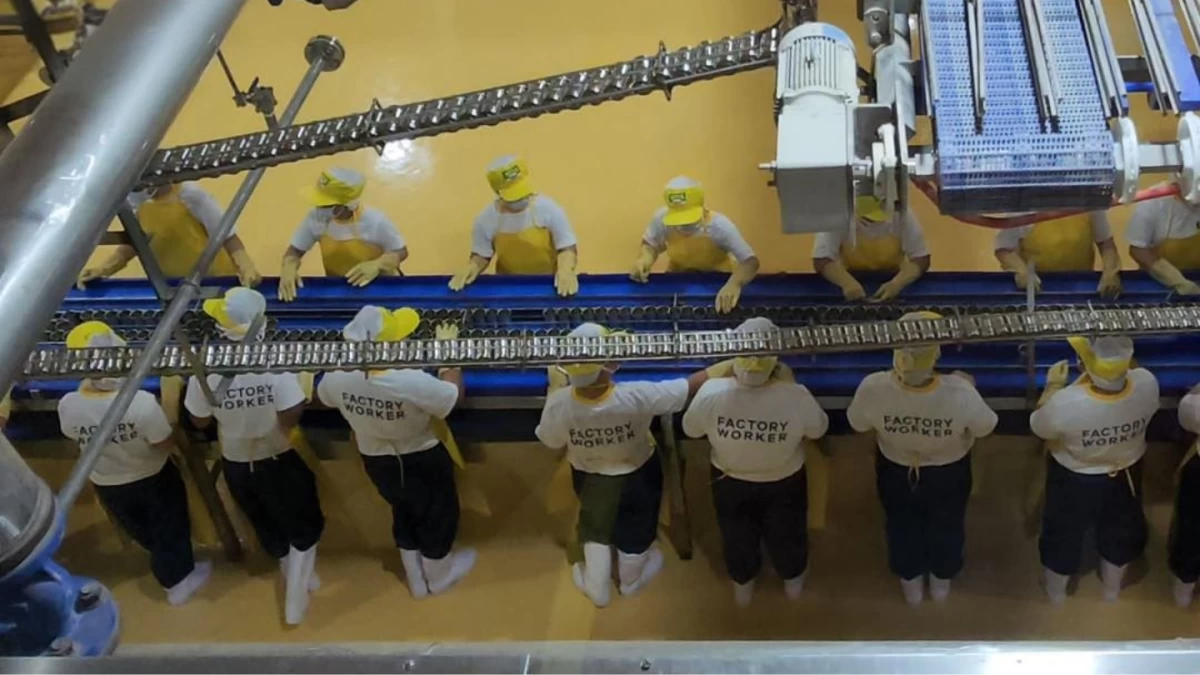
Factory output growth accelerated in April despite the prolonged war in the Middle East, as stronger production in petroleum, electronics, and food manufacturing helped offset external headwinds.
The latest preliminary results of the monthly integrated survey of selected industries (MISSI) released by the Philippine Statistics Authority (PSA) on Friday, June 5, showed that the volume of production index (VoPI)—a proxy for factory output growth—rose by 12 percent year-on-year in April, faster than the revised 10.2-percent expansion recorded in March. This marked a reversal from the 2.4-percent contraction posted in April last year.
The value of production index (VaPI), which measures factory output based on value, likewise accelerated to 14.7 percent in April from the revised 13.1 percent in March.
The PSA said the faster growth in manufacturing output was primarily driven by the manufacture of coke and refined petroleum products, whose VoPI surged by 52.7 percent in April from a 3.4-percent decline in March.
Also contributing to the increase were the manufacture of computer, electronic and optical products, and the manufacture of food products.
Among the 22 industry divisions monitored by the PSA, 15 posted annual increases in production volumes during the month, while seven recorded declines.
Food manufacturing, one of the country’s largest manufacturing segments, posted faster growth as its VoPI increased by 8.2 percent in April from 7.1 percent in March. The improvement was driven by stronger output from manufacturers of other food products, including bakery products, sugar, and condiments, as well as a slower decline in dairy production.
The PSA also reported that manufacturing sales continued to grow, although at a slower pace.
The value of net sales index (VaNSI) expanded by 6.8 percent in April, easing from the revised eight percent growth in March, while the volume of net sales index (VoNSI) slowed to 4.2 percent from 5.2 percent previously.
The moderation in sales growth was largely attributed to slower gains in food manufacturing and weaker performance in chemicals and non-metallic mineral products.
Meanwhile, factory utilization remained elevated.
The average capacity utilization rate of manufacturing establishments stood at 78.4 percent in April, slightly lower than the 78.6 percent recorded in March but higher than the 76.5 percent posted a year ago.
About one-third, or 33.4 percent, of responding manufacturers operated at 90- to 100-percent capacity during the month, while 41.1 percent ran at 70- to 89-percent capacity.