






Manila Bulletin
 Business
Trade & Industry
Toyota urges Philippines to back gas-powered vehicles alongside EV push
Business
Trade & Industry
Toyota urges Philippines to back gas-powered vehicles alongside EV push
Business
Trade & Industry
Toyota urges Philippines to back gas-powered vehicles alongside EV push
Toyota urges Philippines to back gas-powered vehicles alongside EV push
Published Jun 4, 2026 02:46 pm


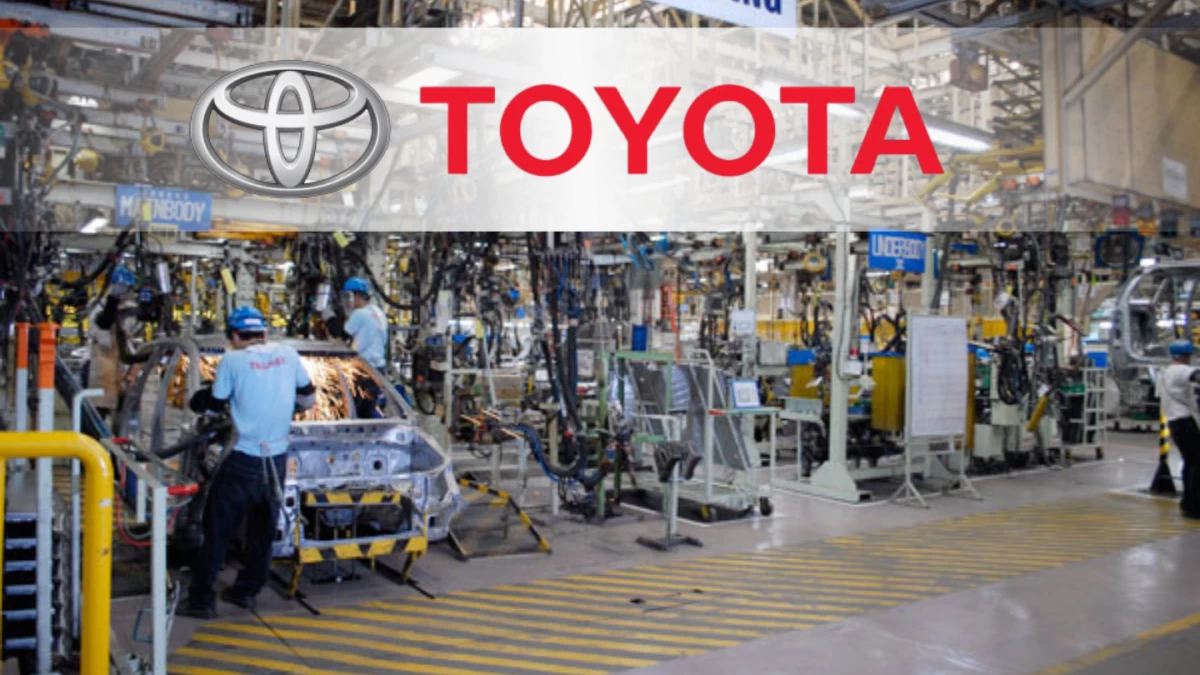
Toyota Motor Philippines Corp. (TMP) is pressing the government to consider establishing a new tax incentive program focused on commercial vehicle manufacturing, warning that the country’s current pivot toward electric-vehicle (EVs) subsidies risks undermining domestic industrial capacity
Jose Maria Atienza, TMP executive vice president, said the local unit of the world’s largest carmaker wants a performance-based incentive system modeled after the country’s previous Comprehensive Automotive Resurgence Strategy (CARS) program.
While the CARS initiative targeted passenger cars, Atienza said a new framework should support commercial platforms, specifically citing Toyota’s local Tamaraw model.
“It's not easy to start a manufacturing plant and start manufacturing vehicles locally. We need the support of the government,” Atienza said on the sidelines of the 10th Philippine International Motor Show (PIMS).
“We're hopeful that some support for local production, including Tamaraw and ICEs (internal combustion engines), will be put in place,” he added.
TMP earlier asked the government to encourage the manufacturing of various vehicle models and engine types in the country to strengthen domestic production.
The company said this in response to the Department of Trade and Industry’s (DTI) decision to drop the proposed Revitalizing the Automotive Industry for Competitiveness Enhancement (RACE) program, which was the successor to CARS.
RACE was designed to provide up to ₱3 billion in incentives to support the production of four-wheeled ICE vehicles in the country.
The program was set aside in favor of the Electric Vehicle Incentive Strategy (EVIS), which aims to attract investments in the local manufacturing of EVs.
Amid an evolving global supply chain, Atienza said both EVs and ICE vehicles are necessary to sustain the productivity of the local automotive industry, including its supporting sectors.
He said TMP has conveyed to the government its request for a manufacturing incentive program for commercial vehicles, adding that discussions on the matter are ongoing.
If such a program is approved, Atienza said TMP would be first in line to apply it to its Tamaraw model to improve efficiency and make production more viable for the company.
“That's what's required also to expand manufacturing utilities,” he said.
The TMP official expects other automotive manufacturers to be interested in joining the program, given the advantages of local production when it comes to meeting demand.
“We know that the Philippine car industry will keep on growing…and later on, it may make better sense if you produce locally,” he said.
Atienza, also the president of the Chamber of Automotive Manufacturers of the Philippines Inc. (CAMPI), said the need for more local production was highlighted during last month’s vehicle sales.
Based on initial estimates, Atienza said total sales in May were around 20 percent lower compared to the same month last year, as companies struggled to keep up with increased demand.
Limited supply was primarily felt in EVs, which saw their share of total sales for the month drop to 20 percent from the previous month’s 35 percent.
EVs are growing in popularity as elevated fuel prices are prompting consumers to shift away from gas-powered cars.
“Everyone's planning for a certain level and the demand was higher than that. So now, the time is for us to catch up,” said Atienza.
In line with the strong adoption of EVs, the Department of Energy (DOE) is planning to set up an expedited processing system for companies installing EV charging stations.
DOE Energy Utilization Management Bureau director Patrick Aquino said the agency wants to cut in half the current approval process, which takes at least six months to complete.
He said this program would help the government make significant gains toward its target of building 7,000 charging stations by 2028. At present, there are around 1,600 charging stations nationwide.