






 Business
Banking & Finance
DBM signals possible cuts in subsidies, confidential funds amid tight fiscal space
Business
Banking & Finance
DBM signals possible cuts in subsidies, confidential funds amid tight fiscal space
DBM signals possible cuts in subsidies, confidential funds amid tight fiscal space
By Derco Rosal


At A Glance
- Budget Secretary Kim Robert de Leon said that the Marcos administration will review all the maintenance and other operating expenses (MOOE) items, which could include trimming down funding for subsidies and confidential funds as the government faces limited fiscal space.
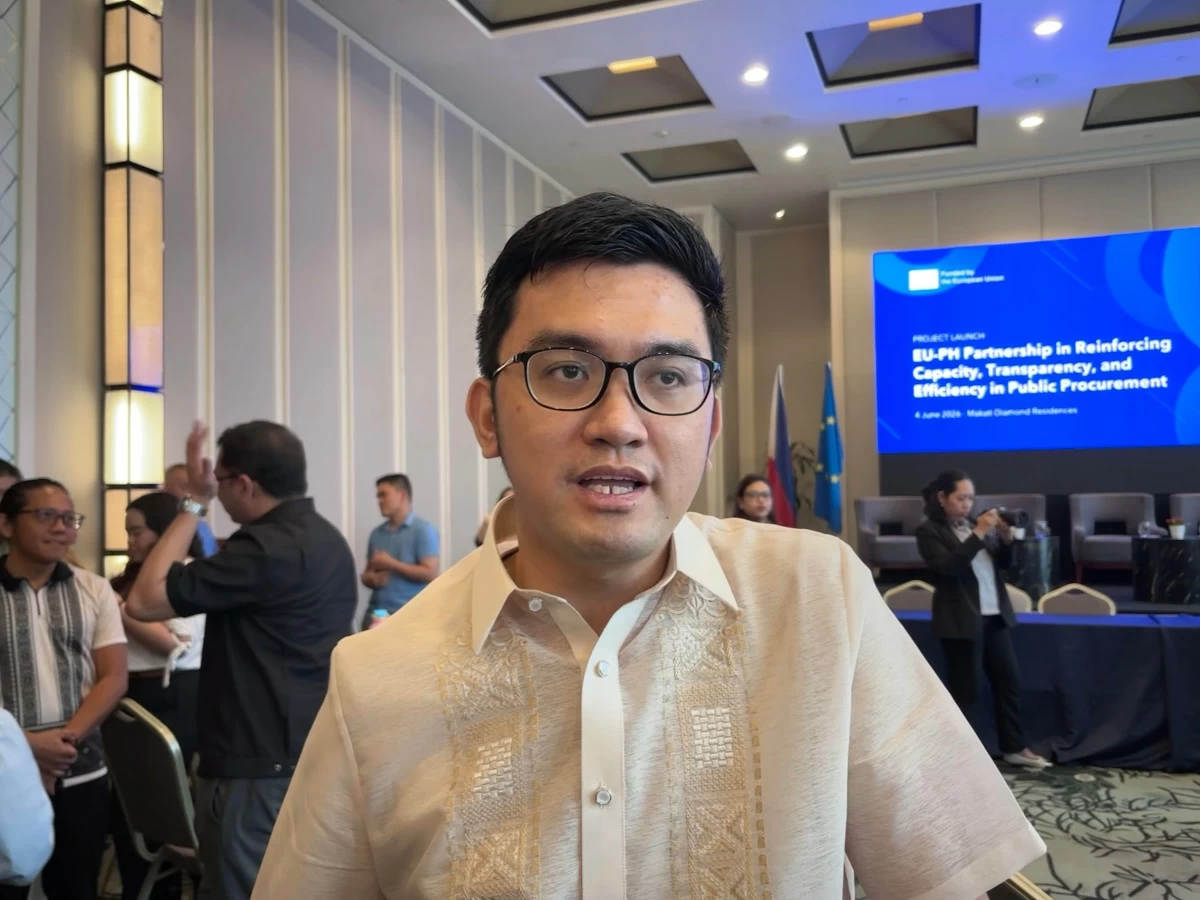
Department of Budget and Management (DBM) Secretary Kim Robert de Leon said the Marcos Jr. administration will review all maintenance and other operating expense (MOOE) items, which could include trimming funding for subsidies and confidential funds as the government faces limited fiscal space.
“Next week, we will be having our executive review board. I have given the [DBM‘s] bureaus a major task that has never been done before, ahead of the budget review: I want to review all MOOE items,” de Leon said during the launch of the European Union (EU)-Philippine partnership project on Thursday, June 4.
The partnership, which also involves the United Nations Development Program (UNDP), aims to enhance transparency, efficiency, and accountability in public procurement.
“It focuses on modernizing procurement processes, adopting international data standards, and integrating participatory practices to ensure the best value for public funds,” UNDP said in a briefer.
“Through these efforts, the project contributes to strengthening the internal capacity of the Procurement Service (PS-DBM) and advancing the Philippines’ anti-corruption and good governance agenda,” UNDP said.
De Leon said the budget review will not focus solely on capital outlay or infrastructure spending.
“I am not just looking at capital outlay; I would like to see how the MOOE items are structured because we have very limited fiscal space,” he said.
“If there is room for us to clear some MOOE items to make way for big-ticket infrastructure that we actually need—and that the Filipino people actually need—then let’s do that,” de Leon said.
The DBM chief said these initiatives are aligned with the goal of improving and streamlining the bureaucracy.
The review of government agencies’ operating expenses forms part of a broader effort by the DBM to challenge the notion that high budget utilization is the primary indicator of government success.
De Leon argued that agencies should not be pressured to spend simply to exhaust their allotments.
“Not necessarily that higher budget utilization means you delivered everything that is expected from you,” de Leon said.
He stressed that true efficiency lies in “producing the expected output with a much lower input,” and questioned the logic of penalizing agencies that save money.
“Why force high budget utilization when you don’t need to utilize the entire budget if it is not needed?” he added.
De Leon told reporters on the sidelines of the event that the DBM will review all MOOE items, as the move is not surgical but a whole-of-government approach.
In support of this reform, the Commission on Audit (COA) is also shifting toward an outcome-based approach, including the adoption of performance auditing. It said the lowest bid is no longer the sole basis for qualification, as the focus is now on value for money.
COA added that it is becoming part of the bureaucracy that helps enable government processes rather than merely reviewing transactions after they have been completed.
Of the ₱6.79-trillion 2026 national budget, capital outlays account for ₱1.02 trillion, while a significant portion is dedicated to MOOEs, which stand at ₱2.98 trillion.
Financial assistance and subsidies account for the largest component of MOOEs at ₱2.17 trillion. Supplies and materials account for ₱292.6 billion, while professional and general services account for more than ₱62.9 billion.
Other operating costs for 2026 include confidential, intelligence, and extraordinary expenses, which collectively amount to around ₱15 billion.