






 Business
Trade & Industry
AirAsia avoids operational disruption after settling CAAP obligations
Business
Trade & Industry
AirAsia avoids operational disruption after settling CAAP obligations
AirAsia avoids operational disruption after settling CAAP obligations


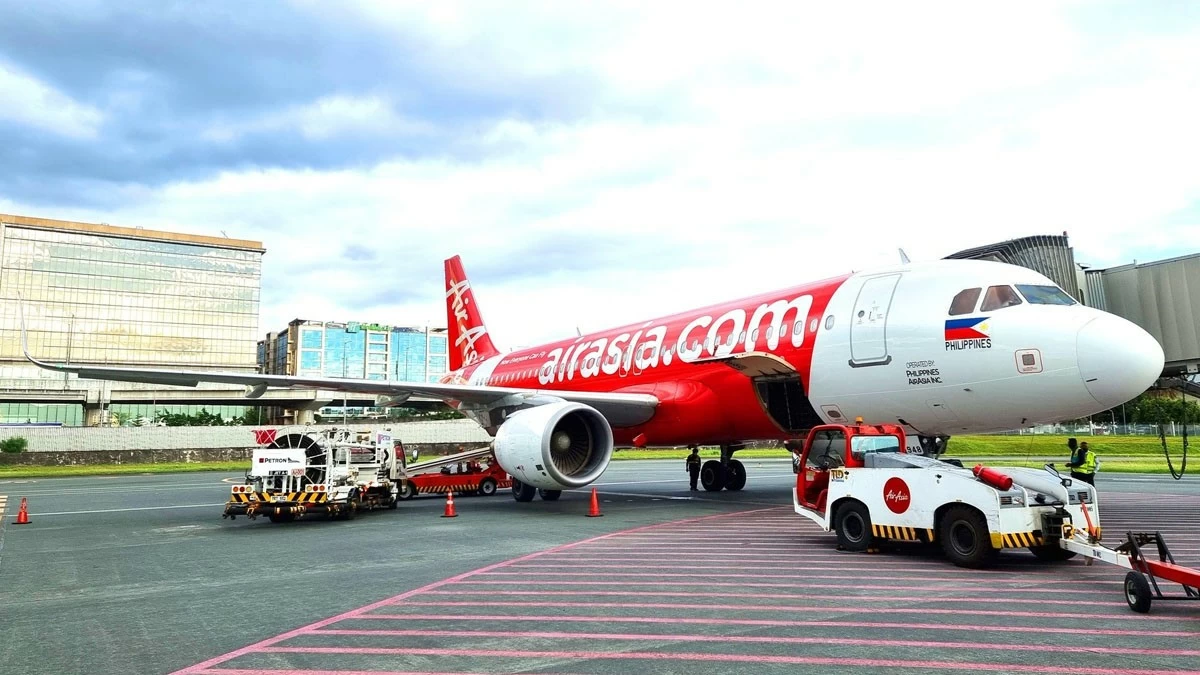
Budget carrier AirAsia Philippines has settled its outstanding financial obligations with the Civil Aviation Authority of the Philippines (CAAP), averting a potential suspension of its domestic operations.
CAAP confirmed in a statement that AirAsia Philippines paid off its remaining obligations on Thursday morning, June 4, which are still “subject to ongoing standard reconciliation processes.”
“CAAP acknowledges and appreciates the airline’s cooperation and its commitment to addressing its obligations through constructive engagement and coordination with the authority,” it said.
AirAsia Philippines reportedly owed ₱271.94 million in outstanding obligations to CAAP, including air navigation charges, aircraft landing and parking fees, passenger service charges, and other related fees.
The amount represents about a third of the ₱833.66 million cited in an initial collection letter issued by CAAP to the airline.
CAAP said last Wednesday, June 3, that the airline had been given until June 6 to settle its obligations.
Had it failed to comply with the deadline, AirAsia Philippines would have seen its flight network limited to airports managed by the private sector, including main gateway Ninoy Aquino International Airport (NAIA), while severely restricting its domestic reach.
CAAP has said it wants to avoid any flight disruptions to prevent the potential displacement of passenger and cargo services and the broader economic impact that could result.
“CAAP remains committed to working closely with all aviation stakeholders to ensure regulatory compliance, maintain the stability of air transport operations, and safeguard the interests of the traveling public,” the agency said.
In a statement, AirAsia Philippines’ parent firm, AirAsia Group, said reports that its local operations were being grounded are “entirely false and do not reflect the reality of the business or operations of the airline.”
The Malaysian company said the reports, which it described as “coordinated and sensationalized,” are part of a so-called “smear” campaign against its Philippine unit.
AirAsia Group said this is not the first time such a campaign has occurred, noting that it aims to undermine fair competition in the domestic aviation sector.
“Such narratives serve only the interests of those seeking to limit consumer choice and create conditions that could lead to a monopoly in the market,” the company said.
“A monopoly benefits no one except dominant market players. For travelers, it often results in reduced competition, fewer choices and significantly higher airfares,” it added.
Despite the issue, AirAsia co-founder and adviser Tony Fernandes said the company remains committed to strengthening its Philippine operations and further championing affordable travel.
“AirAsia carries almost seven million guests in the Philippines annually and our commitment to the Philippines is absolute. We are deeply invested in the country, its people and its future,” Fernandes said.
“As we expand our fleet and aircraft orderbook to become the first narrowbody global low-cost network carrier, we intend to deploy more aircraft into our operations in the Philippines,” he added.
By adding more aircraft to its network, Fernandes said AirAsia Philippines would be able to “offer even more competitive fares and continue delivering greater value to Filipino travelers.”