







When the world feels uncertain, Rome endures
Traveling through turbulent times to discover the Eternal City
Published Jun 3, 2026 09:54 am


With all the problems going on in the world—the War in Iran, the hantavirus outbreak on a cruise ship, and the Ebola outbreak in Uganda and the Democratic Republic of Congo—you would think travel would be the last thing on people’s minds. However, we had planned our trip since January, before any of that was present, and we had already scheduled airline tickets, hotel stays, and tours. Our choice of airline, Etihad, stopped in Abu Dhabi and was one of several Middle East carriers that the war in the Persian Gulf had impacted. Our flights were rescheduled a few times, but still within a day of our planned departures, so it was all systems go. More importantly, some of the tours we had booked sold out months before due to limited slots. The improving situation in the Middle East persuaded us to forge ahead, albeit with a little trepidation.
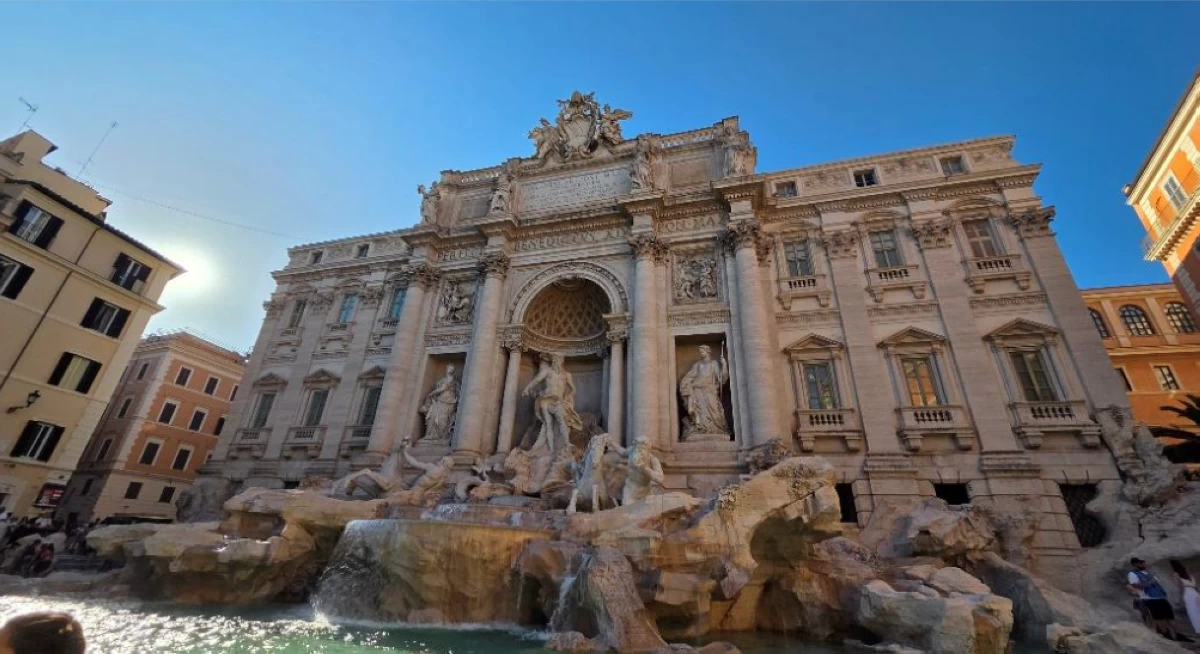
The Trevi fountain, where you make a wish to return to Rome in the future, which came true for me and my wife. (Photos: Dr. Edsel Salvana /Manila Bulletin)
The flights from Manila to Abu Dhabi and Abu Dhabi to Rome went off without a hitch and arrived early in both cases. We chose to see Rome and only Rome (with some day trips to nearby places like Pompei and the Amalfi Coast) for nine days in total based on our previous travel experiences. My wife and I have both been to Rome several times before, but these previous trips were just for a few days, and we felt we had barely scratched the surface. I crafted this trip for an in-depth look at Rome for our two children, who had seen a lot of Roman ruins in our previous trips to Morocco, Egypt, and Jordan, and had wondered about the civilization that had made them.
Rome in May is warm and sunny and is beginning to get crowded with tourists. Peak season is still June and July, but the crowds were getting pretty thick, especially at the top tourist attractions. We arrived in the morning, and we tried to check in at our hotel in the Monti neighborhood of Rome. Monti is a good place to base yourself because it is roughly halfway between the Colosseum and the Trevi fountain, and most of the attractions are within a 15-to-30-minute walk. Since we arrived early and the hotel was quite full, we weren’t able to get our room immediately and so we stored our luggage and started exploring. Our hotel is located right next to the Basilica of Santa Maria Maggiore, and we started our morning walk with a visit to the church. Inside many of these basilicas are tombs of saints, Popes, and famous artists, as well as holy relics, and Santa Maria Maggiore is no exception. One of the most recent burials is Pope Francis, who died in 2025. Seven other popes are buried here, as well as Saint Jerome and the apostle Matthias. The Holy Crib is the most famous of the holy relics that are housed in this church.
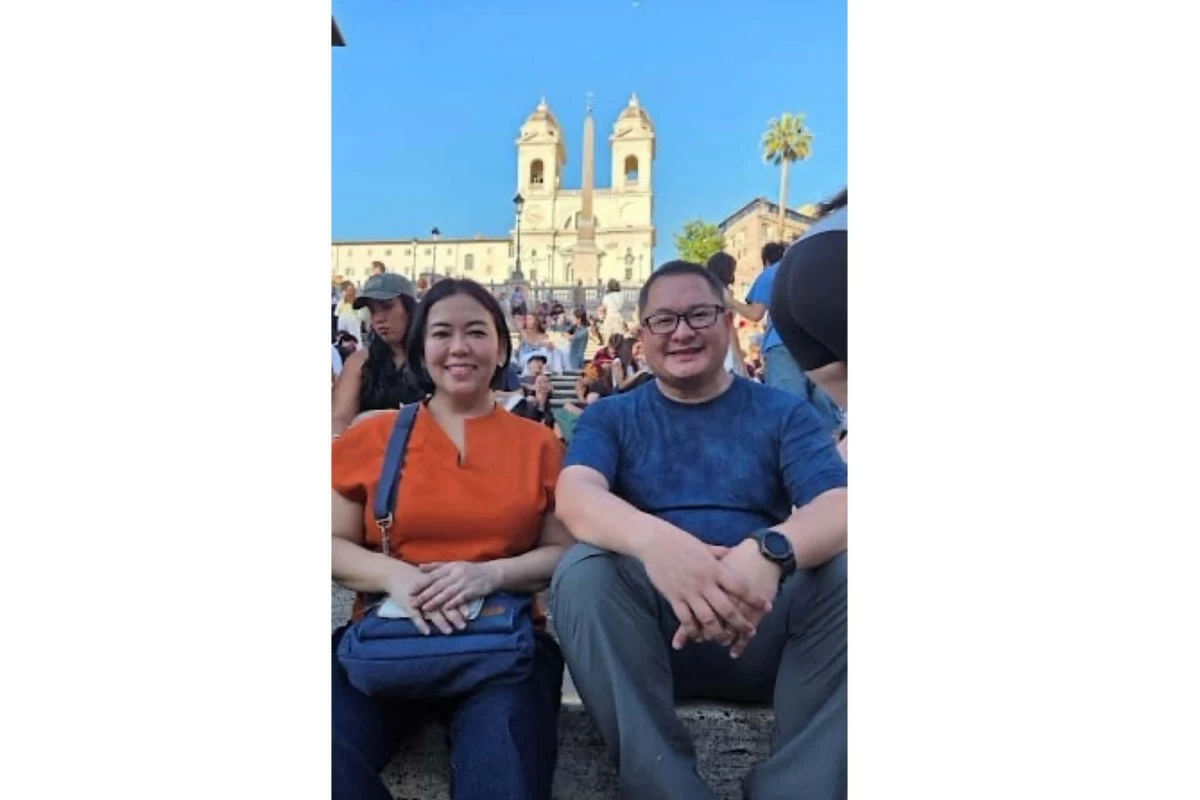
The author and his wife sitting at the famed Spanish steps.
After our impromptu visit to Santa Maria Maggiore, we walked to the site of the Capitoline Hill. The Capitoline museums contain Etruscan art treasures like the Capitoline wolf that supposedly suckled Romulus and Remus, the founders of Rome, as well as the remnants of the Colossus of Constantine. It is a steep climb up some steps, but emerging onto the Piazza del Campidoglio, the square designed by Michelangelo, is breathtaking. Many tours to Rome leave out the Capitoline Hill in favor of the more famous Palatine Hill, which is next to the Colosseum. Since we had time to spare, I made sure that we saw these world-renowned structures and the treasures within. Nearby, the Vittorio Emmanuel II monument dedicated to the first king of Italy is an impressive structure flanked by two fountains.
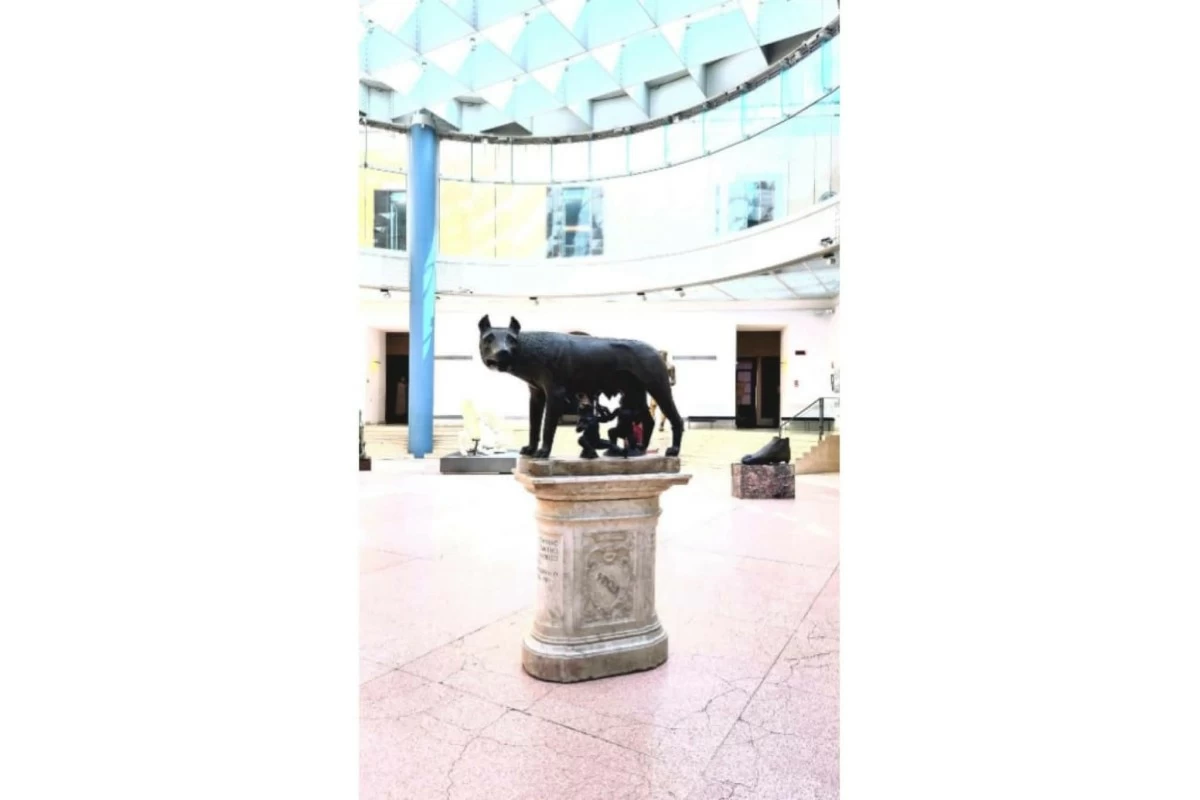
The Capitoline Wolf, an ancient Etruscan sculpture to which Romulus and Remus, the mythical founders of Rome, were added as part of the legend of the two brothers.
We had a quick lunch at a nearby pizzeria, and we were finally able to check in. To end the day, I had scheduled a walking tour to see some of the highlights of Rome for a general overview. We had an excellent tour guide who showed us the Piazza Navona with its majestic Fountain of the Four Rivers by Bernini, the Column of Marcus Aurelius, which is a nearly 40-meter-high column with a spiral carved frieze along its body, and the famed Spanish Steps.
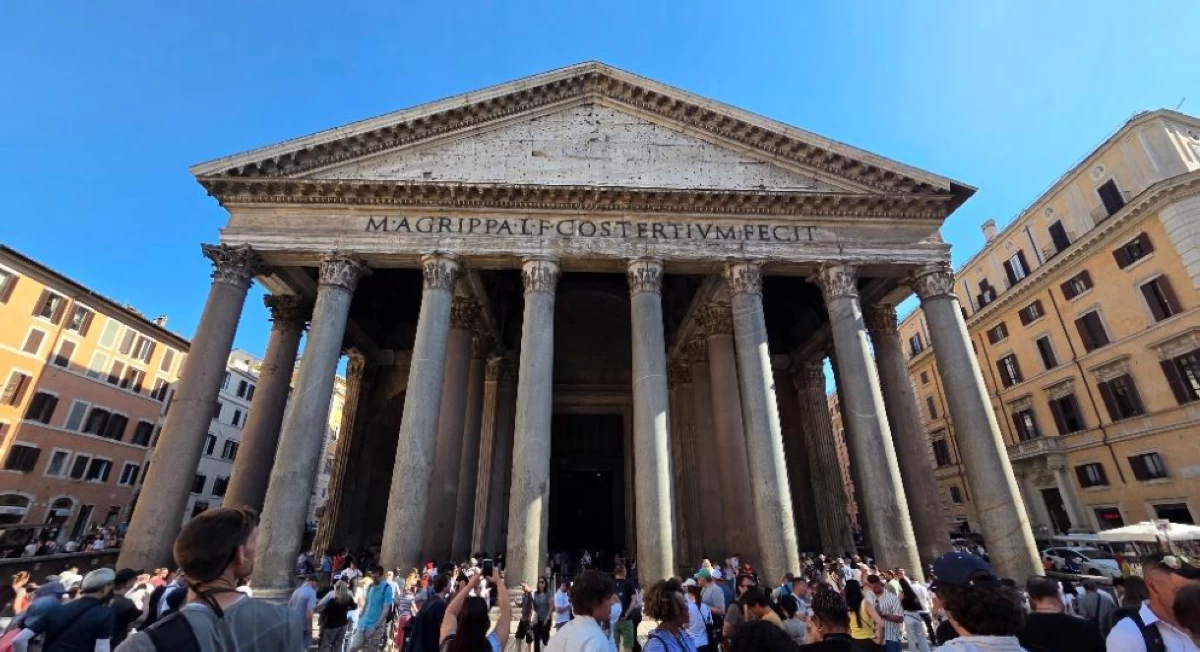
The Pantheon, the final resting place of Rafael.
We visited the Pantheon, an ancient Roman temple that had been converted into a basilica. It has the largest dome in Rome and is the final resting place of the Renaissance painter Raphael. Another highlight was the Trevi fountain with its travertine and marble sculptures of Oceanus (usually mistaken for Neptune) with tritons flanking him, with allegorical figures on the side. It is one of the most famous fountains in the world, and of course, we threw coins over our shoulders as part of the tradition to wish to return to Rome in the future. Both my wife and I had done this before, and so our wishes did come true. One new development is that while throwing coins in the past was free, the city now charges two euros to approach the fountain close enough to throw the coins in an effort to control the crowds and generate revenue to maintain it. The water source of the Trevi is an ancient Roman aqueduct, and we will visit this underground structure later in our trip. Of course, no trip to Rome would be complete without gelato, which we thoroughly enjoyed in front of the Trevi fountain.
This was only the first day of our nine-day trip, and our children felt they had seen so much. Such is the wonder and magnificence of what was once known as the “caput mundi,” the capital of the world. Still to come are visits to the Colosseum, for which we had secured very limited tickets to see the underground area; the Palatine Hill and the Roman Forum; the Vatican Museums and St. Peter’s Square, Villa Borghese, the ancient Catacombs, including a nighttime foray into a crypt, and a tour of the Appian Way. We will also do a day trip to Pompei, which was destroyed by an eruption of Mount Vesuvius, and go to see the Amalfi coast. One final highlight will be truffle hunting with trained dogs, followed by lunch with the truffles we find. I will write more of these adventures as they unfold, which for me is the best way to appreciate this vibrant and beautiful city, which has changed the world in so many ways.