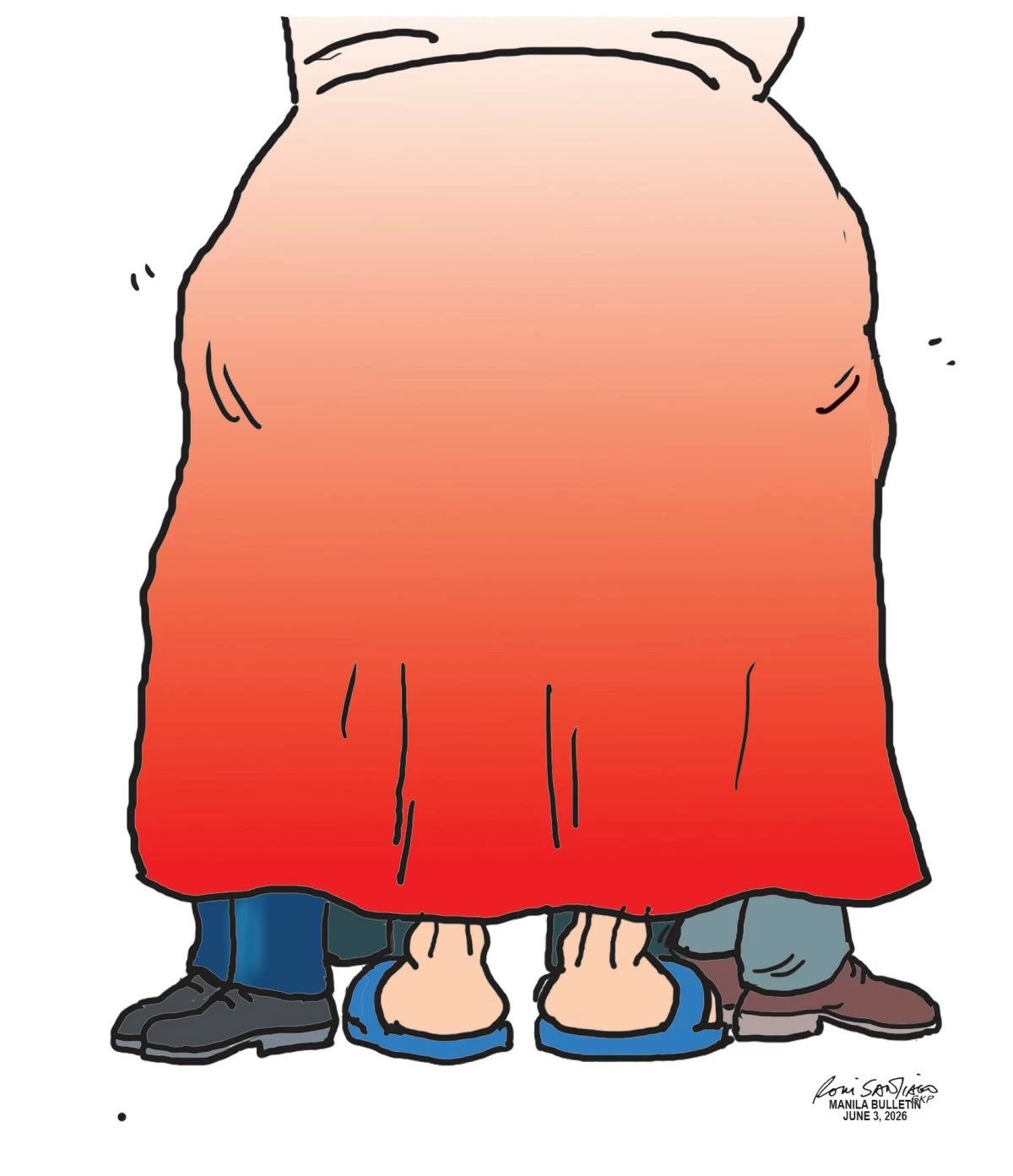
ADVERTISEMENT

Senate, no sanctuary above the law

Published Jun 3, 2026 12:05 am  |  Updated Jun 2, 2026 03:54 pm
The Senate of the Philippines has long occupied a lofty place in the country’s democratic life. It was once regarded as a bastion of statesmen, constitutional guardians, and legal minds whose debates helped shape public policy and national direction. Today, however, that reputation faces a serious test. Recent events have placed the institution under intense scrutiny, raising troubling questions about whether some of its leaders and members remain committed to the principles of accountability, transparency, and equal application of the law.
The dramatic walkout by the minority bloc on May 26 and the controversies surrounding proposed rule changes on virtual attendance and remote voting exposed deeper and troubling institutional problems. Rules that are designed to ensure continuity of legislative work must never be perceived as instruments for shielding individuals from legal accountability. Whether such perceptions are fair or not, the damage to public trust is real when procedural changes appear conveniently timed to benefit colleagues facing serious legal challenges.
Equally concerning was the June 1 confrontation involving the attempted arrest of a senator within Senate premises. Regardless of political affiliation, public office should never confer immunity from lawful judicial processes. The Senate is a constitutional institution, not a refuge from accountability. When elected officials appear to resist or delay the enforcement of legal orders, they risk sending a dangerous message that power can be used as a buffer against justice.
The greater tragedy is that these controversies distract the Senate from its core responsibilities. The inability to maintain quorums, conduct orderly deliberations, and advance critical legislation undermines the institution’s effectiveness. Economic measures, tax reforms, budget discussions, and other urgent national concerns should never be held hostage by political maneuverings. Investors, businesses, and ordinary citizens depend on a functioning legislature capable of providing stability and predictability. Filipinos do not deserve a circus in this august body.
Restoring the Senate’s image will require more than public relations efforts. It demands principled leadership and institutional reform. Senate leaders must abandon any perception of rule railroading designed to shield political allies. Internal regulations should promote transparency, participation, and legislative efficiency, not personal protection. Rules must apply consistently regardless of who benefits or suffers from their application.
Moreover, senators facing legal questions should confront them directly and physically rather than rely on procedural technicalities or institutional privileges. Public office is a public trust. The highest demonstration of respect for the rule of law is not evasion but accountability. Senators who willingly submit themselves to lawful processes strengthen the credibility of both the Senate and the justice system.
The institution must also end the selective invocation of legal and moral principles. Standards cannot be raised when convenient and lowered when politically uncomfortable. The public recognizes inconsistency, and every double standard weakens confidence in democratic institutions. Credibility is built when principles are applied equally to allies, opponents, and everyone in between.
The electorate likewise has a crucial role to play. Citizens must demand higher standards from those they elect. Accountability should not begin only when scandals emerge; it should start at the ballot box. Voters must reward integrity, competence, and respect for institutions while rejecting political behavior that places personal loyalty above public duty. Civic vigilance, informed participation, and principled voting remain the strongest safeguards against institutional decline.
The Senate can still reclaim its stature. But doing so requires its members to remember that they are not merely occupants of public office. They are custodians of an institution larger than themselves. The Senate must once again become a chamber that honors the law, respects accountability, and earns the confidence of the people it serves, nothing less.
ADVERTISEMENT
.most-popular .layout-ratio{ padding-bottom: 79.13%; } @media (min-width: 768px) and (max-width: 1024px) { .widget-title { font-size: 15px !important; } }

{{ articles_filter_1561_widget.title }}

.most-popular .layout-ratio{ padding-bottom: 79.13%; } @media (min-width: 768px) and (max-width: 1024px) { .widget-title { font-size: 15px !important; } }

{{ articles_filter_1562_widget.title }}

.most-popular .layout-ratio{ padding-bottom: 79.13%; } @media (min-width: 768px) and (max-width: 1024px) { .widget-title { font-size: 15px !important; } }

{{ articles_filter_1563_widget.title }}

{{ articles_filter_1564_widget.title }}

.mb-article-details { position: relative; } .mb-article-details .article-body-preview, .mb-article-details .article-body-summary{ font-size: 17px; line-height: 30px; font-family: "Libre Caslon Text", serif; color: #000; } .mb-article-details .article-body-preview iframe , .mb-article-details .article-body-summary iframe{ width: 100%; margin: auto; } .read-more-background { background: linear-gradient(180deg, color(display-p3 1.000 1.000 1.000 / 0) 13.75%, color(display-p3 1.000 1.000 1.000 / 0.8) 30.79%, color(display-p3 1.000 1.000 1.000) 72.5%); position: absolute; height: 200px; width: 100%; bottom: 0; display: flex; justify-content: center; align-items: center; padding: 0; } .read-more-background a{ color: #000; } .read-more-btn { padding: 17px 45px; font-family: Inter; font-weight: 700; font-size: 18px; line-height: 16px; text-align: center; vertical-align: middle; border: 1px solid black; background-color: white; } .hidden { display: none; }
function initializeAllSwipers() { // Get all hidden inputs with cms_article_id document.querySelectorAll('[id^="cms_article_id_"]').forEach(function (input) { const cmsArticleId = input.value; const articleSelector = '#article-' + cmsArticleId + ' .body_images'; const swiperElement = document.querySelector(articleSelector); if (swiperElement && !swiperElement.classList.contains('swiper-initialized')) { new Swiper(articleSelector, { loop: true, pagination: false, navigation: { nextEl: '#article-' + cmsArticleId + ' .swiper-button-next', prevEl: '#article-' + cmsArticleId + ' .swiper-button-prev', }, }); } }); } setTimeout(initializeAllSwipers, 3000); const intersectionObserver = new IntersectionObserver( (entries) => { entries.forEach((entry) => { if (entry.isIntersecting) { const newUrl = entry.target.getAttribute("data-url"); if (newUrl) { history.pushState(null, null, newUrl); let article = entry.target; // Extract metadata const author = article.querySelector('.author-section').textContent.replace('By', '').trim(); const section = article.querySelector('.section-info ').textContent.replace(' ', ' '); const title = article.querySelector('.article-title h1').textContent; // Parse URL for Chartbeat path format const parsedUrl = new URL(newUrl, window.location.origin); const cleanUrl = parsedUrl.host + parsedUrl.pathname; // Update Chartbeat configuration if (typeof window._sf_async_config !== 'undefined') { window._sf_async_config.path = cleanUrl; window._sf_async_config.sections = section; window._sf_async_config.authors = author; } // Track virtual page view with Chartbeat if (typeof pSUPERFLY !== 'undefined' && typeof pSUPERFLY.virtualPage === 'function') { try { pSUPERFLY.virtualPage({ path: cleanUrl, title: title, sections: section, authors: author }); } catch (error) { console.error('ping error', error); } } // Optional: Update document title if (title && title !== document.title) { document.title = title; } } } }); }, { threshold: 0.1 } ); function showArticleBody(button) { const article = button.closest("article"); const summary = article.querySelector(".article-body-summary"); const body = article.querySelector(".article-body-preview"); const readMoreSection = article.querySelector(".read-more-background"); // Hide summary and read-more section summary.style.display = "none"; readMoreSection.style.display = "none"; // Show the full article body body.classList.remove("hidden"); } document.addEventListener("DOMContentLoaded", () => { let loadCount = 0; // Track how many times articles are loaded const offset = [1, 2, 3, 4, 5, 6, 7, 8, 9, 10]; // Offset values const currentUrl = window.location.pathname.substring(1); let isLoading = false; // Prevent multiple calls if (!currentUrl) { console.log("Current URL is invalid."); return; } const sentinel = document.getElementById("load-more-sentinel"); if (!sentinel) { console.log("Sentinel element not found."); return; } function isSentinelVisible() { const rect = sentinel.getBoundingClientRect(); return ( rect.top < window.innerHeight && rect.bottom >= 0 ); } function onScroll() { if (isLoading) return; if (isSentinelVisible()) { if (loadCount >= offset.length) { console.log("Maximum load attempts reached."); window.removeEventListener("scroll", onScroll); return; } isLoading = true; const currentOffset = offset[loadCount]; window.loadMoreItems().then(() => { let article = document.querySelector('#widget_1690 > div:nth-last-of-type(2) article'); intersectionObserver.observe(article) loadCount++; }).catch(error => { console.error("Error loading more items:", error); }).finally(() => { isLoading = false; }); } } window.addEventListener("scroll", onScroll); });

Sign up by email to receive news.