







Philippines ramps up meat imports amid swine fever risks
Published Jun 3, 2026 01:48 pm


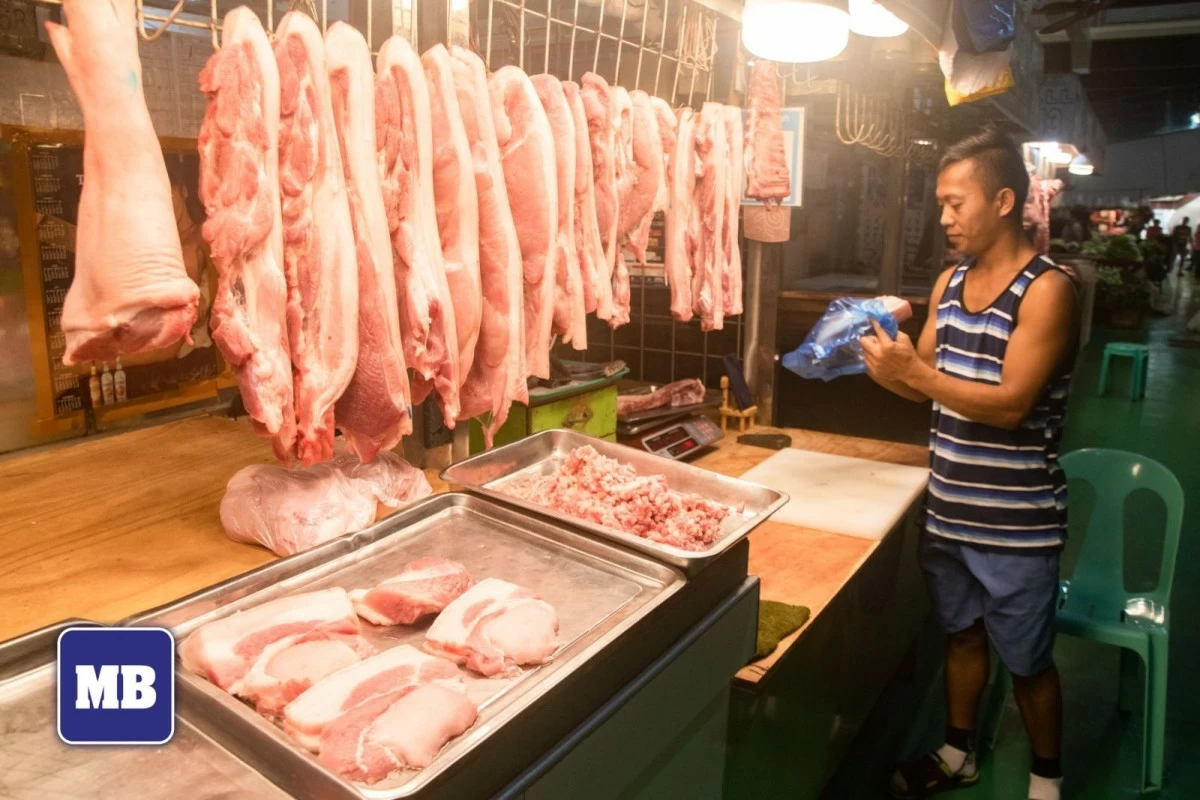
The Department of Agriculture sets a minimum farmgate price for live hogs to help local raisers recover from an influx of cheaper imports.
The country’s meat imports from January to April expanded by 22 percent to nearly 580,000 metric tons (MT) compared to the previous year, driven largely by pork products as demand continues to outpace local production.
Based on data from the Bureau of Animal Industry (BAI), the total volume of meat imports in the first four months reached 577,689 MT, up from 473,461 MT in the same period last year.
Pork imports, which accounted for half of the total, increased by more than 17 percent to 295,718 MT from 250,970 MT a year ago.
Pork cuts were the leading imported pork product with an estimated volume of 134,362 MT, followed by pork offal at 85,050 MT, pork bellies at 43,821 MT, and pork fat at 19,463 MT.
The Philippines relies on imported pork products to bridge the gap between the strong demand of a growing population and domestic pork production, which remains insufficient amid the impact of African swine fever (ASF).
The local swine population plunged to 8.70 million heads in the first quarter, its lowest level for the same three-month period in 31 years, based on data from the Philippine Statistics Authority (PSA).
President Ferdinand “Bongbong” Marcos Jr. earlier allowed the entry of more pork imports through the updated minimum access volume (MAV) policy to help maintain sufficient supply.
Under the expanded MAV, imported pork within a quota of 204,210 MT is subject to only a 15-percent tariff, while imports outside the quota are slapped with a higher 25-percent rate.
Aside from helping the country deal with mounting inflationary pressures due to the Middle East crisis, Agriculture Secretary Francisco Tiu Laurel said the new policy will also help the country brace for ASF risks.
“Historically, ASF infections tend to increase during the rainy season. If supply is affected again, pork prices could climb as it did in before. This measure provides an added layer of protection for consumers and serves as a precautionary food security measure,” he said in a statement.
BAI data also showed that chicken imports increased by more than a quarter to 197,454 MT in the first four months from 154,540 MT in the same period last year.
Mechanically deboned meat (MDM), which serves as a key ingredient in processed foods, was the leading imported chicken product, accounting for 113,078 MT or 57.3 percent of the total.
Beef imports rose by 15.7 percent to 65,157 MT from 56,331 MT, while buffalo meat shipments improved by more than half to 18,227 MT from 11,312 MT.
The BAI said Brazil was the country’s largest supplier of meat products in the first four months, with an estimated import volume of 296,679 MT, or more than half of the total.
The United States ranked second with 65,618 MT, followed by Australia with 31,372 MT, Spain with 24,397 MT, and Canada with 23,518 MT.