ADVERTISEMENT

Meta rolls out new teen protections globally across Instagram, Facebook, and Messenger

New 13+ content defaults, a third-party stress test, and a tool to prevent teens from seeing too much of any one type of content mark Meta's latest push on platform safety for minors.

Published Jun 3, 2026 12:10 pm
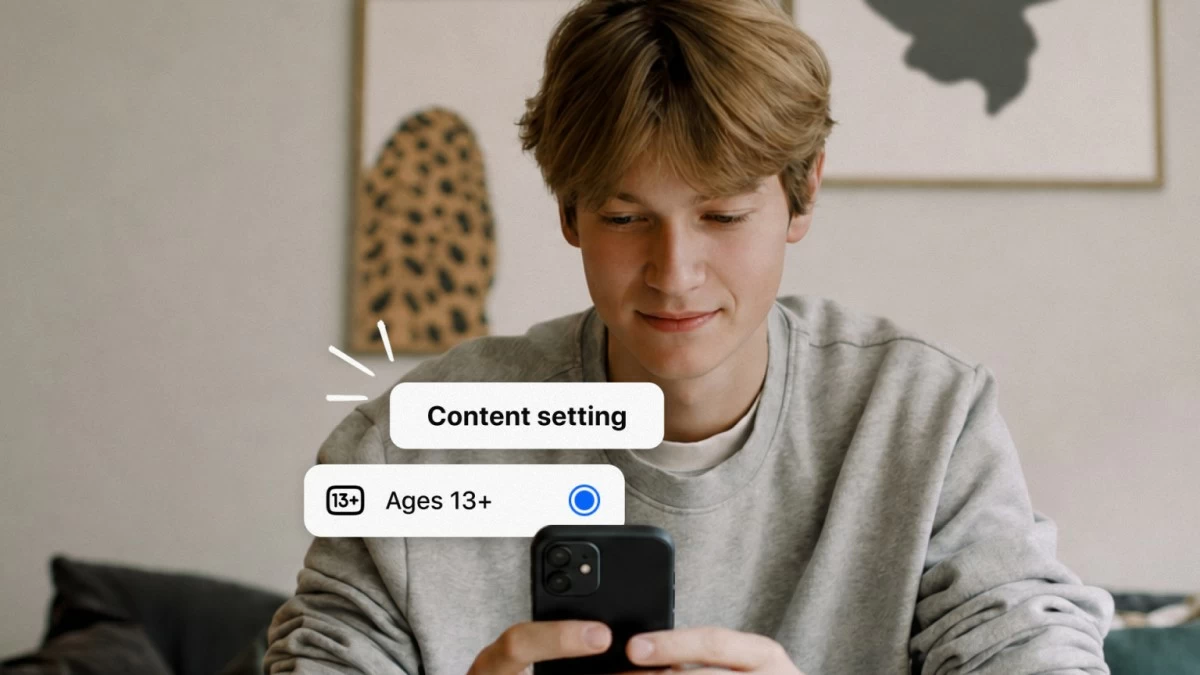
Meta is expanding its teen safety infrastructure, bringing restrictive content controls that launched last October to a global audience, and extending them beyond Instagram to Facebook and Messenger.
The company is also introducing a new content-balance feature designed to stop teenagers from being repeatedly served the same type of borderline content, even when each individual post doesn't technically violate any rules.
What are Teen Accounts, and what's new?
Meta first introduced Teen Accounts on Instagram in October 2024, automatically placing users aged 13–17 into a "13+ content setting" modeled in part on movie rating criteria and shaped by ongoing parent feedback surveys. The setting filters out age-inappropriate content in feeds and Reels and restricts interaction with accounts that regularly share such material.
The new global rollout brings that same default experience to Facebook and Messenger. On Facebook, the 13+ setting hides inappropriate content and limits teens' exposure to profiles, pages, groups, and events that primarily deal in it. On Messenger, it restricts teens from viewing links to inappropriate Facebook content and from chatting with accounts known to share it.
A stricter opt-in tier called Limited Content, which previously existed only on Instagram, is also coming to Facebook and Messenger later this year.
A new tool to prevent content overload
One of the more nuanced additions is a feature being tested to cap how much of any single content category a teen sees in a session. Meta acknowledged that posts about nutrition, weightlifting, or anxiety management can be genuinely helpful in moderation, but problematic when an algorithm serves them in unbroken streams. The test, covering Explore, Feed, and Reels, would interrupt those streams before repetition becomes a concern.
Independent stress-testing finds strong results and two gaps
To validate its controls, Meta commissioned an assessment from Alice (formerly ActiveFence), an online safety firm specializing in adversarial testing of platforms. Alice benchmarked mature content encountered on Instagram Teen Accounts in both setting tiers against content on a leading unnamed competitor's teen experience and in films rated 13+.
The findings were largely favorable: Teens in the default setting encountered 68% less mature content than on the rival platform, while the Limited Content tier drove that figure to 96%. Where mature content did appear, it was rated less intense than either the competitor or 13+ movies. Instagram also blocked mature search terms more frequently than its named rival.
However, Alice flagged two vulnerabilities. The first involved a small number of accounts that were slipping past detection systems designed to prevent teens from interacting with accounts that regularly post inappropriate content. Meta said it updated its signals immediately, and Alice confirmed the fixes were effective before the report's publication. The second gap was a trending video genre, "car surfing" that had not yet been added to restricted content policies, unlike the similar "subway surfing" category already covered. Meta moved quickly to add it.
Parent input at scale
Meta has been running ongoing surveys asking parents in the US, UK, Australia, and Canada to rate content that had actually been recommended to teens in their country. Over the course of the program, hundreds of thousands of parents have reviewed more than 15 million posts. In the most recent survey round at the end of April, fewer than 2% of Facebook posts were rated inappropriate by a majority of parent respondents.

Related Tags

Meta Facebook Messenger Instagram teen safety
ADVERTISEMENT
.most-popular .layout-ratio{ padding-bottom: 79.13%; } @media (min-width: 768px) and (max-width: 1024px) { .widget-title { font-size: 15px !important; } }

{{ articles_filter_1561_widget.title }}

.most-popular .layout-ratio{ padding-bottom: 79.13%; } @media (min-width: 768px) and (max-width: 1024px) { .widget-title { font-size: 15px !important; } }

{{ articles_filter_1562_widget.title }}

.most-popular .layout-ratio{ padding-bottom: 79.13%; } @media (min-width: 768px) and (max-width: 1024px) { .widget-title { font-size: 15px !important; } }

{{ articles_filter_1563_widget.title }}

{{ articles_filter_1564_widget.title }}

.mb-article-details { position: relative; } .mb-article-details .article-body-preview, .mb-article-details .article-body-summary{ font-size: 17px; line-height: 30px; font-family: "Libre Caslon Text", serif; color: #000; } .mb-article-details .article-body-preview iframe , .mb-article-details .article-body-summary iframe{ width: 100%; margin: auto; } .read-more-background { background: linear-gradient(180deg, color(display-p3 1.000 1.000 1.000 / 0) 13.75%, color(display-p3 1.000 1.000 1.000 / 0.8) 30.79%, color(display-p3 1.000 1.000 1.000) 72.5%); position: absolute; height: 200px; width: 100%; bottom: 0; display: flex; justify-content: center; align-items: center; padding: 0; } .read-more-background a{ color: #000; } .read-more-btn { padding: 17px 45px; font-family: Inter; font-weight: 700; font-size: 18px; line-height: 16px; text-align: center; vertical-align: middle; border: 1px solid black; background-color: white; } .hidden { display: none; }
function initializeAllSwipers() { // Get all hidden inputs with cms_article_id document.querySelectorAll('[id^="cms_article_id_"]').forEach(function (input) { const cmsArticleId = input.value; const articleSelector = '#article-' + cmsArticleId + ' .body_images'; const swiperElement = document.querySelector(articleSelector); if (swiperElement && !swiperElement.classList.contains('swiper-initialized')) { new Swiper(articleSelector, { loop: true, pagination: false, navigation: { nextEl: '#article-' + cmsArticleId + ' .swiper-button-next', prevEl: '#article-' + cmsArticleId + ' .swiper-button-prev', }, }); } }); } setTimeout(initializeAllSwipers, 3000); const intersectionObserver = new IntersectionObserver( (entries) => { entries.forEach((entry) => { if (entry.isIntersecting) { const newUrl = entry.target.getAttribute("data-url"); if (newUrl) { history.pushState(null, null, newUrl); let article = entry.target; // Extract metadata const author = article.querySelector('.author-section').textContent.replace('By', '').trim(); const section = article.querySelector('.section-info ').textContent.replace(' ', ' '); const title = article.querySelector('.article-title h1').textContent; // Parse URL for Chartbeat path format const parsedUrl = new URL(newUrl, window.location.origin); const cleanUrl = parsedUrl.host + parsedUrl.pathname; // Update Chartbeat configuration if (typeof window._sf_async_config !== 'undefined') { window._sf_async_config.path = cleanUrl; window._sf_async_config.sections = section; window._sf_async_config.authors = author; } // Track virtual page view with Chartbeat if (typeof pSUPERFLY !== 'undefined' && typeof pSUPERFLY.virtualPage === 'function') { try { pSUPERFLY.virtualPage({ path: cleanUrl, title: title, sections: section, authors: author }); } catch (error) { console.error('ping error', error); } } // Optional: Update document title if (title && title !== document.title) { document.title = title; } } } }); }, { threshold: 0.1 } ); function showArticleBody(button) { const article = button.closest("article"); const summary = article.querySelector(".article-body-summary"); const body = article.querySelector(".article-body-preview"); const readMoreSection = article.querySelector(".read-more-background"); // Hide summary and read-more section summary.style.display = "none"; readMoreSection.style.display = "none"; // Show the full article body body.classList.remove("hidden"); } document.addEventListener("DOMContentLoaded", () => { let loadCount = 0; // Track how many times articles are loaded const offset = [1, 2, 3, 4, 5, 6, 7, 8, 9, 10]; // Offset values const currentUrl = window.location.pathname.substring(1); let isLoading = false; // Prevent multiple calls if (!currentUrl) { console.log("Current URL is invalid."); return; } const sentinel = document.getElementById("load-more-sentinel"); if (!sentinel) { console.log("Sentinel element not found."); return; } function isSentinelVisible() { const rect = sentinel.getBoundingClientRect(); return ( rect.top < window.innerHeight && rect.bottom >= 0 ); } function onScroll() { if (isLoading) return; if (isSentinelVisible()) { if (loadCount >= offset.length) { console.log("Maximum load attempts reached."); window.removeEventListener("scroll", onScroll); return; } isLoading = true; const currentOffset = offset[loadCount]; window.loadMoreItems().then(() => { let article = document.querySelector('#widget_1690 > div:nth-last-of-type(2) article'); intersectionObserver.observe(article) loadCount++; }).catch(error => { console.error("Error loading more items:", error); }).finally(() => { isLoading = false; }); } } window.addEventListener("scroll", onScroll); });

Sign up by email to receive news.