







House gives final approval to landmark KALINGA bill
Published Jun 3, 2026 06:30 pm


At A Glance
- The House approved the proposed KALINGA Act, which sought to create a permanent national emergency response framework against fuel-driven inflation, energy shocks, and supply disruptions.
- The measure authorizes automatic interventions such as cash aid, fuel and electricity subsidies, transport support, MSME assistance, agricultural aid, and strategic reserves, with priority beneficiaries including low-income households, workers, and vulnerable sectors.
- It establishes the KALINGA National Response Council, mandates transparency and digitalized aid distribution, and shifts government policy from reactive crisis management to long-term resilience and preparedness.
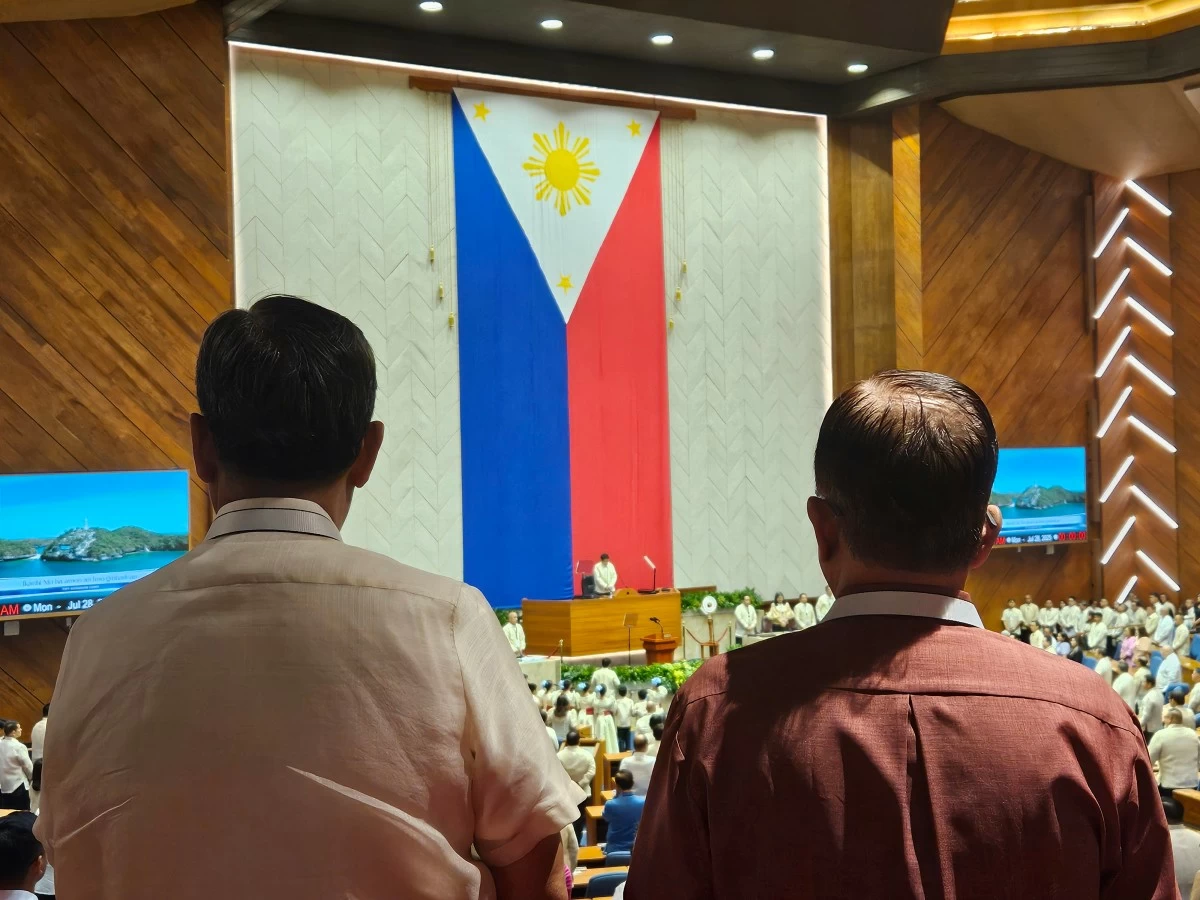
The House plenary (Ellson Quismorio/ MANILA BULLETIN)
The House of Representatives has overwhelmingly approved on third and final reading an all-encompassing measure that seeks to establish a permanent national emergency response framework to protect Filipinos from fuel-driven inflation, energy shocks, supply disruptions and future global crises.
Embodied in House Bill (HB) No. 9305, the proposed "Komprehensibong Alalay sa Livelihood, Inflation, Negosyo at Goods Assistance (KALINGA) Act" garnered 294 affirmative votes during plenary session Wednesday night, June 3.
Only three House members voted in the negative, while nobody abstained.
House Speaker Isabela 6th district Rep. Faustino “Bojie” Dy III and Majority Leader Ilocos Norte 1st district Rep. Sandro Marcos were the principal authors of the measure, which drew the backing of 156 other lawmakers as co-authors.
The proposed KALINGA Act institutionalizes a whole-of-government emergency response and resiliency framework that would allow the government to automatically roll out targeted interventions once specific fuel price, energy supply, or economic disruption thresholds are reached.
Under the bill, the President may declare a state of national energy emergency if global crude oil prices remain elevated for a sustained period, domestic fuel prices sharply increase, or national fuel inventories fall below critical supply levels.
Once triggered, the proposed law authorizes temporary emergency measures aimed at stabilizing prices, protecting vulnerable sectors, preserving essential services, securing supply chains, and cushioning the economy from external shocks.
“These are no longer isolated or temporary disruptions. Fuel and energy shocks now have immediate effects on food prices, transport costs, electricity rates, jobs and household incomes,” Marcos said.
“This measure ensures that government already has a standing legal framework to respond quickly, decisively and in a coordinated manner during times of crisis,” added the presidential son.
Speaker Dy said the KALINGA bill is designed to ensure that ordinary Filipinos do not bear the full burden of crises beyond their control.
“Hindi natin kontrolado ang mga digmaan, geopolitical conflicts o iba pang pandaigdigang krisis. Pero kontrolado natin kung gaano tayo kahanda at kung gaano natin napoprotektahan ang ating mga kababayan mula sa epekto ng mga ito,” Dy said.
(We do not control wars, geopolitical conflicts, or other global crises. But we do control how prepared we are and how well we protect our people from their effects.)
Among the key features of HB No. 9305 are targeted cash assistance, fuel subsidies, transport support, food vouchers, electricity subsidies, micro, small, and medium enterprises (MSME) aid, agricultural and fisheries assistance, emergency financing programs, logistics support, and strategic fuel reserve mechanisms.
The measure identifies low-income households, minimum wage earners, displaced workers, public transport drivers and operators, delivery riders, farmers, fisherfolk, logistics providers, MSMEs, overseas Filipino workers and other vulnerable sectors as priority beneficiaries of government interventions during periods of emergency.
The bill also authorizes emergency procurement measures, fuel inventory monitoring, contingency supply plans, concessional credit programs, crop and fisheries support, temporary regulatory relief, and energy conservation and demand management measures.
To strengthen implementation and prevent leakages, the proposal mandates the use of interoperable digital beneficiary databases, verified registries, digital payment systems, and automated validation platforms for the distribution of aid and subsidies.
The measure likewise creates the KALINGA National Response Council, chaired by the Executive Secretary and composed of key Cabinet officials, to oversee emergency response operations, coordinate interventions, monitor implementation and recommend the declaration or lifting of a national energy emergency.
The proposed law also subjects all expenditures and emergency measures to transparency, congressional oversight, and Commission on Audit (COA) review.
Marcos said the measure seeks to shift government policy from reactive crisis management to long-term preparedness and national resilience.
“The government should not merely be scrambling for solutions every time a global fuel crisis hits. We must already have systems in place to stabilize supply chains, protect livelihoods and ensure that assistance reaches affected Filipinos immediately,” he said.
“This is ultimately about protecting ordinary Filipinos from economic shocks beyond their control while preserving stability in critical sectors of the economy,” he added.
LGUs play key role
In light of the measure's passage, Parañaque 2nd district Rep. Brian Raymund Yamsuan has urged local government units (LGUs) to invest more in their digitalization efforts to better target beneficiaries of state-funded aid.
"LGUs play a key role in identifying and validating the list of beneficiaries of government aid, as well in assisting in its distribution. With or without the KALINGA bill, modernizing LGU databases through digitalization will prevent confusion, duplication of names, and speed up the delivery of assistance to our beleaguered countrymen during times of fuel price-induced crises,” said Yamsuan, one of the bill's authors.
The former assistant secretary of the Department of the Interior and Local Government (DILG) noted that LGUs can well afford to implement their respective digitalization initiatives with the record-high P57.88-billion financing support for their programs and projects through the Local Government Support Fund (LGSF) in the 2026 national budget.
Yamsuan says digitalizing LGU processes and services would not only fast-track and improve the delivery of government support and services “that are felt by the people” but would also enhance transparency and accountability at the local level.