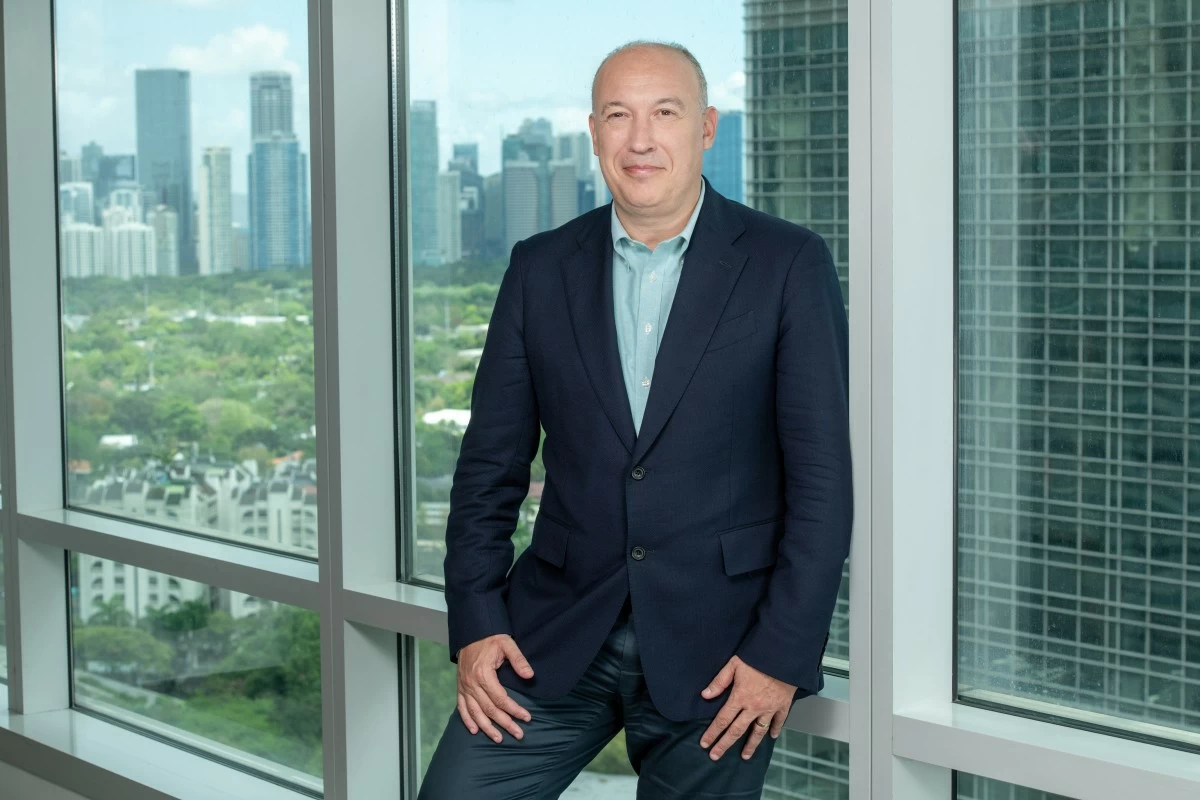
By Julian Mengual, Chief Executive Officer, MediCard Philippines
For many Filipinos, seeking healthcare begins only when discomfort becomes impossible to ignore.
A headache may be dismissed as puyat (lack of sleep). Chest discomfort becomes “baka acid reflux lang” (just acid reflux). Before seeking professional help, many first turn to home remedies, online searches, or advice from family and friends. It reflects the familiar mindset of tiis muna — a wait-and-see approach to health.
During the recent
AIA Philippines Rethink Healthy Summit, one recurring conversation stood out: many Filipinos still delay seeking medical attention until symptoms worsen.
AIA’s new study also found that many Filipinos only become more proactive about their health after experiencing a crisis or major health scare.
While resilience is often seen as a Filipino strength, delaying care has quietly become one of the country’s biggest healthcare challenges.
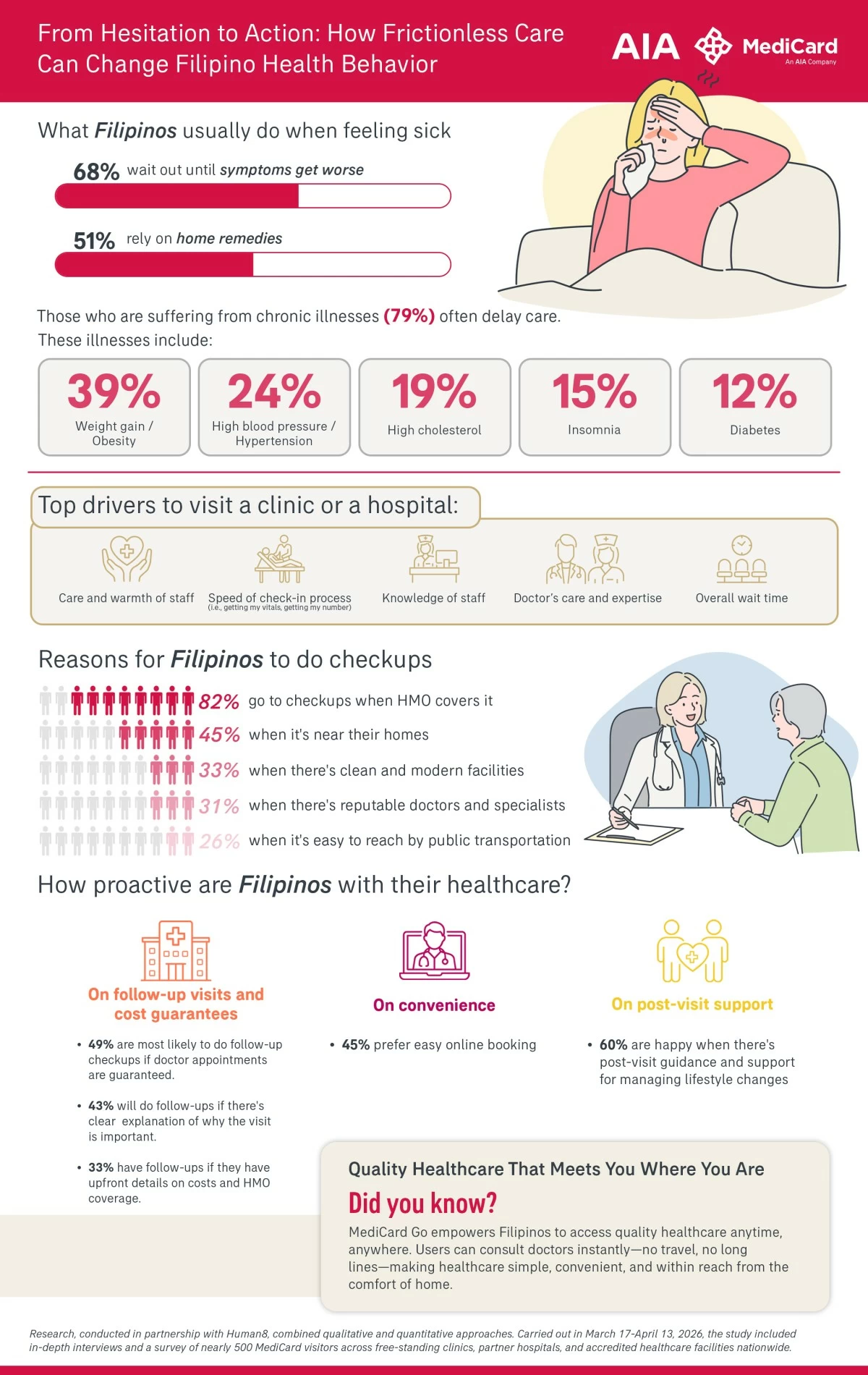
Recent customer journey research* we commissioned at MediCard Philippines, one of the country’s leading healthcare companies and AIA Philippines’ healthcare arm, revealed that 51% first relied on home remedies, while 68% waited for days or until symptoms worsen before seeking medical attention. Even among insured patients, many still delayed consultations until symptoms began affecting daily life or work.
Care Comes First: Warmth Drives Filipinos to Seek Healthcare The real challenge is friction across the patient journey that spans from pre-visit to post-care. For many Filipinos, healthcare still feels difficult: from traffic and long waiting times (patients often expect to be attended to within 30 minutes for each journey stage) to unclear processes, scheduling concerns, and uncertainty around coverage and out-of-pocket costs.
As a result, many delay care not only because of fear or cost, but because healthcare often competes with work, traffic, schedules, and daily responsibilities. Even among patients with chronic illnesses – the more vulnerable segment – delays are common. Over time, their conditions become normalized, making it easier to justify putting care off altogether.
This is where frictionless care becomes critical. It means reducing the physical and emotional barriers that prevent people from acting early and following through on their recommended care. Improving outcomes today also means improving the experience of care itself.
Seeking healthcare is often an emotional, anxiety-filled experience. A stressful or confusing experience can reinforce avoidance, while a smoother and more compassionate experience can encourage people to seek care earlier and more consistently. Patients are not only looking for treatment, but also for clarity, reassurance, and guidance they can easily understand.
MediCard’s research also showed that care and warmth from staff mattered most to patients, ranking above speed and doctors’ expertise in shaping a positive healthcare experience. At the same time, patients were more likely to follow through with check-ups when appointments were guaranteed, booking was convenient, and post-visit support was available.
From Reactive to Proactive Care
This is why healthcare providers can no longer focus on treatment alone. They must also design healthcare experiences that encourage patients to seek care earlier and more consistently.
At MediCard Philippines, we believe healthcare providers must evolve from simply offering medical services to becoming true care partners. Our goal is to make healthcare easier to access, easier to understand, and easier for Filipinos to stay on top of their health.
We continue to invest in more connected and patient-centered healthcare experiences, from telemedicine and digital appointment systems to more seamless clinic journeys and stronger post-visit support. These efforts matter because patient experience increasingly shapes healthcare behavior.
Our findings show that MediCard Lifestyle Center excels in booking efficiency, overall customer service, and proactive post-visit care. MediCard’s research also found that 70% of members were satisfied with their overall clinic experience. More importantly, positive healthcare journeys were driven by the care and warmth of staff, efficient processes, and doctors who communicate clearly and empathetically.
Access to doctors and modern facilities still matters, but patients are also looking for reassurance, clarity, and healthcare experiences that feel easier to navigate. The quality of care today is no longer measured only by medical expertise, but also by how supported patients feel throughout the entire healthcare journey.
Digital tools now play an important role in this shift. Telemedicine allows patients to seek professional advice quickly and conveniently, especially for mild symptoms. Many MediCard members shared that teleconsultations helped them avoid guesswork and get immediate guidance without long travel and waiting times.
In a country shaped by traffic, long clinic queues, and demanding schedules, even seeking care can feel burdensome. For many patients, convenience is no longer simply a preference. It has become an important part of whether they seek care at all.
Our findings also show that Filipinos are willing to become more proactive when friction is removed. However, members with multiple chronic illnesses face greater operational and access barriers that hinder follow-through on recommended care. Nearly half of respondents (49%) said they are more likely to attend follow-up checkups if appointments are guaranteed, while 45% said easy online booking and flexible schedules would encourage them to return.
Designing Healthcare Around Patients
The future of healthcare will be defined by ecosystems that combine hospital-level care with digital convenience, an uplifting and spacious environment, compassionate support, and proactive guidance.
Healthcare providers today must think beyond consultations and treatment alone. The real opportunity lies in creating holistic healthcare experiences that make patients feel supported, informed, and empowered to act earlier rather than later.
When care becomes easier to access and navigate, hesitation decreases. The gap between symptoms and action shortens. Tiis muna (endure first) gradually becomes “patingin na natin.” (Let’s have it checked.)
In healthcare, timing is everything. The earlier people act, the better the outcomes -- medically, emotionally, and financially. In the Philippines, tiis muna has long shaped health behavior, so the future of healthcare may depend on making it easier for Filipinos to stay on top of their health before symptoms become impossible to ignore.
*Research, conducted in partnership with Human8, combined qualitative and quantitative approaches. Carried out in March 17-April,13, 2026, the study included in-depth interviews and a survey of nearly 500 MediCard visitors across free-standing clinics, partner hospitals, and accredited healthcare facilities nationwide.