






Manila Bulletin
 Business
The Stock Market
Stocks surge past 5,900 on fuel price rollback, peso rally
Business
The Stock Market
Stocks surge past 5,900 on fuel price rollback, peso rally
Business
The Stock Market
Stocks surge past 5,900 on fuel price rollback, peso rally
Stocks surge past 5,900 on fuel price rollback, peso rally
Published Jun 2, 2026 05:08 pm


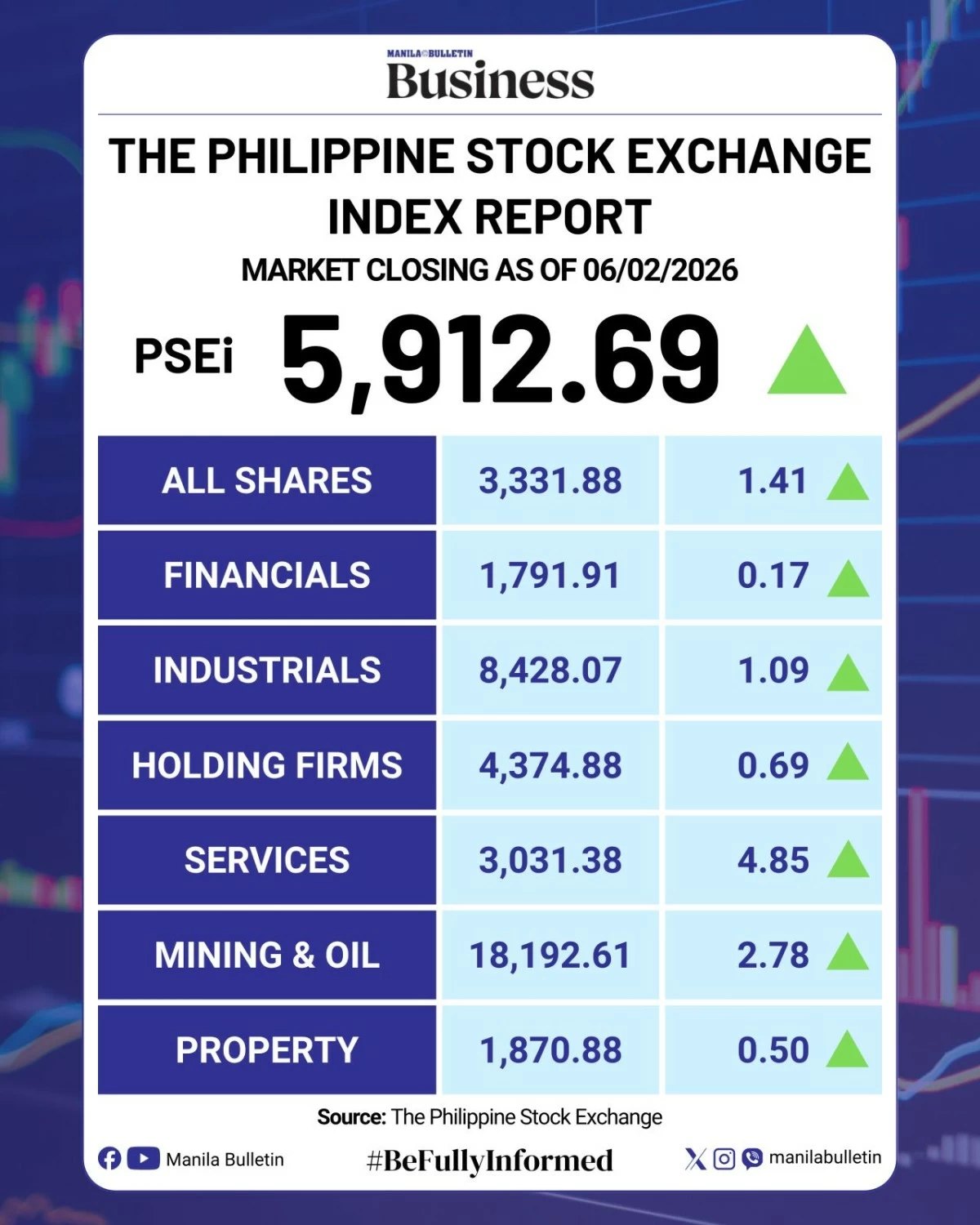
Local stocks surged, reclaiming the key psychological threshold, as rollback in domestic fuel prices and the strengthening local currency lured bargain hunters back to the equity market.
The Philippine Stock Exchange index (PSEi) advanced 1.95 percent, or 113.37 points, to close at 5,912.69 on Tuesday, June 2. The Services sector led the broad-based rally, propelled by gains in heavyweight International Container Terminal Services Inc.
Trading volume remained relatively thin, with 638 million shares valued at ₱6.79 billion changing hands. Advancing issues outnumbered decliners 98 to 79, while 60 stocks closed unchanged.
Luis Limlingan, managing director at Regina Capital Development Corp., noted that continued bargain hunting effectively helped the main index reclaim the 5,900 level.
He added that the appreciation of the peso against the United States (US) dollar provided the tailwind, anchoring selective capital inflows into local equities after a period of selling pressure.
Lower costs at the pump also provided a crucial catalyst for the market’s upward trajectory. Japhet Tantiangco, research manager at Philstocks Financial Inc., attributed the extended rally to optimism surrounding the significant rollback in retail fuel prices, which investors expect will ease the country’s broader inflation outlook. Sentiment received an additional boost following the government’s announcement of plans to establish a strategic petroleum reserve program, a move aimed at insulating the domestic economy from future global energy supply shocks.
External factors further supported the equity rebound. Michael Ricafort, chief economist at Rizal Commercial Banking Corp., observed that the PSEi’s gains coincided with a downward correction in global crude costs, with New York Mercantile Exchange West Texas Intermediate prices retreating toward the $90-per-barrel threshold.
According to Ricafort, the correction in energy costs came despite a complex geopolitical backdrop in the Middle East, characterized by conflicting diplomatic signals. While local geopolitical tensions persist amid ongoing Israeli military engagements in Lebanon, comments from Donald Trump indicating that talks with Iran were progressing rapidly helped temper immediate market anxieties over potential supply disruptions, counteracting earlier statements from Tehran regarding a suspension of diplomatic talks.