







Saving the Philippines' endangered national tree
Published Jun 2, 2026 12:13 pm
|
Updated Jun 2, 2026 07:19 pm


Ask any elementary pupil about the country’s national tree and the answer will likely be “narra.” But ask them what a narra tree looks like, and many may struggle to describe it.
The reason is simple: many children today have never actually seen a narra tree in their surroundings.
Even in areas where narra trees still grow, they are often cut down in the name of development. This was exemplified by the more than 200 trees removed to facilitate the construction of the Southern Access Link Expressway (SALEx), a nearly four-kilometer roadway intended to connect Skyway to Roxas Boulevard.
Among the felled trees was a decades-old narra tree that sparked public outcry. Recent reports said at least two narra trees from Quirino Avenue were relocated to the Hidden Garden along Taft Avenue through a method known as earth balling.
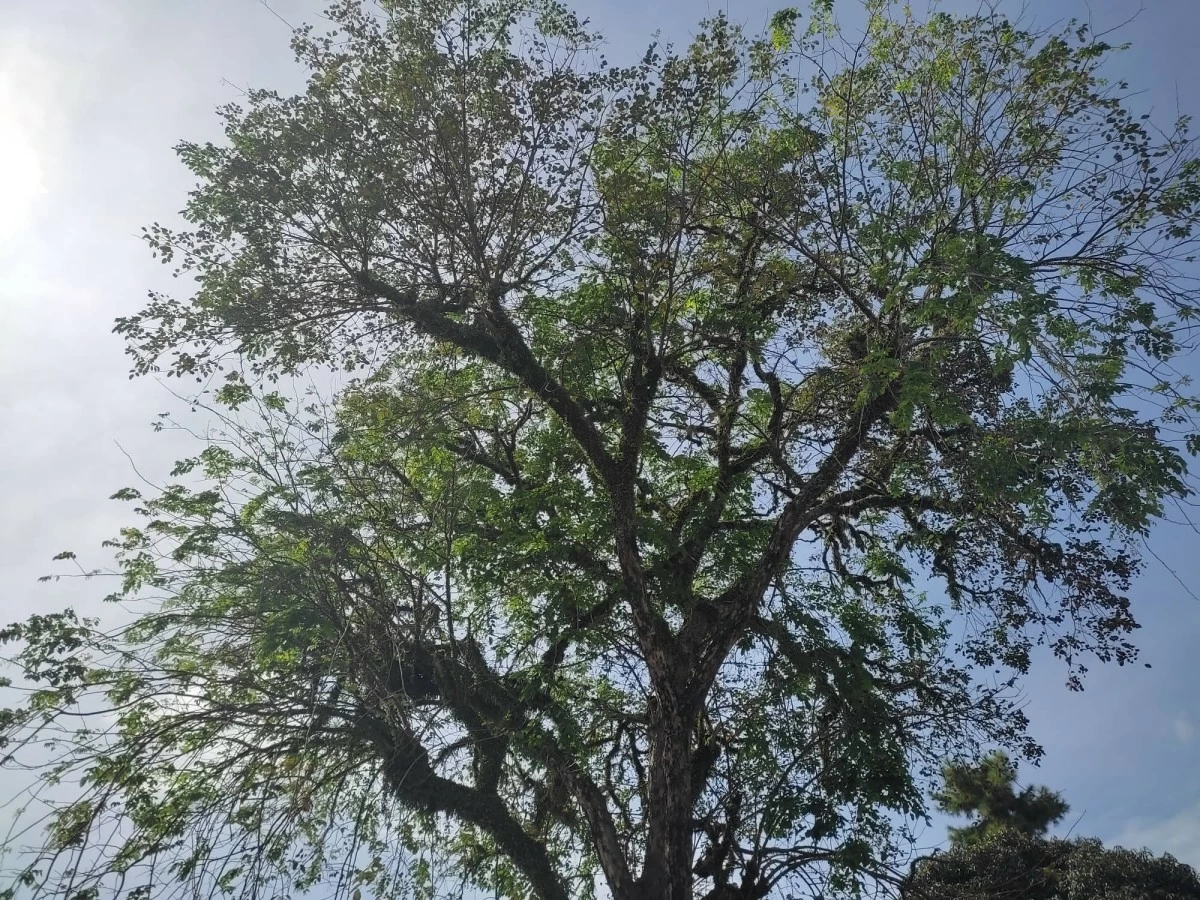
Narra, the country tree icon, is facing extinction.
Why is there so much ado about narra?
Narra is an endemic tree species native to the Philippines. Today, the country’s tree icon is facing critical endangerment in the wild, according to the National Parks Development Committee.
Experts said only a determined and sustained conservation campaign can save the narra from extinction in the country.
“Today, the Philippines has only small, scattered and endangered remainders of the tree,” said Jethro P. Adang, director of the Mindanao Baptist Rural Life Center (MBRLC) Foundation Inc. in Kinuskusan, Bansalan, Davao del Sur.
The International Union for Conservation of Nature (IUCN) classifies narra globally as an endangered species. In the Philippines, decades of deforestation and overexploitation for its prized hardwood have severely depleted natural populations.
Narra faces similar threats in other parts of Asia. It is classified as a threatened species in Indonesia and endangered in India. In Vietnam, narra has reportedly gone extinct in the wild, while in Peninsular Malaysia, it is believed to have disappeared because of exploitation.
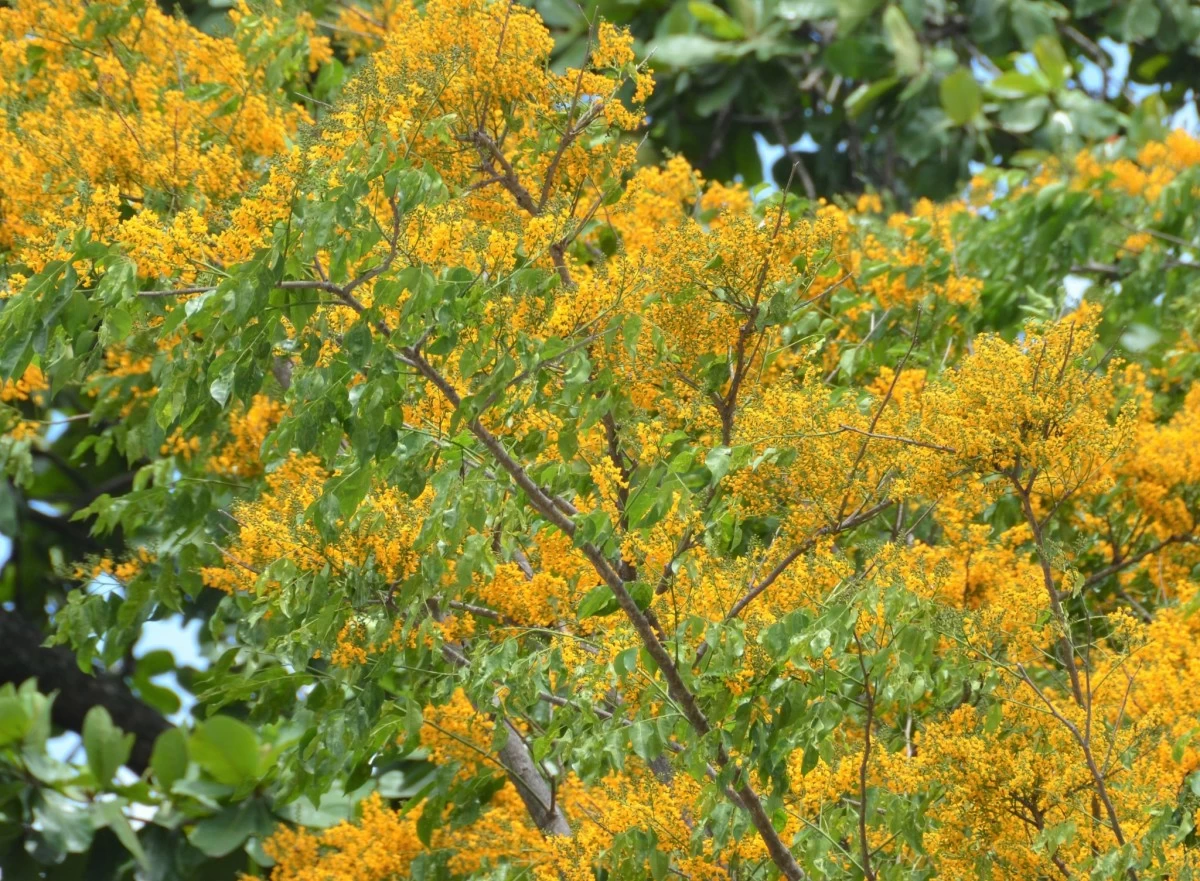
Narra is also planted in some parts of Southeast Asia due to its radiant yellow flowers.
Despite this, narra continues to be planted across Southeast Asia. In Singapore, it became a symbol of the country’s garden city program and lines many roads and avenues. In Thailand, narra is the provincial tree of Chonburi and Phuket.
Narra is valued not only for its environmental importance but also for its beauty and durability.
“The flowers are yellow, fragrant, and borne in large axillary panicles,” according to the Hawaii-based Nitrogen-fixing Tree Association. In the Philippines, narra trees bloom from March to April, producing bright yellow flowers.
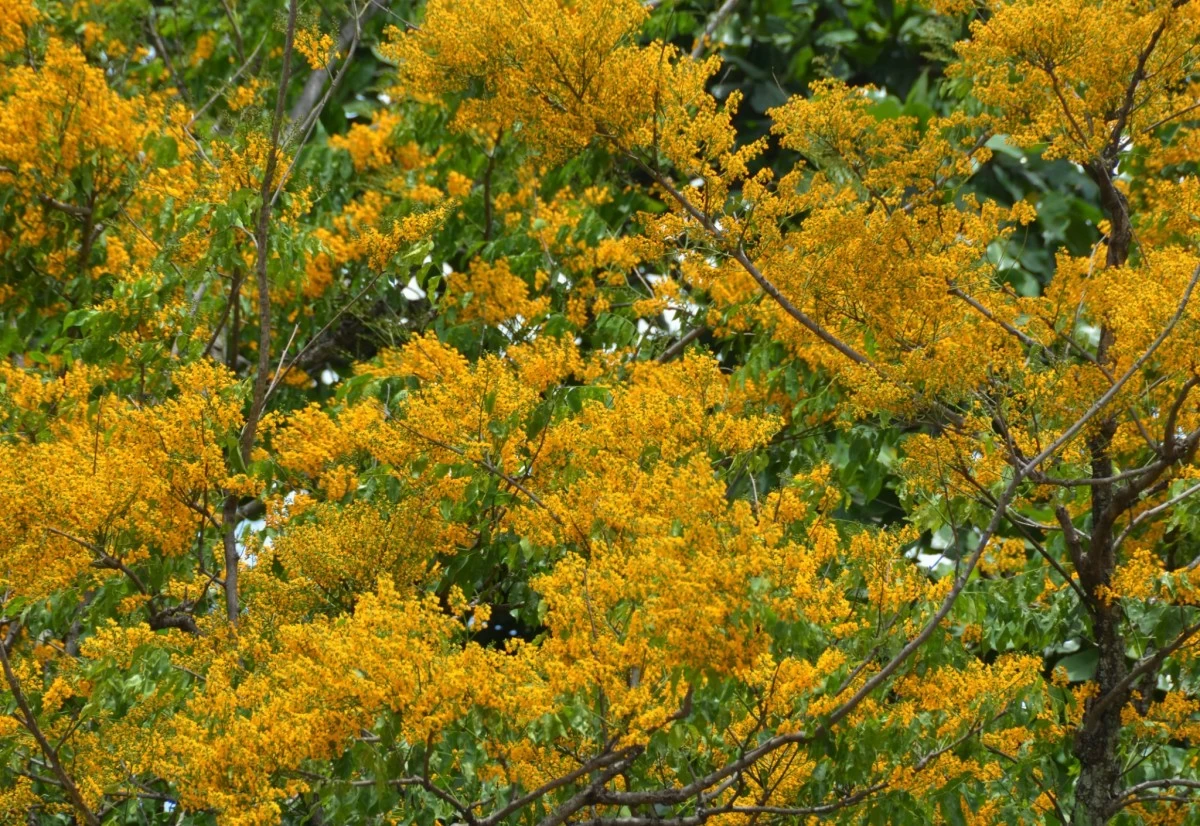
Narra is known for its beautiful flowers.
Its timbre is also highly prized.
“Its timber is moderately hard and heavy, easy to work, pleasantly rose-scented, takes a fine polish, develops a range of rich colors from yellow to red, and has conspicuous growth rings,” wrote T.E. Hensleigh and B.K. Holaway in Agroforestry Species for the Philippines.
Because of these qualities, narra wood is widely used for high-quality furniture, paneling, parquet flooring, musical instruments, sculptures, and decorative works.
Beyond its commercial value, narra has long been used in traditional medicine. Tea from its leaves was once used as a remedy for boils and diarrhea, while modern studies have explored its possible medicinal properties.
In 1987, the Philippine government imposed a ban on the cutting of narra trees. Violators may face criminal prosecution under Section 68 of Presidential Decree No. 705, or the Revised Forestry Code.
Whether on public or private land, narra trees cannot be trimmed, pruned, or cut without a technical assessment and permits from the Department of Environment and Natural Resources.
As narra stands on the brink of extinction, Filipinos are reminded of their responsibility to help preserve the country’s national tree.
In his Feb. 1, 1934 proclamation, Governor-General Frank Murphy said narra deserved the honor because of its “popularity, aesthetic value, hardiness, rapidity of growth, nativity, and history.”