







Explaining economics to the masses
Published Jun 2, 2026 12:01 am
|
Updated Jun 1, 2026 06:26 am


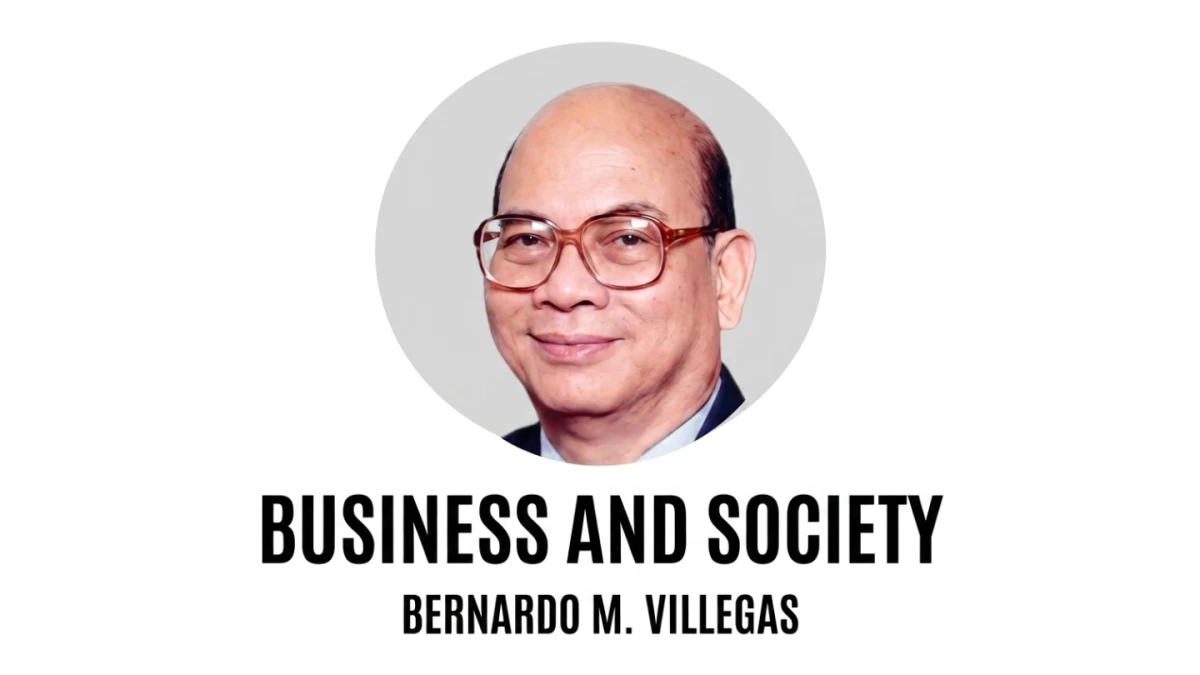
I am always flattered when I meet people well-established in their respective professions (those in their 40s to 60s) who tell me that they learned their basic economics from the textbooks I wrote in the 1970s and 1980s for both high school and college students, especially in private schools. The most widely used text for high school which I wrote was entitled Guide to Economics for Filipinos. For college students, I authored Introduction to Economics, Economics of a Nation, Economics for Consumers, and Economics for Industry.
I was fortunate to have a whole team of graduate students at the then-fledgling Center for Research and Communication (CRC)—precursor of the University of Asia and the Pacific (UA&P)—to help me gather local data. This ensured that the books were not merely theoretical, but truly helped students understand what was happening to the Philippine economy. For a long time before that period, the leading colleges were using textbooks written by foreigners, such as Nobel laureate Paul Samuelson. There was little in these foreign textbooks that reflected Philippine economic realities; the monetary examples given were even in United States (US) dollars.
We at CRC were so concerned about improving economic literacy among the Filipino youth that we started the first graduate program for teachers in the field of economics education. Thanks to a generous grant from the Ford Foundation, we gathered high school and college economics teachers from all over the Philippines (especially from Mindanao) and ran them through a master’s program in Economics Education. We were the first and only tertiary education institution to offer a Master of Arts in Economics Education.
We were proud of our graduates who significantly improved the level of economics education in many schools across the country. Many of them were eventually promoted to supervisors and superintendents in both private and public schools. Our most famous graduate is Milvida “Nene” Guevarra, who later served as Undersecretary of the Department of Finance (DOF) and founded Synergeia, an institute devoted to improving the quality of Philippine education. I, however, still have to face another challenge: how to make my other writings accessible to an even wider audience of Filipinos, especially among the millennials and centennials.
Ever since I started writing textbooks and other publications on economics more than 50 years ago, it has always been my wish or dream to communicate with the larger mass of Filipinos who feel more comfortable reading in Filipino, our national language, rather than in English. Alas, the dream never came true because through the years, my fluency in Filipino (based on Tagalog) has consistently deteriorated.
I learned to speak Tagalog in the bosom of my large family. My father and mother, Dr. Jose Villegas and Dr. Isabel Malvar Villegas, were both from Sto. Tomas, Batangas. With six siblings (three brothers and three sisters), I had every opportunity to speak (though not necessarily write) in pure Tagalog (Ala-eh!). My mother was the youngest daughter of General Miguel Malvar, the last Filipino general to surrender to the American forces during the Philippine-American War. She had ten siblings. One can just imagine the number of first cousins I had, considering how large families were during the generation we were growing up. Since the Malvars were a well-knit clan, I had plenty of practice to perfect my oral Tagalog.
The first sign of deterioration in my fluency in the national language began when my father, who worked all his professional life as a government official in the Department of Health, was assigned for some six years to Dumaguete, Negros Oriental. Although we always spoke Tagalog at home, we had to start speaking Cebuano at the grade school where we studied (St. Paul’s College). I became sufficiently fluent in this language, which is spoken by the greatest number of Filipinos. Today, when I visit Cebu or other places in the Visayas and Mindanao where Cebuano is the lingua franca, I usually tell the people I meet that I have lost most of my Cebuano (“dugay na sa Manila”), but warn them that I can still understand most of what they say (“dili mapabaligya”).
After graduating from De La Salle College, I hardly used the national language. I studied for four years in the U.S. and later spent a total of three years in Spain on sabbatical leaves. I am glad I learned conversational Spanish during those years teaching and doing research at one of the best business schools in the world, the IESE Business School in Barcelona. My efforts to become sufficiently fluent in the language of Cervantes further distracted me from perfecting my Filipino.
I think these are all valid excuses for my inability to write in Filipino. I still want, however, to be able to convey my ideas—especially the good news that despite all the defects and weaknesses of our politicians, the Philippines can still aspire to be a First World country twenty years from now. That is why I am so grateful to some of my colleagues at UA&P for their generous offer to translate my book, The Philippine Economy Towards First World Status (2022), into Filipino.
I am especially thinking of Filipinos below the average age of 26 who belong to lower-income households (more than 50% of the population) who will benefit from a Filipino version of the book. They are the ones who most need to be assured that they can look forward to a bright economic future in the Philippines, despite the unfortunate bad news stemming from the despicable behavior of some of our politicians (especially in the Senate), corrupt government officials, and dishonest business persons. I hope the content of my book, now translated into Filipino, will convince the majority of these young people that the Philippines is still the best country to live and work in.
I extend my heartfelt gratitude to Professor Louise Vincent Amante and his team of translators for their kind gesture of coming out with “Ang Ekonomiya ng Pilipinas Tungong Estadong First World.” Even the title indicates that the translation is in Filipino, not Tagalog, and will therefore appeal to at least the two youngest generations—the Millennials and Centennials—who have taken courses in speaking and reading Filipino. May this Filipino version of my book serve to instill a large dose of optimism in these two generations, who will be the ones to lead us toward the promised land described in this book.
For comments, my email address is [email protected].