







Dell takes a shot at the MacBook Neo with the new XPS 13


Apple’s MacBook Neo is rolling with a lot of steam right now. Besides the bright colors and the Apple ecosystem powering it, the price is set at a more accessible range for people who first want to dip their toes in the world of MacBooks.
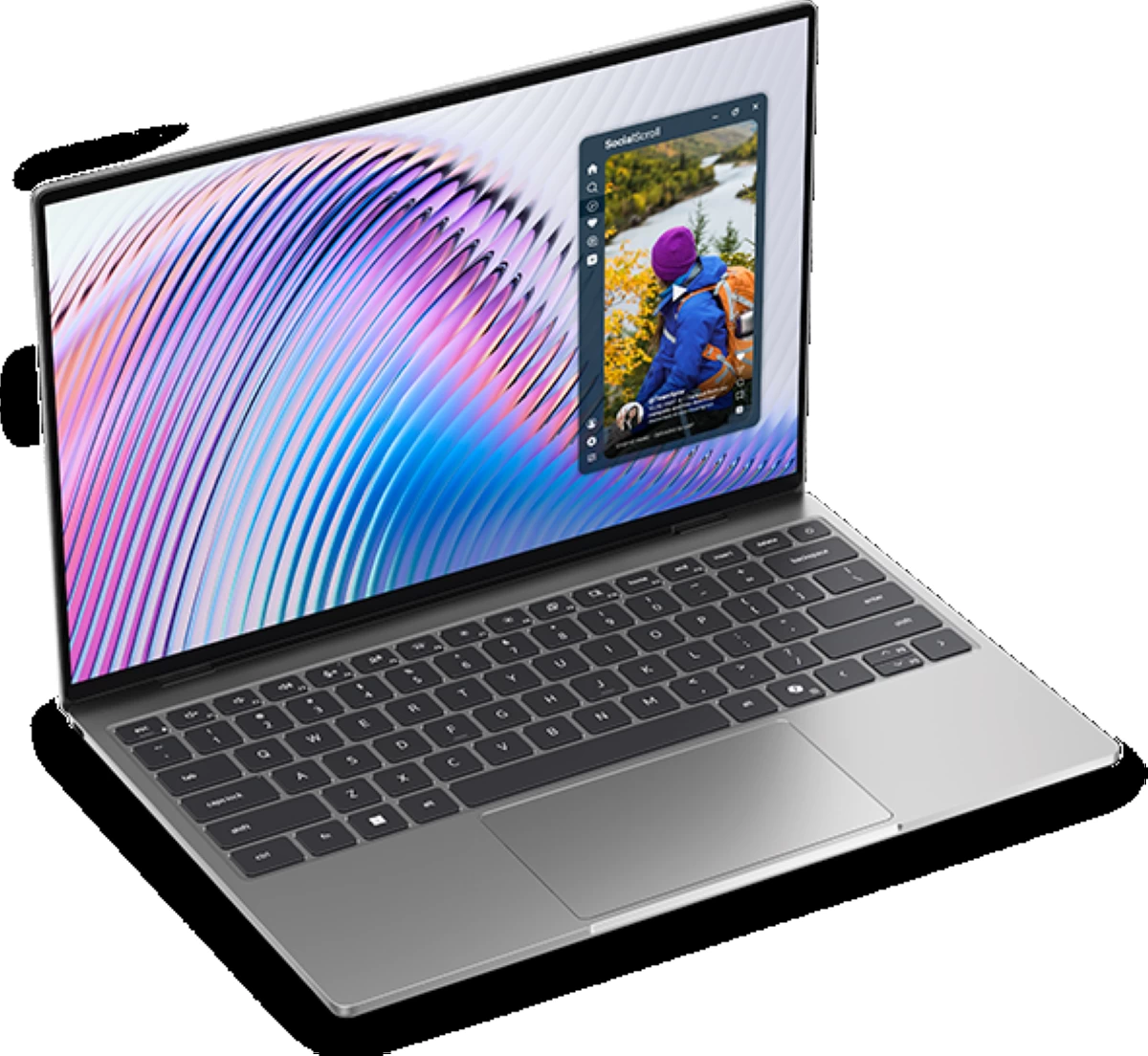
However, competitors won’t be going down without a fight. Dell has recently announced their new XPS 13 laptop. It is one hundred dollars more than the MacBook Neo, and powered with an Intel chip and runs on Windows 11.
Feature breakdown
- The Dell XPS 13 boasts a fully functional Touch screen. The MacBook Neo does not support a touch screen. My question is, is the touch screen actually necessary? Personally, I dislike smudging my screen with fingerprints. Also, even slightly touching most screens, would make it rock and wobble, which is annoying in its own right.
- Everyday usability takes a hit on Apple's budget device, which lacks a Backlit keyboard, a feature that the $699 XPS 13 boasts, and yes, I believe they should be proud of that one.
- The MacBook Neo has two USB-C ports, one has speeds of up to 10GB/s, while the second one has 480MB/s, which people may consider slow. Dell’s XPS 13 ports have a complete 10GB/s speed.
- Dell supports Wi-Fi 7, while the MacBook Neo supports up to Wi-Fi 6E. Wi-Fi 7’s theoretical speeds go up to 46GB, while Wi-Fi 6E only goes up to 9GB. But not all ISPs around the world support Wi-Fi 7, and for many households, Wi-Fi 6 hasn’t even been maximized. Also, Wi-Fi 7 in some places is unlocked via premium plans.
- MacBook Neo has Touch ID for its 512GB version. The Dell XPS 13 has Windows Hello for their biometric security.
- Audio Hardware: Dell doubles the acoustic hardware, utilizing a Four speakers setup compared to the Two speakers built into the Neo.
Power and Efficiency
The MacBook Neo relies entirely on Apple's A18 Pro chip (a 3nm architecture sporting a 6-core CPU, 5-core GPU, and 16-core Neural Engine) utilizing 8GB of unified memory. Because the architecture is completely integrated, there are no upgrade paths.
Dell counters this rigidity by offering its CNC aluminum chassis with an Intel Core processor for the base $699 model, but provides consumers an upgrade path up to an 8-core Intel Core Ultra 7 355 (Panther Lake). Memory configurations scale up to 32GB of LPDDR5X, and unlike the Neo, the SSD can be swapped out and upgraded post-purchase.
Portability and Display
Surprisingly, Dell manages to pack a larger display while engineering a lighter machine. The MacBook Neo features a 13.0-inch Liquid Retina display (2408 x 1506) locked at a static 60Hz refresh rate, weighing in at 2.7 pounds (1.23 kg).
The new XPS 13 stretches to a 13.4-inch 2.5K display. Crucially for battery preservation and smooth scrolling, it features a variable refresh rate that scales from 30Hz up to 120Hz. Despite the larger glass footprint, the XPS 13 utilizes a lightweight frame that scales down to just 2.2 pounds (1.0 kg), making it half a pound lighter than Apple's machine.
In terms of battery, the Dell XPS 13 may see up to 17 hours for the first few years. Apple’s MacBook Neo can go up to 16 hours of battery life with a long standby time.