ADVERTISEMENT

Poorest families hit hardest by ₱490 rice price shock—Think tank

Published Jun 1, 2026 12:00 am
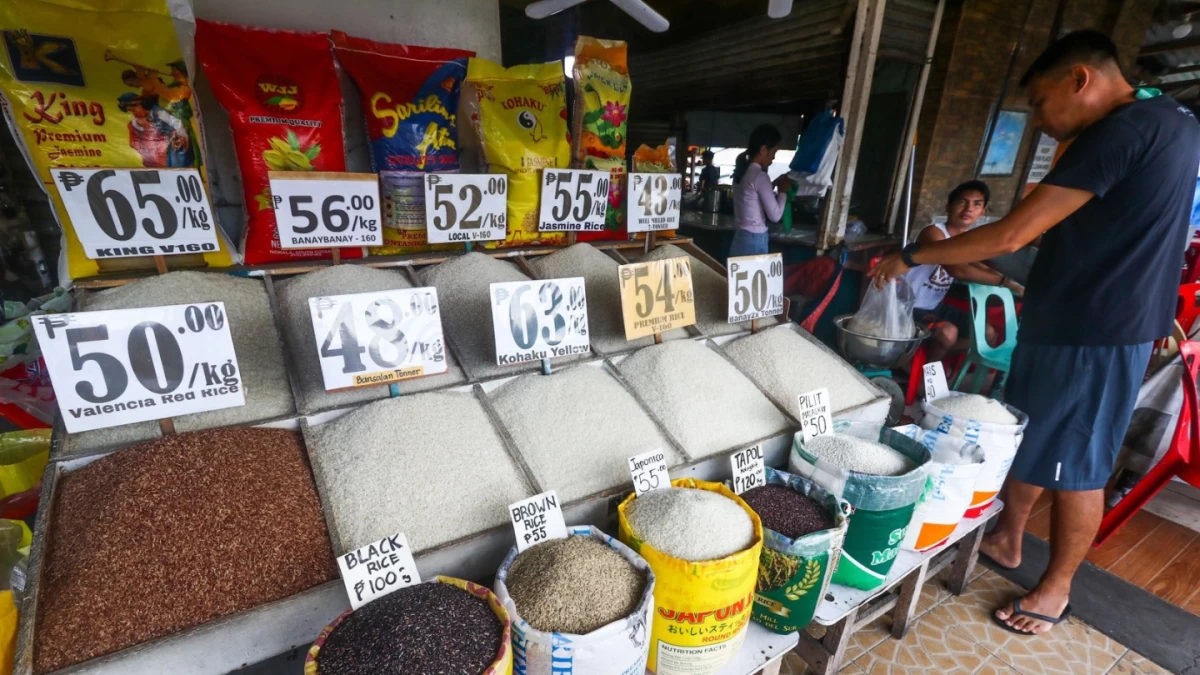
Lower-income households will need to cough up an additional ₱490 in monthly rice spending due to higher fertilizer prices and their impact on retail prices, according to the Congressional Policy and Budget Research Department (CPBRD).
Under a conservative lower-bound scenario, the House of Representatives’ think tank said poorer households would be disproportionately burdened by higher rice prices caused by fertilizer supply shocks.
CPBRD estimated that households in the poorest income decile would have to spend up to ₱490.8 more on monthly rice purchases, equivalent to around eight percent of their average monthly food spending.
In comparison, a typical median-income household would pay an additional ₱410.1, while those in the upper-income bracket would pay only ₱317.2 more.
“While no household is expected to be fully insulated, the shock is inherently regressive, with lower-income households bearing a disproportionately larger burden relative to their food budget,” CPBRD said in a report.
CPBRD noted that these projections account only for the impact of higher fertilizer prices, meaning households would likely spend even more when transport costs and other inflationary pressures are taken into account.
It said that the price of regular-milled rice, which currently fetches an average of ₱45.07 per kilo, could increase by up to 19.4 percent or roughly ₱10.6 per kilo as urea fertilizer prices nearly double.
Fertilizer costs have remained elevated since the ongoing conflict in the Middle East erupted in late February, putting pressure on the Philippines, which imports about 90 percent of its fertilizer requirements.
Under a conservative estimate, CPBRD said the impact of urea price hikes on regular-milled rice would likely materialize in the latter half of the year and persist for two to three years.
The think tank cautioned that prices may still increase at a faster pace because of the asymmetric pricing behavior of retailers, which it described as a legitimate concern.
“In a crisis scenario such as this, where supply disruptions are perceived as sustained, retailers may raise prices abruptly ahead of their actual cost increases,” CPBRD said.
In response, CPBRD said the government must focus on protecting the upcoming wet-season planting cycle through diversified emergency procurement and balanced fertilization programs to ensure an adequate rice supply in the near term, preventing price hikes in the process.
Over the long term, it said there should be more investment in building institutional capacity for fertilizer supply management, alongside broader modernization efforts, to reduce the agriculture sector’s exposure to external shocks.
“Equally critical is avoiding policy missteps, such as price caps, untargeted subsidies, and broad legislated wage hikes, that risk amplifying rather than easing inflationary pressures,” said CPBRD.
In terms of price caps, CPBRD said such a policy should be avoided to prevent sending a negative signal to producers and importers regarding the market’s ability to respond adequately to demand.
“Put differently, a binding price ceiling on the price of rice would likely aggravate rather than mitigate emergent risks of a shortage as it would disincentivize the investments necessary to increase supply,” it said.
Last month, the government started imposing a nationwide ₱50-per-kilo price cap on imported five-percent broken rice in a bid to keep the staple affordable for consumers.

Related Tags

Congressional Policy and Budget Research Department (CPBRD) rice prices
ADVERTISEMENT
.most-popular .layout-ratio{ padding-bottom: 79.13%; } @media (min-width: 768px) and (max-width: 1024px) { .widget-title { font-size: 15px !important; } }

{{ articles_filter_1561_widget.title }}

.most-popular .layout-ratio{ padding-bottom: 79.13%; } @media (min-width: 768px) and (max-width: 1024px) { .widget-title { font-size: 15px !important; } }

{{ articles_filter_1562_widget.title }}

.most-popular .layout-ratio{ padding-bottom: 79.13%; } @media (min-width: 768px) and (max-width: 1024px) { .widget-title { font-size: 15px !important; } }

{{ articles_filter_1563_widget.title }}

{{ articles_filter_1564_widget.title }}

.mb-article-details { position: relative; } .mb-article-details .article-body-preview, .mb-article-details .article-body-summary{ font-size: 17px; line-height: 30px; font-family: "Libre Caslon Text", serif; color: #000; } .mb-article-details .article-body-preview iframe , .mb-article-details .article-body-summary iframe{ width: 100%; margin: auto; } .read-more-background { background: linear-gradient(180deg, color(display-p3 1.000 1.000 1.000 / 0) 13.75%, color(display-p3 1.000 1.000 1.000 / 0.8) 30.79%, color(display-p3 1.000 1.000 1.000) 72.5%); position: absolute; height: 200px; width: 100%; bottom: 0; display: flex; justify-content: center; align-items: center; padding: 0; } .read-more-background a{ color: #000; } .read-more-btn { padding: 17px 45px; font-family: Inter; font-weight: 700; font-size: 18px; line-height: 16px; text-align: center; vertical-align: middle; border: 1px solid black; background-color: white; } .hidden { display: none; }
function initializeAllSwipers() { // Get all hidden inputs with cms_article_id document.querySelectorAll('[id^="cms_article_id_"]').forEach(function (input) { const cmsArticleId = input.value; const articleSelector = '#article-' + cmsArticleId + ' .body_images'; const swiperElement = document.querySelector(articleSelector); if (swiperElement && !swiperElement.classList.contains('swiper-initialized')) { new Swiper(articleSelector, { loop: true, pagination: false, navigation: { nextEl: '#article-' + cmsArticleId + ' .swiper-button-next', prevEl: '#article-' + cmsArticleId + ' .swiper-button-prev', }, }); } }); } setTimeout(initializeAllSwipers, 3000); const intersectionObserver = new IntersectionObserver( (entries) => { entries.forEach((entry) => { if (entry.isIntersecting) { const newUrl = entry.target.getAttribute("data-url"); if (newUrl) { history.pushState(null, null, newUrl); let article = entry.target; // Extract metadata const author = article.querySelector('.author-section').textContent.replace('By', '').trim(); const section = article.querySelector('.section-info ').textContent.replace(' ', ' '); const title = article.querySelector('.article-title h1').textContent; // Parse URL for Chartbeat path format const parsedUrl = new URL(newUrl, window.location.origin); const cleanUrl = parsedUrl.host + parsedUrl.pathname; // Update Chartbeat configuration if (typeof window._sf_async_config !== 'undefined') { window._sf_async_config.path = cleanUrl; window._sf_async_config.sections = section; window._sf_async_config.authors = author; } // Track virtual page view with Chartbeat if (typeof pSUPERFLY !== 'undefined' && typeof pSUPERFLY.virtualPage === 'function') { try { pSUPERFLY.virtualPage({ path: cleanUrl, title: title, sections: section, authors: author }); } catch (error) { console.error('ping error', error); } } // Optional: Update document title if (title && title !== document.title) { document.title = title; } } } }); }, { threshold: 0.1 } ); function showArticleBody(button) { const article = button.closest("article"); const summary = article.querySelector(".article-body-summary"); const body = article.querySelector(".article-body-preview"); const readMoreSection = article.querySelector(".read-more-background"); // Hide summary and read-more section summary.style.display = "none"; readMoreSection.style.display = "none"; // Show the full article body body.classList.remove("hidden"); } document.addEventListener("DOMContentLoaded", () => { let loadCount = 0; // Track how many times articles are loaded const offset = [1, 2, 3, 4, 5, 6, 7, 8, 9, 10]; // Offset values const currentUrl = window.location.pathname.substring(1); let isLoading = false; // Prevent multiple calls if (!currentUrl) { console.log("Current URL is invalid."); return; } const sentinel = document.getElementById("load-more-sentinel"); if (!sentinel) { console.log("Sentinel element not found."); return; } function isSentinelVisible() { const rect = sentinel.getBoundingClientRect(); return ( rect.top < window.innerHeight && rect.bottom >= 0 ); } function onScroll() { if (isLoading) return; if (isSentinelVisible()) { if (loadCount >= offset.length) { console.log("Maximum load attempts reached."); window.removeEventListener("scroll", onScroll); return; } isLoading = true; const currentOffset = offset[loadCount]; window.loadMoreItems().then(() => { let article = document.querySelector('#widget_1690 > div:nth-last-of-type(2) article'); intersectionObserver.observe(article) loadCount++; }).catch(error => { console.error("Error loading more items:", error); }).finally(() => { isLoading = false; }); } } window.addEventListener("scroll", onScroll); });

Sign up by email to receive news.