







Philippines, Vietnam sign four agreements
Published Jun 1, 2026 12:34 pm


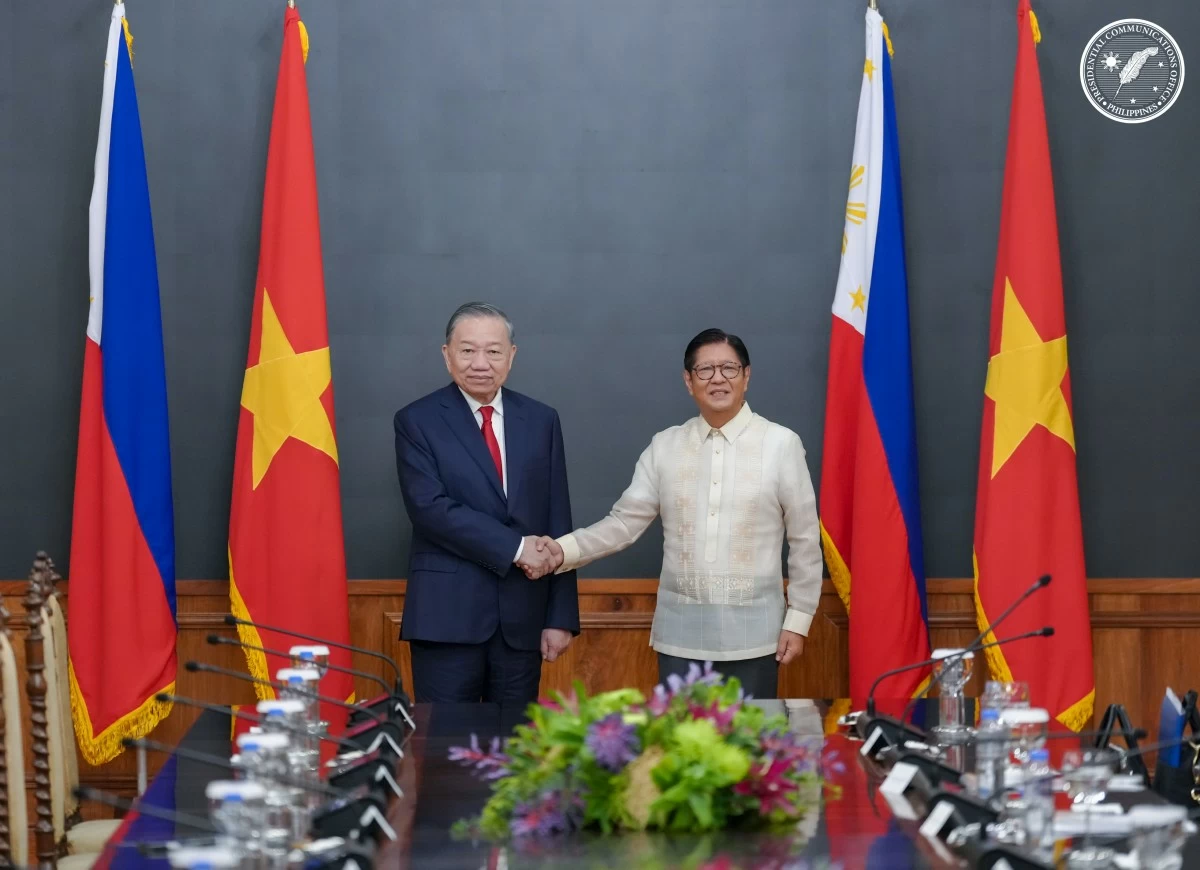
President Ferdinand R. Marcos Jr. and Vietnamese President To Lam hold a bilateral meeting at Malacañan on June 1, 2026. (PCO)
The Philippines and Vietnam signed four agreements covering defense, digital transformation, tourism, and education.
The four agreements were signed during the meeting between President Marcos and Vietnamese President To Lam at Malacañan on Monday, June 1.
During a joint press conference, Marcos and Lam witnessed the signing of the memorandum of understanding (MOU) on defense cooperation between the Department of National Defense (DND) and
The Ministry of National Defense of the Socialist Republic of Vietnam, as well as the MOU on information technology and digital transformation cooperation between the Department of Information and Communications Technology (DICT) and Vietnam's Ministry of Science and Technology.
Other agreements include the Tourism Cooperation Program 2026-2029 between the Department of Tourism (DOT) and the Ministry of Culture, Sports and Tourism of Vietnam; and the MOU between the University of the Philippines and the Academy of Public Administration and Governance, Ho Chi Minh National Academy of Politics.
Pivotal pact
According to Marcos, the signing of the MOU on defense, which he described as a "pivotal agreement," renews the 2010 Philippines–Viet Nam Memorandum of Agreement on Defense Cooperation.
The "strategically important framework," Marcos said, will significantly bolster their joint capabilities in maritime security, military education, and disaster risk reduction and management.
"As fellow claimant states, we reaffirm that maintaining peace, stability, and the freedom of navigation and overflight in the South China Sea remains non-negotiable," he said during the joint press conference.
"We stand resolute in our commitment to the peaceful resolution of disputes, grounded firmly in international law, particularly the
1982 United Nations Convention on the Law of the Sea (UNCLOS) and the 2016 South China Sea Arbitral Award," he added.
Marcos also recognized the "urgent need for a unified front against severe cross-border threats" such as internet fraud, human trafficking, illegal gambling, and people smuggling.
"We have agreed to address these challenges decisively through accelerated intelligence sharing and coordinated law enforcement actions," the President said.
In signing the MOU on information technology and digital transformation, Marcos said it ensures productive, proactive cooperation in digital inclusion, e-governance, and emerging technologies, recognizing its vital role as an engine of economic growth.
He also commended the finalization of the Tourism Cooperation Program for 2026–2029.
He added that the two countries have agreed to work closely to enhance air connectivity and increase commercial flight frequencies.
Signing the MOU on education, Marcos further said, underscored the importance of institutionalizing student and faculty exchanges to internationalize our higher education systems.
Future ties
The Chief Executive announced that the Philippines and Vietnam agreed to launch joint cultural initiatives and commercial partnerships in high-growth creative sectors, including animation and game development.
It is an attempt to capitalize on the two countries' shared demographic dividend of "a young, tech-savvy, and highly innovative workforce," Marcos said.
Highlighting that Vietnam is the Philippines’ 11th-largest trading partner, Marcos expressed that they remain committed to fostering a "a highly conducive environment for two-way investments," particularly in manufacturing, green technology, and the digital economy.
"Agriculture remains a vital cornerstone of our Enhanced Strategic Partnership. Moving forward, we are opening new pathways for our collaboration in agribusinesses, seafood processing, and joint scientific research for climate-resilient farming to ensure food security for both our peoples," he said.
Marcos said his meeting with the Vietnamese President showed that the Enhanced Strategic Partnership "does not merely secure our bilateral interests" but "firmly positions the Philippines and Viet Nam as steadfast anchors of peace, innovation, dynamism, and sustainable growth" across the region.