ADVERTISEMENT

Philippine manufacturing returns to growth in May

Published Jun 1, 2026 09:09 am  |  Updated Jun 1, 2026 02:24 pm
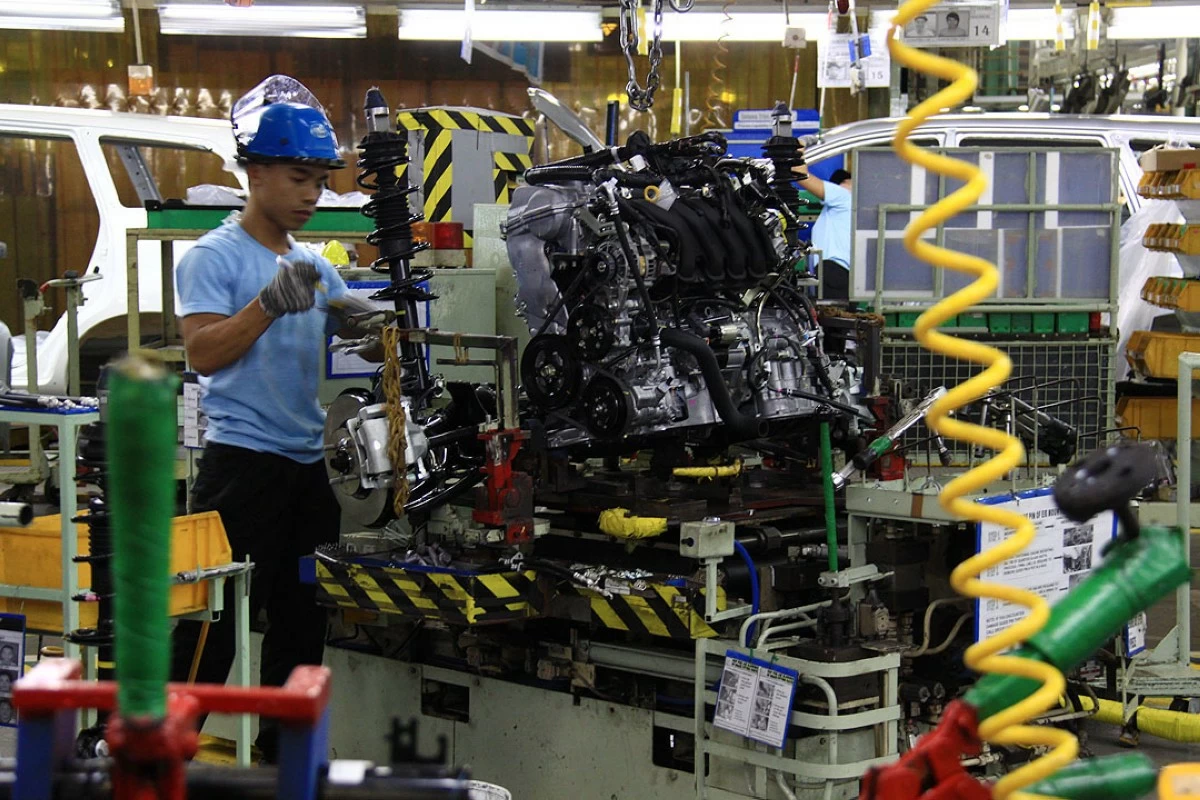
(PPMA photo)
(PPMA photo)

Philippine manufacturing activity returned to growth in May as output and new orders recovered, but factories continued to shed jobs while cost pressures intensified amid supply-chain disruptions and the prolonged war in the Middle East, S&P Global said.

In a report on Monday, June 1, S&P Global said the Philippines manufacturing purchasing managers’ index (PMI) rose to 50.8 last month from 48.3 in April, returning to expansion territory after falling below the 50 threshold the previous month.

A PMI reading above 50 signals an improvement in operating conditions from a month ago, while a reading below 50 indicates deterioration.

S&P Global said the latest data signaled a fresh improvement in the health of the Filipino manufacturing sector last May, supported by renewed growth in output and new orders.

However, the recovery remained modest and historically subdued, even as improvements were recorded in five of the last six survey periods.

The overall expansion was driven by a renewed rise in new orders after a sharp decline last April. S&P Global said improved client demand and new customer wins supported growth, although the recovery appeared to be mainly domestic.

The exports picture remained weak, with new sales from abroad falling at the sharpest pace since July 2020.

The increase in overall new business encouraged manufacturers to raise production at a solid pace in May after output growth stalled in April. The upturn was the strongest in three months and above the survey average.

Despite the pickup in production, S&P Global said supply-chain disruptions intensified during the month. Lead times for inputs lengthened to one of the greatest extents in nearly a year and a half due to shipping delays, as companies consolidated orders to limit costs.

The report said the war in the Middle East pushed fuel and raw material prices higher, leaving manufacturers facing heavier cost burdens.

Input price inflation accelerated to its fastest rate since August 2022, while selling prices also increased sharply as companies passed higher costs on to customers.

S&P Global said the rise in factory-gate selling prices was the second-sharpest in three and a half years, surpassed only by the increase recorded last April.

The rebound in new orders was still not enough to revive purchasing activity among manufacturers. Buying activity declined for a third straight month, often due to higher raw material prices.

Instead, companies relied on inventories to meet production requirements. Stocks of purchases fell rapidly last month, with the decline the steepest in six years. Stocks of finished goods also decreased for the second straight month, although at a softer pace.

Employment also weakened during the month. S&P Global said manufacturers recorded job shedding last May due to resignations and layoffs.

The pace of job losses was the fastest in two years, although the overall decline remained moderate.

Despite weaker employment, manufacturers were still able to reduce backlogs of work in May, though the rate of depletion was only marginal.

Filipino manufacturers also became more optimistic about output in the coming year. S&P Global said the level of positive sentiment rose to an 18-month high, as firms hoped demand conditions would improve.

“The latest PMI data for the Filipino manufacturing sector presented a mixed picture. While manufacturers registered renewed growth in output and new orders, supply-chain disruption and cost pressures worsened as the Middle East conflict entered its third month. Both buying and hiring activity declined,” S&P Global Market Intelligence economist Maryam Baluch said.

However, firms remained increasingly optimistic about the future, hoping improved demand will support output growth. Indeed, sustaining this growth will depend on how certain customers feel in the economic and geopolitical outlook,” Baluch added.

S&P Global’s Philippines manufacturing PMI is compiled from responses to questionnaires sent to purchasing managers in a panel of around 400 manufacturers. Data for the latest survey were collected from May 12 to 22.

Related Tags

purchasing managers\' index (PMI) S&P Global
ADVERTISEMENT
.most-popular .layout-ratio{ padding-bottom: 79.13%; } @media (min-width: 768px) and (max-width: 1024px) { .widget-title { font-size: 15px !important; } }

{{ articles_filter_1561_widget.title }}

.most-popular .layout-ratio{ padding-bottom: 79.13%; } @media (min-width: 768px) and (max-width: 1024px) { .widget-title { font-size: 15px !important; } }

{{ articles_filter_1562_widget.title }}

.most-popular .layout-ratio{ padding-bottom: 79.13%; } @media (min-width: 768px) and (max-width: 1024px) { .widget-title { font-size: 15px !important; } }

{{ articles_filter_1563_widget.title }}

{{ articles_filter_1564_widget.title }}

.mb-article-details { position: relative; } .mb-article-details .article-body-preview, .mb-article-details .article-body-summary{ font-size: 17px; line-height: 30px; font-family: "Libre Caslon Text", serif; color: #000; } .mb-article-details .article-body-preview iframe , .mb-article-details .article-body-summary iframe{ width: 100%; margin: auto; } .read-more-background { background: linear-gradient(180deg, color(display-p3 1.000 1.000 1.000 / 0) 13.75%, color(display-p3 1.000 1.000 1.000 / 0.8) 30.79%, color(display-p3 1.000 1.000 1.000) 72.5%); position: absolute; height: 200px; width: 100%; bottom: 0; display: flex; justify-content: center; align-items: center; padding: 0; } .read-more-background a{ color: #000; } .read-more-btn { padding: 17px 45px; font-family: Inter; font-weight: 700; font-size: 18px; line-height: 16px; text-align: center; vertical-align: middle; border: 1px solid black; background-color: white; } .hidden { display: none; }
function initializeAllSwipers() { // Get all hidden inputs with cms_article_id document.querySelectorAll('[id^="cms_article_id_"]').forEach(function (input) { const cmsArticleId = input.value; const articleSelector = '#article-' + cmsArticleId + ' .body_images'; const swiperElement = document.querySelector(articleSelector); if (swiperElement && !swiperElement.classList.contains('swiper-initialized')) { new Swiper(articleSelector, { loop: true, pagination: false, navigation: { nextEl: '#article-' + cmsArticleId + ' .swiper-button-next', prevEl: '#article-' + cmsArticleId + ' .swiper-button-prev', }, }); } }); } setTimeout(initializeAllSwipers, 3000); const intersectionObserver = new IntersectionObserver( (entries) => { entries.forEach((entry) => { if (entry.isIntersecting) { const newUrl = entry.target.getAttribute("data-url"); if (newUrl) { history.pushState(null, null, newUrl); let article = entry.target; // Extract metadata const author = article.querySelector('.author-section').textContent.replace('By', '').trim(); const section = article.querySelector('.section-info ').textContent.replace(' ', ' '); const title = article.querySelector('.article-title h1').textContent; // Parse URL for Chartbeat path format const parsedUrl = new URL(newUrl, window.location.origin); const cleanUrl = parsedUrl.host + parsedUrl.pathname; // Update Chartbeat configuration if (typeof window._sf_async_config !== 'undefined') { window._sf_async_config.path = cleanUrl; window._sf_async_config.sections = section; window._sf_async_config.authors = author; } // Track virtual page view with Chartbeat if (typeof pSUPERFLY !== 'undefined' && typeof pSUPERFLY.virtualPage === 'function') { try { pSUPERFLY.virtualPage({ path: cleanUrl, title: title, sections: section, authors: author }); } catch (error) { console.error('ping error', error); } } // Optional: Update document title if (title && title !== document.title) { document.title = title; } } } }); }, { threshold: 0.1 } ); function showArticleBody(button) { const article = button.closest("article"); const summary = article.querySelector(".article-body-summary"); const body = article.querySelector(".article-body-preview"); const readMoreSection = article.querySelector(".read-more-background"); // Hide summary and read-more section summary.style.display = "none"; readMoreSection.style.display = "none"; // Show the full article body body.classList.remove("hidden"); } document.addEventListener("DOMContentLoaded", () => { let loadCount = 0; // Track how many times articles are loaded const offset = [1, 2, 3, 4, 5, 6, 7, 8, 9, 10]; // Offset values const currentUrl = window.location.pathname.substring(1); let isLoading = false; // Prevent multiple calls if (!currentUrl) { console.log("Current URL is invalid."); return; } const sentinel = document.getElementById("load-more-sentinel"); if (!sentinel) { console.log("Sentinel element not found."); return; } function isSentinelVisible() { const rect = sentinel.getBoundingClientRect(); return ( rect.top < window.innerHeight && rect.bottom >= 0 ); } function onScroll() { if (isLoading) return; if (isSentinelVisible()) { if (loadCount >= offset.length) { console.log("Maximum load attempts reached."); window.removeEventListener("scroll", onScroll); return; } isLoading = true; const currentOffset = offset[loadCount]; window.loadMoreItems().then(() => { let article = document.querySelector('#widget_1690 > div:nth-last-of-type(2) article'); intersectionObserver.observe(article) loadCount++; }).catch(error => { console.error("Error loading more items:", error); }).finally(() => { isLoading = false; }); } } window.addEventListener("scroll", onScroll); });

Sign up by email to receive news.