








The Senate's plenary session on Monday, June 1, failed to commence as no senator from the majority bloc appeared at the session hall, including Senate President Alan Peter Cayetano, who was expected to open the proceedings.
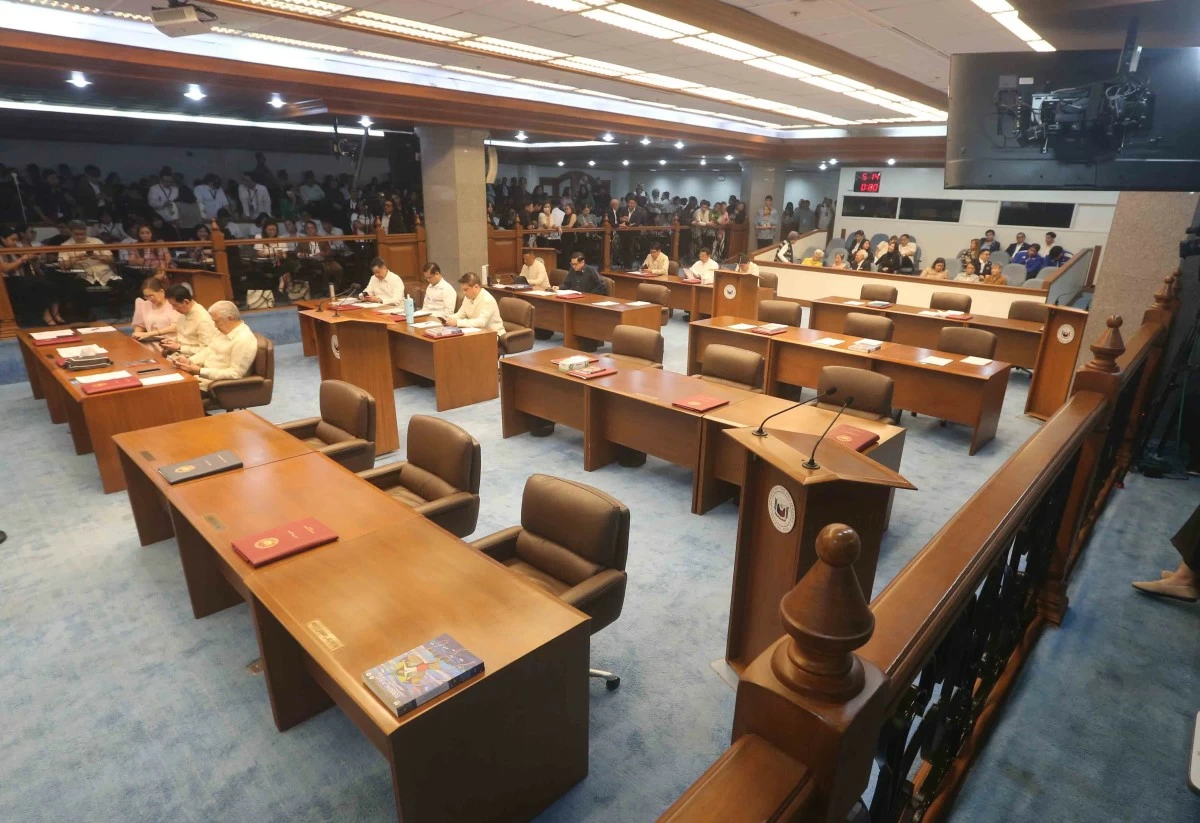
No senators from the majority bloc attended the Senate plenary session at the Senate of the Philippines in Pasay City on June 1, 2026. (Mark Balmores)
The session was scheduled to begin at 5 p.m., but only members of the minority bloc, or the so-called "Solid Bloc 11," were present.
As of 6 p.m., one hour after the scheduled start of the session, no majority bloc senator had arrived, raising questions about whether the chamber would be able to convene.
At around 7:05 p.m. members of the minority bloc, started leaving the plenary hall.
"Wala na eh, di na dadating eh (They're no longer showing up)," Sen. Juan Miguel “Migz” Zubiri said.
Zubiri said that in his 14 years in the Senate, this is the first time he has experienced the presiding officer not showing up.
"It's a sign of protest on their part...bakit naman naka-hostage yung trabaho ng Senado? (Why is the Senate's work being hostage-taken?)" Zubiri asked, referring to a statement by Cayetano.
For their part, Zubiri said that the minority bloc wants to work.
Senator Erwin Tulfo called the incident another waste of taxpayers' money.
Senate to go quiet?
In a statement, Cayetano called on the minority bloc to join what he described as a collective stand for the Senate's independence, amid escalating tensions over the chamber's leadership and alleged external pressures on lawmakers.
Cayetano’s statement came after the Sandiganbayan Fifth Division issued a warrant of arrest against Sen. Jinggoy Estrada, a member of the Majority bloc, on charges of plunder and graft in connection with his alleged involvement in the flood control scam.
Cayetano stressed that the Senate is a co-equal branch of government and "not a prize to be claimed" by any political faction.
"The Senate is a co-equal branch of government. It is not a prize to be claimed — by anyone," Cayetano said.
While acknowledging disagreements over Senate leadership, Cayetano said such issues should be resolved internally by the chamber itself.
Cayetano warned against allowing the independence of the institution and the legal standing of its members to become bargaining chips in political struggles.
"I am speaking truth that each senator already knows — the independence of this institution, and the legal standing of any of its members, are not currencies. The day they become things to be traded, is the day that the Senate is diminished. And after the Senate, the Republic," he said.
The Senate chief then challenged members of the minority bloc to take a stand on what he described as a test of the chamber's autonomy.
"So I put one question to you, not as the majority but as the chamber: will you stand for the Senate's independence?" Cayetano asked.
He also proposed what he called a "deliberate act" by senators to allow the Senate to "go quiet" as a form of protest, arguing that such a move would prompt the public to question why a co-equal branch of government would choose silence rather than be compelled to act under outside influence.
"I am asking you to join one deliberate act — to let the Senate go quiet, together and by choice, so the country is made to ask why a co-equal branch would fall silent rather than be made to serve," he said.
"The door is open. What you do with it is yours to answer — to this institution, and to the people watching it."