ADVERTISEMENT

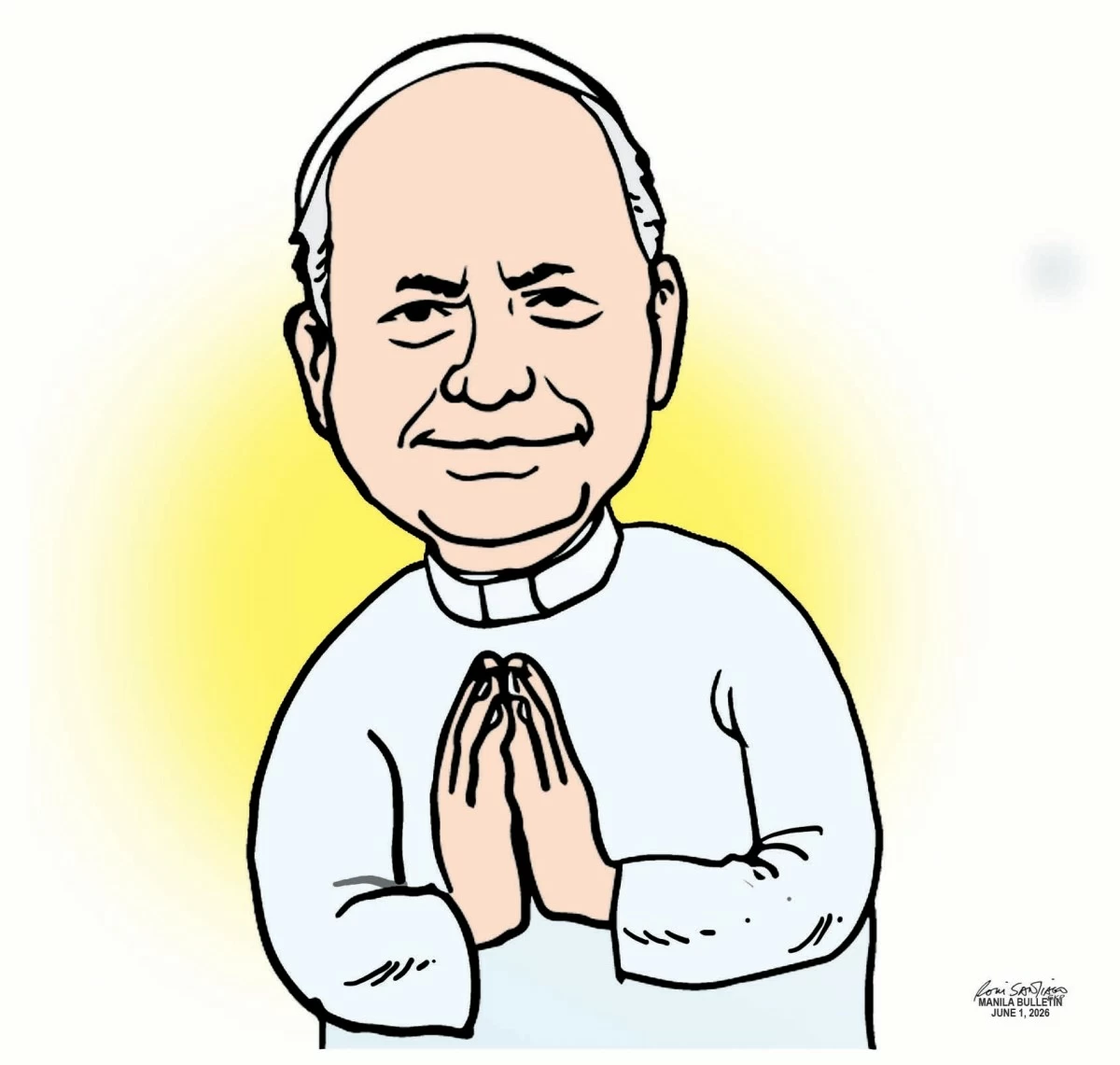
Magnifica Humanitas: Pope Leo XIV delivers a timely message of faith

Published Jun 1, 2026 12:05 am
At a time of great peril and uncertainty, Pope Leo XIV has issued the encyclical entitled Magnifica Humanitas (Magnificent Humanity) – an epistle of robust hope that seeks to invigorate Christians and Catholics in tackling present-day realities.
Human dignity is the focal point of Magnifica Humanitas. This is a counterpoint to the capitalist dictum that emphasizes the primacy of profits. Enterprise vibrancy is equated with the ability to earn and increase profits continually. Corporate viability is deemed coterminous with a viable business model that unfailingly brings forth profitable results. In the headlong march to match the pace of technological advance, the growth of people is indubitably stymied.
Pope Leo XIV emphasizes: “The positive potential of the market and private initiative (makes sense) only if they remain subordinate to the moral law and guided by the principle of solidarity , without sacrificing the most vulnerable in the rationale of profit.”
Recall that the Pontiff’s choice of name was inspired by Pope Leo XIII’s authorship of a timeless encyclical, Rerum Novarum (Of New Things – On the Condition of Labor). He signed Magnifica Humanitas on the 135th anniversary of the issuance of Rerum Novarum.
Importantly, Pope Leo XIV asserted that economic decision making about Artificial Intelligence (AI) must be adopted in the context of the common good. He cited a passage from Pope Benedict XVI’s encyclical Caritas in Veritate (Love in Truth) that was issued a few years ago: “Economic activity cannot claim to solve social problems simply through the expansion of a commercial mentality, but must be ordered toward the common good, for which the political community bears its own irreplaceable responsibility.”
According to Pope Leo XIV, the notion that private property rights are absolute must be set aside by the realization that there is a “universal destination of goods.” This challenges the popular idea that “to the victor belongs the spoils.” In contrast, he asserts that the common good always takes precedence. Christian tradition has never recognized that the right to private property is inviolable.
The scope of the capitalist model is also challenged, especially as it includes patents and algorithms of digital platforms and other technological infrastructure. He asserts that “the good of the human person must take precedence over the deification of private rights.”
In the encyclical, Pope Leo XIV frames the current digital revolution as a choice between two biblical paradigms, namely, the tower of Babel and the rebuilding of Jerusalem. The former symbolizes unbridled technological ambition that pursues efficiency and power without wisdom or care for the vulnerable. It threatens to create algorithmic control, digital slavery, and extreme wealth inequality. The latter propagates the ideal of a community built on shared responsibility and mutual solidarity in uplifting the poor and the marginalized.
In essence, he asserts that the primacy of the human being must not be diminished or subjugated. He points out: “Indeed, precisely because we experience limits – vulnerability, suffering and failure – we can recognize the inviolate dignity of every person, both our own and that of others.”
His message resonates even among secular-minded thinkers and advocates of social change. Far from being deterred by cynicism or restrained by conservatism, he provides enthusiastic encouragement as he urges humanity to actively embrace the boon produced by technological progress, and not be deterred by its daunting challenges.

Related Tags

Editorial POPE LEO XIV
ADVERTISEMENT
.most-popular .layout-ratio{ padding-bottom: 79.13%; } @media (min-width: 768px) and (max-width: 1024px) { .widget-title { font-size: 15px !important; } }

{{ articles_filter_1561_widget.title }}

.most-popular .layout-ratio{ padding-bottom: 79.13%; } @media (min-width: 768px) and (max-width: 1024px) { .widget-title { font-size: 15px !important; } }

{{ articles_filter_1562_widget.title }}

.most-popular .layout-ratio{ padding-bottom: 79.13%; } @media (min-width: 768px) and (max-width: 1024px) { .widget-title { font-size: 15px !important; } }

{{ articles_filter_1563_widget.title }}

{{ articles_filter_1564_widget.title }}

.mb-article-details { position: relative; } .mb-article-details .article-body-preview, .mb-article-details .article-body-summary{ font-size: 17px; line-height: 30px; font-family: "Libre Caslon Text", serif; color: #000; } .mb-article-details .article-body-preview iframe , .mb-article-details .article-body-summary iframe{ width: 100%; margin: auto; } .read-more-background { background: linear-gradient(180deg, color(display-p3 1.000 1.000 1.000 / 0) 13.75%, color(display-p3 1.000 1.000 1.000 / 0.8) 30.79%, color(display-p3 1.000 1.000 1.000) 72.5%); position: absolute; height: 200px; width: 100%; bottom: 0; display: flex; justify-content: center; align-items: center; padding: 0; } .read-more-background a{ color: #000; } .read-more-btn { padding: 17px 45px; font-family: Inter; font-weight: 700; font-size: 18px; line-height: 16px; text-align: center; vertical-align: middle; border: 1px solid black; background-color: white; } .hidden { display: none; }
function initializeAllSwipers() { // Get all hidden inputs with cms_article_id document.querySelectorAll('[id^="cms_article_id_"]').forEach(function (input) { const cmsArticleId = input.value; const articleSelector = '#article-' + cmsArticleId + ' .body_images'; const swiperElement = document.querySelector(articleSelector); if (swiperElement && !swiperElement.classList.contains('swiper-initialized')) { new Swiper(articleSelector, { loop: true, pagination: false, navigation: { nextEl: '#article-' + cmsArticleId + ' .swiper-button-next', prevEl: '#article-' + cmsArticleId + ' .swiper-button-prev', }, }); } }); } setTimeout(initializeAllSwipers, 3000); const intersectionObserver = new IntersectionObserver( (entries) => { entries.forEach((entry) => { if (entry.isIntersecting) { const newUrl = entry.target.getAttribute("data-url"); if (newUrl) { history.pushState(null, null, newUrl); let article = entry.target; // Extract metadata const author = article.querySelector('.author-section').textContent.replace('By', '').trim(); const section = article.querySelector('.section-info ').textContent.replace(' ', ' '); const title = article.querySelector('.article-title h1').textContent; // Parse URL for Chartbeat path format const parsedUrl = new URL(newUrl, window.location.origin); const cleanUrl = parsedUrl.host + parsedUrl.pathname; // Update Chartbeat configuration if (typeof window._sf_async_config !== 'undefined') { window._sf_async_config.path = cleanUrl; window._sf_async_config.sections = section; window._sf_async_config.authors = author; } // Track virtual page view with Chartbeat if (typeof pSUPERFLY !== 'undefined' && typeof pSUPERFLY.virtualPage === 'function') { try { pSUPERFLY.virtualPage({ path: cleanUrl, title: title, sections: section, authors: author }); } catch (error) { console.error('ping error', error); } } // Optional: Update document title if (title && title !== document.title) { document.title = title; } } } }); }, { threshold: 0.1 } ); function showArticleBody(button) { const article = button.closest("article"); const summary = article.querySelector(".article-body-summary"); const body = article.querySelector(".article-body-preview"); const readMoreSection = article.querySelector(".read-more-background"); // Hide summary and read-more section summary.style.display = "none"; readMoreSection.style.display = "none"; // Show the full article body body.classList.remove("hidden"); } document.addEventListener("DOMContentLoaded", () => { let loadCount = 0; // Track how many times articles are loaded const offset = [1, 2, 3, 4, 5, 6, 7, 8, 9, 10]; // Offset values const currentUrl = window.location.pathname.substring(1); let isLoading = false; // Prevent multiple calls if (!currentUrl) { console.log("Current URL is invalid."); return; } const sentinel = document.getElementById("load-more-sentinel"); if (!sentinel) { console.log("Sentinel element not found."); return; } function isSentinelVisible() { const rect = sentinel.getBoundingClientRect(); return ( rect.top < window.innerHeight && rect.bottom >= 0 ); } function onScroll() { if (isLoading) return; if (isSentinelVisible()) { if (loadCount >= offset.length) { console.log("Maximum load attempts reached."); window.removeEventListener("scroll", onScroll); return; } isLoading = true; const currentOffset = offset[loadCount]; window.loadMoreItems().then(() => { let article = document.querySelector('#widget_1690 > div:nth-last-of-type(2) article'); intersectionObserver.observe(article) loadCount++; }).catch(error => { console.error("Error loading more items:", error); }).finally(() => { isLoading = false; }); } } window.addEventListener("scroll", onScroll); });

Sign up by email to receive news.