






Manila Bulletin
 World
Ukraine hits Russian energy targets and denies striking Kremlin-occupied nuclear plant
World
Ukraine hits Russian energy targets and denies striking Kremlin-occupied nuclear plant
World
Ukraine hits Russian energy targets and denies striking Kremlin-occupied nuclear plant
Ukraine hits Russian energy targets and denies striking Kremlin-occupied nuclear plant
Published May 31, 2026 08:17 pm
|
Updated Jun 1, 2026 12:11 pm


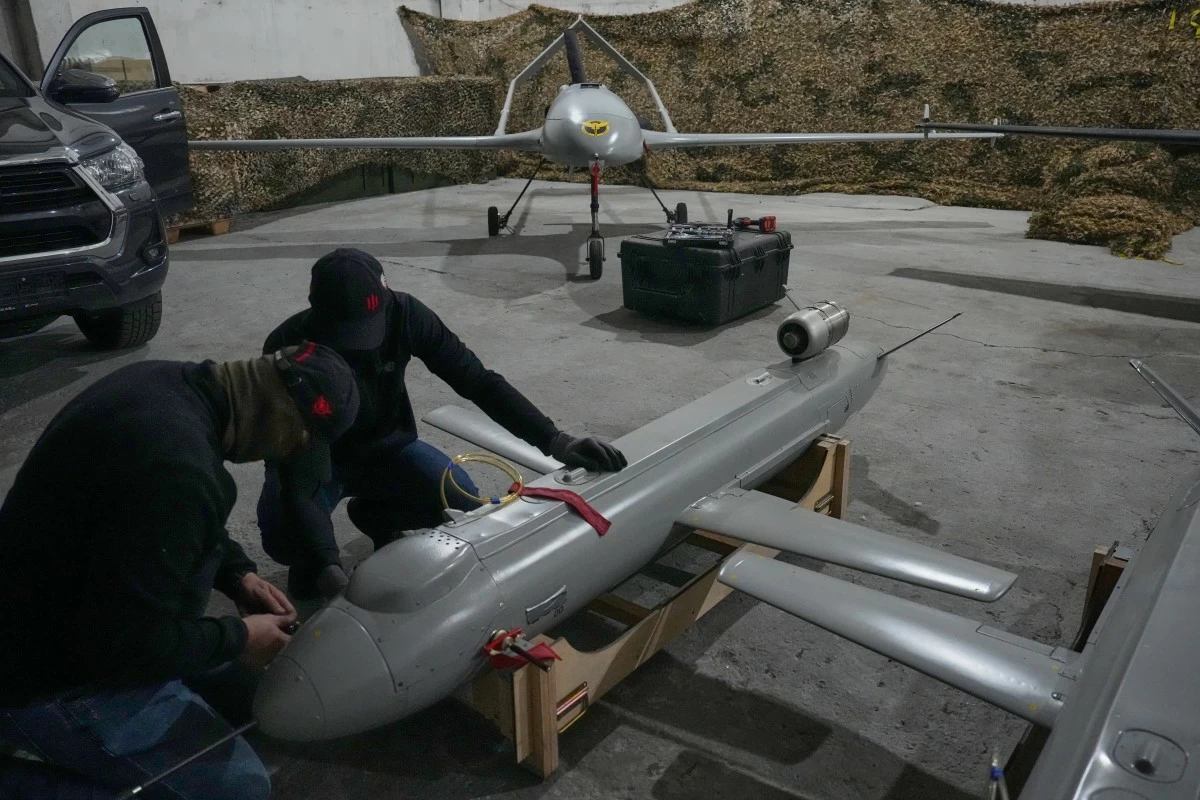
Servicemen of Ukraine's defense intelligence set up the Peklo (Hell) missile drone against Russian in an undisclosed location in Ukraine late Thursday, May 28, 2026. (AP Photo/Efrem Lukatsky)
KYIV, Ukraine (AP) — Kyiv on Sunday launched new strikes overnight on Russian energy sites. It has also denied Moscow’s claims that a Ukrainian drone struck the Russian-controlled Zaporizhzhia nuclear plant.
Ukraine’s General Staff said Ukrainian drones struck the Saratov oil refinery in southwestern Russia, causing a large-scale fire. It claimed the refinery has been supplying Moscow’s war effort.
The refinery belongs to Russia’s state oil enterprise, Rosneft. Local Russian Gov. Roman Busargin said Ukrainian drones had damaged civilian infrastructure, but did not give details. Astra, an independent Russian news channel, said an oil refinery was on fire in the city of Saratov.
Ukraine has stepped up its attacks on Russia’s oil and gas facilities in recent months, arguing the energy sector funds and directly fuels Moscow’s more than four-year invasion.
“Tonight, our soldiers applied Ukraine’s long-range sanctions against an oil refinery in Saratov, Russia — approximately 700 kilometers (435 miles) from the front line. A significant achievement,” Ukrainian President Volodymyr Zelenskyy wrote on social media on Sunday.
Drone debris also set fire to a fuel depot in Russia’s southwestern Rostov region, which borders Russian-occupied eastern Ukraine, Gov. Yuriy Slyusar reported on Telegram on Sunday. He said residents of nearby homes were evacuated.
Ukraine's General Staff on Sunday confirmed its forces were behind the strike on the facility in the town of Matveev Kurgan. Local authorities said a drone strike on the depot had caused a large-scale fire across a wide area.
According to its General Staff, Ukraine also struck the Lazarevo pumping station in Russia's Kirov region northeast of Moscow, more than 1,200 kilometers (745 miles) from Ukrainian-controlled land. The station helps ship Russian oil from Siberia to Belarus.
Regional Gov. Alexander Sokolov said drones had hit a facility in the Kirov region, without giving further details.
Russia says a Ukrainian drone struck a nuclear plant
Kyiv denied that a Ukrainian drone struck the Zaporizhzhia nuclear plant, Europe’s largest. Russia’s state nuclear energy company, Rosatom, said on Saturday that the drone exploded after tearing a hole in the wall of a turbine hall. Rosatom’s CEO Alexei Likhachev accused Ukraine of a deliberate attack.
“This afternoon, a Ukrainian kamikaze combat drone struck the turbine hall building of Power Unit No. 6, resulting in a detonation,” Likhachev said. He added there was no damage to main equipment.
Ukraine’s military said it did not target or strike the plant, describing the Russian claim as “yet another propaganda ploy.” A military statement said that it adheres to international humanitarian law and is aware of the "consequences of any actions targeting nuclear facilities.”
Rafael Grossi, head of the U.N. nuclear watchdog — the International Atomic Energy Agency — expressed “serious concern” in a post on X following the incident.
The IAEA said in a statement Sunday that its inspectors at the plant “observed damage to the exterior of a turbine building” that was “consistent with the impact" of a drone. It gave no details of where the drone may have come from, but said radiation levels at the site remained normal. It added that its inspectors had requested access to the inside of the turbine hall for further examination.
Russian forces captured the Zaporizhzhia plant in the early weeks of the war, and it remains close to the front lines in the southern Zaporizhzhia region, one of four Russia has formally annexed despite lacking full military control or international recognition for its actions. The nuclear plant has repeatedly come under fire since Russia’s full-scale invasion in February 2022, sparking fears of a nuclear accident. Moscow and Kyiv have blamed each other for targeting the plant.
Zelenskyy claims Russia treats abducted Ukrainian children ‘as combatants’
In an interview broadcast Sunday, Zelenskyy told CBS News’ “Face the Nation” that Russia treats abducted Ukrainian children “essentially as combatants,” claiming Kyiv has evidence they are being trained to fight against fellow Ukrainians.
“They taught these children to hate their native country, to hate (their) native people. And Ukrainians, can you imagine, such young Ukrainians — young boys — come to the battlefield and kill (other) Ukrainians,” he said.
He also alleged that Russians have separated abducted Ukrainian siblings, adopting them out to different families, and offered to trade some children for captured Ukrainian soldiers in prisoner swaps.
“There are hundreds of examples of such steps by Russia,” Zelenskyy said, without specifying what evidence his government had.
Since Russia's full-scale invasion of Ukraine, tens of thousands of children have been unlawfully deported or forcibly transferred to Russia or Russian-held territories in eastern Ukraine.
Earlier this month, the European Union imposed sanctions on 16 officials accused of helping the abductions, claiming many children had their identities changed or were put up for adoption.
Sanctions were also slapped on seven centers suspected of indoctrinating the children or training them to serve in the armed forces, either for Russia or pro-Russian militias inside Ukraine.
The International Criminal Court has issued an arrest warrant for Russian President Vladimir Putin for war crimes, accusing him of personal responsibility for the abductions.
Deadly drone attacks continue
Elsewhere, Ukraine’s air force said Sunday that it had shot down 212 of 299 drones launched by Russia overnight. It said 14 drones had reached their targets, while drone debris fell in five locations.
A truck driver died early on Sunday as drones hit a parking lot in Ukraine’s northern Chernihiv region, according to local administration head Vyacheslav Chaus.
Russian drones struck the city of Dnipro and an oil refinery in Ukraine’s Rivne region, causing fires, authorities said. The head of the Dnipropetrovsk region, of which Dnipro is the capital, said later on Sunday that one person was killed and nine were injured in Russian attacks in the province.