ADVERTISEMENT

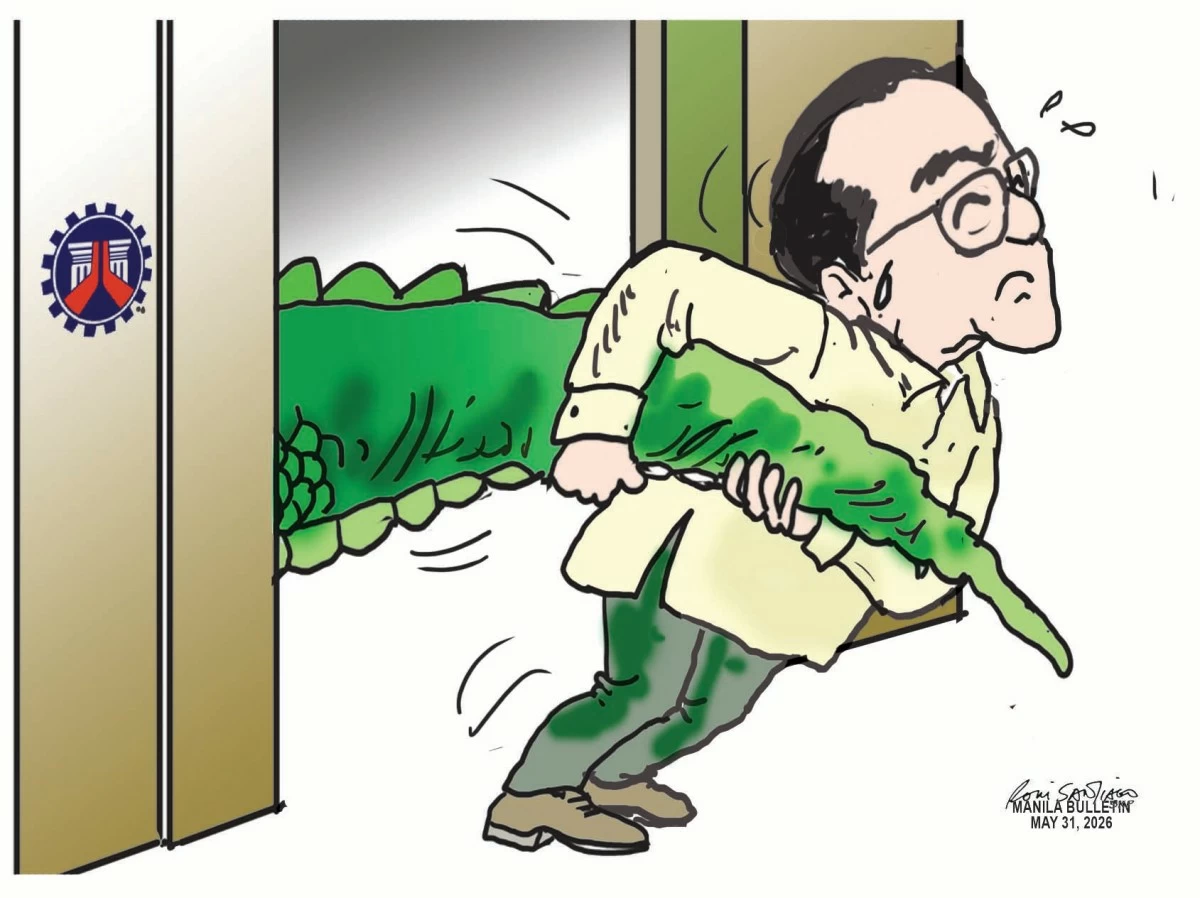
End flood control corruption; don't slow down public works

Published May 31, 2026 12:05 am  |  Updated May 30, 2026 04:18 pm
The government's investigation into alleged irregularities and questionable budget insertions in flood control projects is both necessary and long overdue. Public funds intended to protect communities from floods must be used for their intended purpose, and those responsible for any misuse must be held accountable. However, the resulting slowdown in infrastructure implementation has exposed a serious institutional weakness: the Philippine government still struggles to pursue accountability and project execution at the same time.
The recent contraction in public construction has contributed to slower economic growth, weakened infrastructure delivery, and heightened uncertainty for workers and communities that depend on these projects. While anti-corruption efforts are essential, they become inadequate if they result in administrative paralysis. The country should not be forced to choose between fighting corruption and building critical infrastructure.
The consequences are immediate and tangible. Delayed or unfinished flood control projects leave vulnerable communities exposed to severe weather events at a time when climate-related disasters are becoming more frequent and destructive. Construction workers lose jobs and income as projects stall. Local economies suffer when government spending slows. In effect, ordinary Filipinos bear the cost of both corruption and bureaucratic inaction.
This situation highlights the need for a deeper reform agenda. Investigations alone will not solve the structural weaknesses that allowed questionable projects to emerge in the first place. The Department of Public Works and Highways must undertake a comprehensive overhaul of its budgeting and project management systems. The current framework, which has long been criticized for opaque allocations and limited public visibility, should be replaced by a more transparent and accountable model.
A practical starting point is the adoption of independent, line-item project tracking. Every infrastructure project should be publicly traceable from budget allocation to completion. Citizens, oversight agencies, and policymakers should be able to monitor project costs, implementation status, contractors, and outcomes in real time. Greater transparency would not only deter abuse but also allow legitimate projects to continue while investigations proceed.
At the same time, those conducting the investigations must maintain discipline and focus. The objective should be the swift establishment of facts, the recovery of misused funds, and the prosecution of those responsible. Investigations should not be prolonged unnecessarily, politicized, or allowed to create uncertainty that delays all infrastructure activity regardless of merit. A serious anti-corruption campaign requires both rigor and efficiency.
Some have suggested expanding public-private partnerships to address the infrastructure gap. While PPPs can play an important role, they are not a complete solution. Developing and negotiating such arrangements takes time, and private investors generally prioritize projects with clear financial returns. Essential public works such as rural flood control, drainage systems, and disaster-mitigation infrastructure often remain dependent on government funding and leadership. These projects cannot simply be handed over to the market.
The private sector can nevertheless contribute meaningfully to reform efforts. Companies can support transparent procurement practices, strengthen compliance standards, adopt independent auditing mechanisms, and participate in digital monitoring systems that improve accountability throughout the project cycle.
Citizens also have an important responsibility. Public vigilance, community monitoring, and the reporting of irregularities are essential to strengthening accountability. Sustainable reform requires active participation from society, not just action from government institutions.
The challenge facing the Philippines is clear. Corruption must be confronted decisively, but infrastructure development cannot be allowed to grind to a halt in the process. The goal should not be merely to investigate wrongdoing after it occurs, but to build institutions capable of preventing abuse while continuing to deliver essential public services.
Effective governance requires both integrity and execution. The nation cannot afford to sacrifice one for the other.

Related Tags

Editorial flood control corruption
ADVERTISEMENT
.most-popular .layout-ratio{ padding-bottom: 79.13%; } @media (min-width: 768px) and (max-width: 1024px) { .widget-title { font-size: 15px !important; } }

{{ articles_filter_1561_widget.title }}

.most-popular .layout-ratio{ padding-bottom: 79.13%; } @media (min-width: 768px) and (max-width: 1024px) { .widget-title { font-size: 15px !important; } }

{{ articles_filter_1562_widget.title }}

.most-popular .layout-ratio{ padding-bottom: 79.13%; } @media (min-width: 768px) and (max-width: 1024px) { .widget-title { font-size: 15px !important; } }

{{ articles_filter_1563_widget.title }}

{{ articles_filter_1564_widget.title }}

.mb-article-details { position: relative; } .mb-article-details .article-body-preview, .mb-article-details .article-body-summary{ font-size: 17px; line-height: 30px; font-family: "Libre Caslon Text", serif; color: #000; } .mb-article-details .article-body-preview iframe , .mb-article-details .article-body-summary iframe{ width: 100%; margin: auto; } .read-more-background { background: linear-gradient(180deg, color(display-p3 1.000 1.000 1.000 / 0) 13.75%, color(display-p3 1.000 1.000 1.000 / 0.8) 30.79%, color(display-p3 1.000 1.000 1.000) 72.5%); position: absolute; height: 200px; width: 100%; bottom: 0; display: flex; justify-content: center; align-items: center; padding: 0; } .read-more-background a{ color: #000; } .read-more-btn { padding: 17px 45px; font-family: Inter; font-weight: 700; font-size: 18px; line-height: 16px; text-align: center; vertical-align: middle; border: 1px solid black; background-color: white; } .hidden { display: none; }
function initializeAllSwipers() { // Get all hidden inputs with cms_article_id document.querySelectorAll('[id^="cms_article_id_"]').forEach(function (input) { const cmsArticleId = input.value; const articleSelector = '#article-' + cmsArticleId + ' .body_images'; const swiperElement = document.querySelector(articleSelector); if (swiperElement && !swiperElement.classList.contains('swiper-initialized')) { new Swiper(articleSelector, { loop: true, pagination: false, navigation: { nextEl: '#article-' + cmsArticleId + ' .swiper-button-next', prevEl: '#article-' + cmsArticleId + ' .swiper-button-prev', }, }); } }); } setTimeout(initializeAllSwipers, 3000); const intersectionObserver = new IntersectionObserver( (entries) => { entries.forEach((entry) => { if (entry.isIntersecting) { const newUrl = entry.target.getAttribute("data-url"); if (newUrl) { history.pushState(null, null, newUrl); let article = entry.target; // Extract metadata const author = article.querySelector('.author-section').textContent.replace('By', '').trim(); const section = article.querySelector('.section-info ').textContent.replace(' ', ' '); const title = article.querySelector('.article-title h1').textContent; // Parse URL for Chartbeat path format const parsedUrl = new URL(newUrl, window.location.origin); const cleanUrl = parsedUrl.host + parsedUrl.pathname; // Update Chartbeat configuration if (typeof window._sf_async_config !== 'undefined') { window._sf_async_config.path = cleanUrl; window._sf_async_config.sections = section; window._sf_async_config.authors = author; } // Track virtual page view with Chartbeat if (typeof pSUPERFLY !== 'undefined' && typeof pSUPERFLY.virtualPage === 'function') { try { pSUPERFLY.virtualPage({ path: cleanUrl, title: title, sections: section, authors: author }); } catch (error) { console.error('ping error', error); } } // Optional: Update document title if (title && title !== document.title) { document.title = title; } } } }); }, { threshold: 0.1 } ); function showArticleBody(button) { const article = button.closest("article"); const summary = article.querySelector(".article-body-summary"); const body = article.querySelector(".article-body-preview"); const readMoreSection = article.querySelector(".read-more-background"); // Hide summary and read-more section summary.style.display = "none"; readMoreSection.style.display = "none"; // Show the full article body body.classList.remove("hidden"); } document.addEventListener("DOMContentLoaded", () => { let loadCount = 0; // Track how many times articles are loaded const offset = [1, 2, 3, 4, 5, 6, 7, 8, 9, 10]; // Offset values const currentUrl = window.location.pathname.substring(1); let isLoading = false; // Prevent multiple calls if (!currentUrl) { console.log("Current URL is invalid."); return; } const sentinel = document.getElementById("load-more-sentinel"); if (!sentinel) { console.log("Sentinel element not found."); return; } function isSentinelVisible() { const rect = sentinel.getBoundingClientRect(); return ( rect.top < window.innerHeight && rect.bottom >= 0 ); } function onScroll() { if (isLoading) return; if (isSentinelVisible()) { if (loadCount >= offset.length) { console.log("Maximum load attempts reached."); window.removeEventListener("scroll", onScroll); return; } isLoading = true; const currentOffset = offset[loadCount]; window.loadMoreItems().then(() => { let article = document.querySelector('#widget_1690 > div:nth-last-of-type(2) article'); intersectionObserver.observe(article) loadCount++; }).catch(error => { console.error("Error loading more items:", error); }).finally(() => { isLoading = false; }); } } window.addEventListener("scroll", onScroll); });

Sign up by email to receive news.