






Manila Bulletin
 Philippines
National
'Anong mastermind?': Acidre says it's impossible for Romualdez to control budget process
Philippines
National
'Anong mastermind?': Acidre says it's impossible for Romualdez to control budget process
Philippines
National
'Anong mastermind?': Acidre says it's impossible for Romualdez to control budget process
'Anong mastermind?': Acidre says it's impossible for Romualdez to control budget process
Published May 31, 2026 04:00 pm


At A Glance
- Rep. Jude Acidre rejects claims that ex‑Speaker Martin Romualdez controlled the budget, saying the process involves the executive, House, Senate, bicameral, and presidential approval.
- He stresses accountability must rest on evidence, noting even within the House the Speaker cannot dominate hearings, minority input, and deliberations.
- Acidre points out Senate amendments to the DPWH budget were P142 billion versus the House's P94 billion (P30 billion released), arguing this disproves the "mastermind" tag.
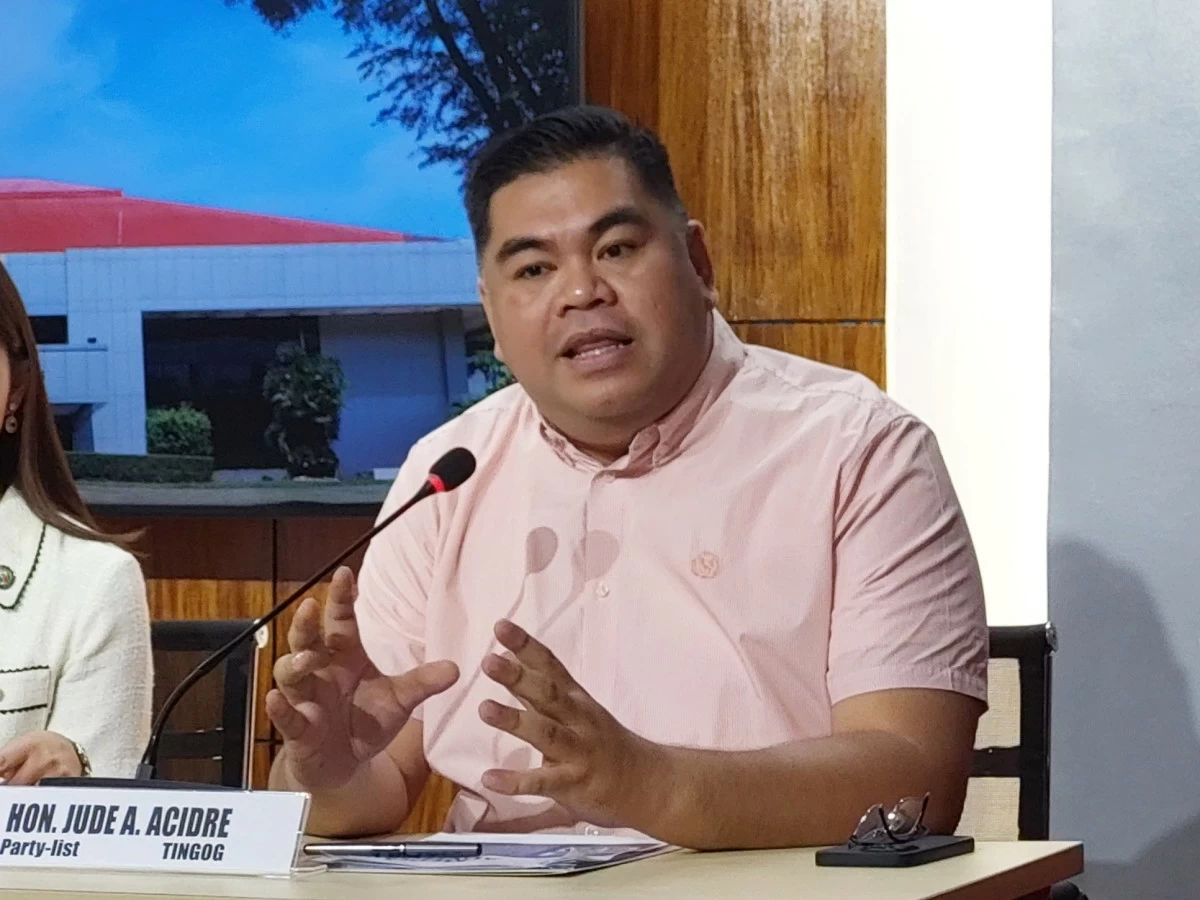
Tingog Party-list Rep. Jude Acidre (Ellson Quismorio/ MANILA BULLETIN)
A ranking congressman has echoed the assertion of Leyte 1st district Rep. Martin Romualdez's camp that it's simply baloney to call the former House Speaker the "mastermind" of the flood control projects corruption scandal.
According to Tingog Party-list Rep. Jude Acidre, the Office of the Ombudsman's claim that Romualdez had “functional control” over the national budget process as former Speaker was an overreach.
Acidre says no single official, office or institution can control a budget that passes through the executive, the House, the Senate, and bicameral deliberations; and afterwards is subjected to presidential approval and executive implementation.
“It’s impossible for one person to have control over the entire process. And I think to surmise that one person or one personality or one institution has functional control is very much an overreach,” said the House Committee on Higher and Technical Education chairman.
As far as the corruption allegations against Acidre was concerned, he stressed that accountability must rest on evidence and the actual role of each person in the budget chain.
“You have to be familiar kasi with the process ng budget making. It begins with the National Expenditure Program (NEP) in the executive, goes to the House for the process, goes through three readings, goes through the budget briefings," noted the second-term congressman.
"Tapos dadaan din siya sa plenary, pupunta sa Senado, pupunta sa bicameral to reconcile both versions, then it will be reviewed by the president and signed by the president, and implemented by the Executive agencies concerned,” Acidre explained.
(It will also pass through the plenary, go to the Senate, then to the bicameral to reconcile both versions, after which it will be reviewed and signed by the president, and implemented by the concerned Executive agencies.)
Acidre said that if any control can be attributed to the Speaker, it would only relate to the flow of business within the House and not to the entire national budget process that includes the Senate, the President and implementing agencies.
“If you are to talk about ‘functional,’ ako ang masasabi ko lang kung meron man, ang Speaker siguro dapat meron lang control sa proseso ng House kung meron man,” he explained.
(If you are to talk about ‘functional,’ what I can only say is that if there is any, the Speaker should only have control over the process in the House, if at all.)
Even within the House, Acidre noted that the process cannot be reduced to the Speaker alone because budget deliberations involve questions, hearings, minority participation and formal proceedings before any measure moves forward.
“But then again that’s not even intended kasi may magtatanong ‘yan, may minority ‘yan, may hearings ‘yan, di ba?” he pointed out.
(But then again that's not even intended because there will be questions, there will be a minority, there will be hearings, right?)
Acidre also questioned the logic of tagging the House as the supposed center of the flood control controversy when, based on the figures he cited, Senate-introduced amendments in the Department of Public Works and Highways (DPWH) budget were substantially larger than House-introduced amendments.
“Kung makikita mo (If you can see), I just wanna look at the figures, the Senate insertion introduced amendments in the DPWH budget would be around P142 billion, and you are talking about how many senators? 24,” he said.
He said the House introduced P94 billion in amendments, of which only around P30 billion-plus was actually released. This makes the “mastermind” claim even more absurd.
“So maisip ko, paano kaming mastermind eh hindi nga kami nakakuha ng pinakamalaking parte ng national budget, di ba?” Acidre said.
(So I wonder, how can we be the mastermind when we did not even get the largest share of the national budget, right?)
For Acidre, the budget process, the size of the amendments and the release of funds all point to one basic conclusion: accusations should be anchored on evidence and not on sweeping assumptions about the powers of a former Speaker.
Romualdez was the House Speaker during the entirety of the 19th Congress and during the first part of the current 20th Congress.